Evidence quality 4.38/5
Eight-dimension review score against the quality rubric . Each dimension scored 1–5.
- D1 Source grounding
- 5/5
- D2 Source authority
- 5/5
- D3 Arithmetic
- 3/5
- D4 Uncertainty
- 4/5
- D5 Scope
- 5/5
- D6 Prose
- 4/5
- D7 Perception honesty
- 4/5
- D8 Caveat completeness
- 5/5
● your factors — click this risk ▾ to reveal
- Your factors
≈ As likely as
Perceived
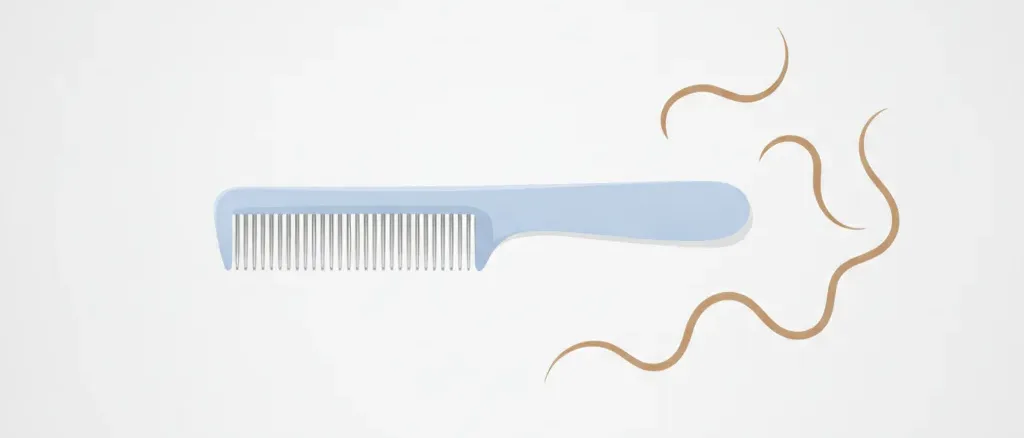
Head lice trip an alarm out of all proportion to what they do. The dread is almost entirely social: a note home from school reads like an accusation, the word itself carries a whiff of neglect, and the reflex is to treat an infestation as both an emergency and a verdict on the household's cleanliness. That puts the fear lopsided in two directions. On the harm axis it is wildly overestimated, because lice transmit no disease and cause nothing worse than an itch. On the cause axis it is simply wrong: lice have no preference for dirty hair and no relationship to hygiene or income. The one place the intuition is closer to calibrated is frequency, where most parents still under-guess how routine an event this is across the school-age years.
Rough estimate: Treated as a health crisis and a mark of poor hygiene; the harm is near zero and the cause has nothing to do with cleanliness
Source: editorial intuition, not polled
Actual
~6-12 million infestations/year among US children aged 3-11 (CDC, sales-derived estimate)
US children 3-11, annual head-lice infestation
Show derivation
Likelier normally reports lifetime-US-adult probabilities; this entry is scoped to the school-age window (ages 3-11), where head lice are concentrated, the same way the choking, button-battery, and foreign-body entries are scoped to early childhood. The CDC estimates 6-12 million infestations per year among US children aged 3-11. Against a population of roughly 35-36 million children in that band (federal child- population tables: ~24.5 million aged 6-11 plus ~11 million aged 3-5), the raw figure implies an annual event rate of about 0.17 to 0.34 per child. That raw rate is an overcount on two grounds the CDC itself flags: it descends from a 1997 estimate built on insecticide sales, it counts infestation events rather than unique children (the same child can be reinfested within a year), and a large share of presumed cases are misdiagnosed non-viable nits. Discounting for those, a conservative unique-child annual incidence is on the order of 1 in 13 (~0.077). Compounded across the nine-year window, 1 - (1 - 0.077)^9 ≈ 0.51, or roughly one child in two catching lice at least once before leaving elementary school. The uncertainty band is deliberately wide: the low end (~0.30) takes the CDC's overcount warning at face value, and the high end (~0.80) follows from the raw, undiscounted sales-based estimate. There is no national surveillance of head lice, so no figure here is better than an informed bracket.
Caveats: The headline number is the softest thing on this page. There is no national surv…
The headline number is the softest thing on this page. There is no national surveillance of head lice in the United States; the often-quoted 6-12 million figure descends from a 1997 estimate built on retail sales of lice-treatment products, and the CDC explicitly warns it is likely an overcount, because many presumed infestations are misdiagnosed non-viable nits and because the count tallies events rather than unique children. The ~1-in-2 school-age figure here is therefore a bracketed estimate, not a measured rate, and the wide uncertainty band reflects that. What is not soft is the harm: head lice transmit no disease, are not a health hazard, and have nothing to do with cleanliness, household income, or parenting. The only routine symptom is itching, and on a first infestation even that can take four to six weeks to appear, which is part of why lice spread before anyone notices. Because in-classroom transmission is low, the American Academy of Pediatrics and the National Association of School Nurses recommend against "no-nit" policies that send children home; the dominant route is close, prolonged head-to-head contact, typically at home or in close play, not fleeting contact at a desk. Head lice cannot jump or fly. None of this is medical guidance; treatment choices belong with a clinician or pharmacist.
Related risks
Other risks on similar themes — for exploring related fears.

Toy injury requiring ER (child)
What are the odds of a child needing an ER visit for a toy-related injury?


Child fall head injury
What are the odds of a child suffering a serious head or eye injury from a fall?
Painkiller before infant vaccination
What are the odds that giving an infant paracetamol prophylactically at vaccination blunts the immune response to the vaccine?


Pick challenger
Few childhood events carry a social charge as out of step with their actual stakes as head lice. The note home from school is read as an accusation, the word itself drags in associations with neglect and squalor, and the household response is usually some mix of panic and shame. Almost none of that maps onto what head lice are. They are wingless insects that live on the scalp, feed on blood, and cause an itch. They transmit no disease, they are not a health hazard, and the United States sees them in enormous numbers: the CDC estimates 6 to 12 million infestations a year among children aged 3 to 11. Spread across the nine years of the school-age window, an honest reading of that number puts the chance a given child catches lice at least once somewhere around one in two. For a thing treated as a rare disgrace, it is closer to a near-universal rite of elementary school.
The gap between the dread and the harm is almost total. Head lice carry no pathogens; unlike body lice, they are not a disease vector. The only routine consequence is itching where the lice feed, and on a first infestation even that can take four to six weeks to begin, which is exactly why an infestation usually spreads through a class or a family before anyone spots it. The American Academy of Pediatrics is blunt that this is a nuisance, not an illness, and that cleanliness is beside the point: it makes no difference whether the hair is clean or dirty. Because transmission inside a classroom is actually low, the AAP and the National Association of School Nurses now recommend against the old “no-nit” policies that sent children home; exclusion costs missed school and adds stigma without meaningfully slowing spread.
The frequency, by contrast, is the least certain figure here, and it is worth being honest about why. The United States runs no surveillance system for head lice. The 6-to-12-million estimate everyone quotes, the CDC included, traces back to a 1997 calculation built on retail sales of treatment products, and the CDC itself flags it as probably too high: a large share of presumed cases are dead nits misread as live infestations, and the count tallies treatment events rather than distinct children, so a child treated twice is counted twice. Set the raw number against the roughly 35 million US children aged 3 to 11 and it implies anywhere from a sixth to a third of them are infested in a year, before any discount. The one-in-two school-age estimate on this page already trims that for the overcount and compounds what is left across the window; the wide band, from about one child in three to four in five, is the honest width of the guess.
What actually moves the risk is contact, not hygiene. Lice cannot jump or fly; they travel by direct head-to-head contact and, less often, by shared bedding, hats, or brushes inside a home. That makes an infested sibling or a co-sleeping parent a far stronger driver than a neighbor at a school desk. Girls are affected somewhat more than boys, which the CDC attributes to more of the close, prolonged head-touching that play and shared hairstyles involve. The rate is concentrated in the preschool and elementary years and falls off through the tween and teen years as that contact thins out. And there is a striking and well-documented protective pattern: head lice are much less common among African American children in the US, generally explained by the North American louse’s claws gripping the flatter, more oval hair shaft less easily. The louse itself does not care who its host is; it only cares how often two heads touch.
Related tidbits
Head lice carry no disease and don't care whether hair is clean or dirty. The CDC counts millions of US cases a year in kids aged 3–11; across elementary school, roughly 1 in 2 children get them. A nuisance, not a health hazard.
Claim ledger
Every number below is what each source reported, with the verbatim quote we relied on and how we arrived at our figure. Click any link to verify directly.
2/4 sources independently verified verbatim against the cited source
-
[1] Centers for Disease Control and Prevention (CDC) — About Head Lice Verified
About Head Lice- Statistic
Estimated 6-12 million infestations/year among US children aged 3-11; head lice transmit no disease and are not a health hazard; getting head lice is not related to cleanliness; girls affected more often than boys; much less common among African American persons; no reliable national count- Excerpt
“"an estimated 6 - 12 million infestations occur each year in the United States among children 3 - 11 years of age. [...] Head lice do not transmit any disease and therefore are not considered a health hazard. [...] Getting head lice is not related to cleanliness of you or your environment. [...] The most common way to get head lice is by head-to-head contact with a person who already has head lice. [...] Some studies suggest that girls get head lice more often than boys, probably due to more frequent head-to-head contact. [...] In the United States, infestation with head lice is much less common among African American persons than among persons of other races. [...] There is not reliable data on how many people get head lice each year in the United States." ”
- Source data from
- 2024-06-04
- Accessed
- 2026-06-23 · archived copy
- Verification
- Excerpt independently re-fetched and confirmed word-for-word against the cited source during our grounding audit.
- Calculation
- Primary anchor for the headline count (6-12 million/year, ages 3-11), the no-disease / no-hygiene harm framing, the head-to-head transmission route, and the sex and race multipliers. The CDC's own "not reliable data" caveat is the basis for the wide uncertainty band and the overdiagnosis discount applied in the assumptions.
- Independence
- The 6-12 million figure traces to a single 1997 sales-based estimate that the CDC, AAP, and most secondary references all restate; treat CDC and AAP as one pipeline for the headline frequency. They are genuinely independent on the harm/biology claims (no disease, hygiene-irrelevant, no-nit policy), which both establish separately.
-
[2] American Academy of Pediatrics (HealthyChildren.org) — Signs and Symptoms of Head Lice Verified
Signs and Symptoms of Head Lice- Statistic
Head lice cause no serious illness and carry no disease; cleanliness is irrelevant; AAP and the National Association of School Nurses discourage school-exclusion (no-nit) policies; millions of US school-age children get head lice each year; itching is the main symptom; spread by close, prolonged head-to-head contact- Excerpt
“"Though head lice may be a nuisance, they don't cause serious illness or carry any diseases. [...] It doesn't matter if the hair is clean or dirty. [...] Each year millions of school-aged children in the United States get head lice. [...] Itching on the areas where head lice are present is the most common symptom. [...] The main way that head lice spread is from close, prolonged head-to-head contact. [...] The American Academy of Pediatrics and National Association of School Nurses discourage such policies and believe a child should not miss or be excluded from school because of head lice." ”
- Source data from
- 2022-10-01
- Accessed
- 2026-06-23 · archived copy
- Verification
- Excerpt independently re-fetched and confirmed word-for-word against the cited source during our grounding audit.
- Calculation
- Independent confirmation (from the AAP's parent-facing arm) of the harm framing: no serious illness, no disease, cleanliness-irrelevant, itching as the sole routine symptom, and the explicit recommendation against keeping a child home. Corroborates the "millions per year" order of magnitude without restating a precise count.
- Independence
- Published by the AAP, the same organization behind the 2022 clinical report below; the two are one pipeline, not independent of each other. Independent of CDC on the harm/biology and no-nit-policy claims.
-
[3] American Academy of Pediatrics — Pediatrics 2022;150(4):e2022059282 — Head Lice (Clinical Report)
Head Lice (Clinical Report)- Statistic
2022 AAP clinical report: children should not be excluded from school for head lice given low in-classroom transmission; no-nit exclusion policies should be abandoned; head lice are not a health hazard and not a marker of poor hygiene- Excerpt
“[Paraphrase from published clinical report - full text paywalled] The 2022 AAP clinical report on head lice concludes that a child or adolescent should not be restricted from school attendance because of head lice, given the low rate of in-classroom transmission, and that "no-nit" exclusion policies should be abandoned. It reiterates that head lice are not a health hazard, do not spread disease, and are not a sign of poor hygiene. ”
- Source data from
- 2022-10-01
- Accessed
- 2026-06-23 · archived copy
- Calculation
- The current peer-reviewed clinical standard. Used for the no-nit / no-exclusion framing and the formal statement that infestation is not a health hazard. Excerpt is a paraphrase because the Pediatrics article page is paywalled and 403s to automated fetching; the wording is conservative and tracks the published recommendations.
- Independence
- Same organization (AAP) as the HealthyChildren source above — treat as one pipeline. Distinct from CDC.
-
[4] Federal Interagency Forum on Child and Family Statistics (childstats.gov) — POP1 Child population: Number of children ages 0-17 in the United States by age
POP1 Child population: Number of children ages 0-17 in the United States by age- Statistic
US children, 2022: ages 0-5 = 22.6 million; ages 6-11 = 24.5 million; all children 0-17 = 73.2 million- Excerpt
“"Ages 0-5: 22.6 [million] [...] Ages 6-11: 24.5 [million] [...] All children (0-17): 73.2 [million]" (2022 actual figures from the federal child-population table). ”
- Source data from
- 2023-07-01
- Accessed
- 2026-06-23 · archived copy
- Calculation
- Supplies the denominator. Ages 3-11 ≈ the full 6-11 band (24.5 million) plus roughly half of the 0-5 band for ages 3-5 (~11 million), giving ~35-36 million children. This is the divisor used to turn the CDC's 6-12 million annual infestation count into a per-child rate in the assumptions.
- Independence
- Population denominator only — a separate measurement pipeline from the infestation-count sources, so it neither confirms nor inflates the headline frequency.