Evidence quality 4.38/5
Eight-dimension review score against the quality rubric . Each dimension scored 1–5.
- D1 Source grounding
- 5/5
- D2 Source authority
- 5/5
- D3 Arithmetic
- 3/5
- D4 Uncertainty
- 4/5
- D5 Scope
- 5/5
- D6 Prose
- 4/5
- D7 Perception honesty
- 4/5
- D8 Caveat completeness
- 5/5
● your factors — click this risk ▾ to reveal
- Your factors
≈ As likely as
Perceived
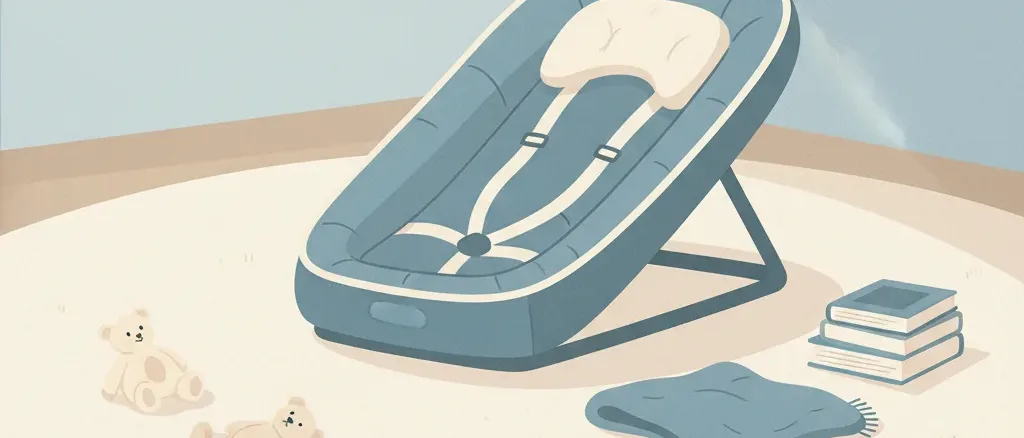
Most parents now associate the Rock 'n Play with the 2019 recall and the 2022 federal ban, so the product has high name-recognition as a hazard. Before the recall, the device sat on shelves at major US retailers for a decade and was routinely recommended by parenting forums and even some pediatricians for infants with reflux. The mental model parents had — soft fabric, gentle incline, easy to rock — gave no hint of the positional-asphyxia mechanism that drove the fatalities. Awareness today is high enough that most US parents would refuse a brand-new inclined sleeper if offered one, though secondhand units still circulate and the European market has no equivalent product ban.
Rough estimate: ~1 in 200,000 to 1 in 500,000 per regularly-exposed infant
Source: editorial intuition, not polled
Actual
73 infant deaths plus 1,108 non-fatal incidents reported to CPSC across all US inclined-sleep products, January 2005–June 2019
US infants 0-12 months exposed to inclined-sleep products in homes, 2005–2019
Show derivation
73 deaths across all inclined-sleep products reported to CPSC January 2005 through June 2019 (CPSC, 2019-10-31). Denominator estimated from recall units: the Fisher-Price Rock 'n Play recall covered 4.7 million units alone, and competitor units (Kids II, Graco, others) bring total US inclined-sleep unit sales over the period to roughly 15-20 million. Per-unit risk works out to ~1 in 240,000. Per-infant risk is higher because many units are used by more than one child (hand-me-down, secondhand sale), giving an order-of- magnitude estimate of ~1 in 50,000 to 1 in 100,000 per regularly-exposed infant. The uncertainty band reflects this denominator ambiguity. Crucial historical caveat: the Safe Sleep for Babies Act (signed 2022-05-16, taking effect roughly 180 days later) made it unlawful to manufacture, sell, or distribute inclined sleepers with surfaces above 10 degrees. The forward- looking risk for a newly-purchased US unit is approximately zero from late 2022 onward; the residual risk is concentrated in secondhand units still in homes and in the EU and Polish markets, where no equivalent ban exists and the EN 12790-1/-2:2023 reclined-cradle standard governs the product class without prohibiting it.
Caveats: The per-unit-sold figure is the most defensible aggregate, but it understates pe…
The per-unit-sold figure is the most defensible aggregate, but it understates per-infant risk by an unknown factor because each unit is often used by more than one child. CPSC's incident-reporting database also under-counts: it captures fatalities reliably but only a fraction of near-misses and minor positional events. The 73-death total is bounded above only by the surveillance window (January 2005 through June 2019) — additional deaths after the recall cutoff are not in this count. The headline rate is now historical for the US market; what matters in 2026 is whether a given household has a secondhand or pre-ban unit still in use, and whether they are in a jurisdiction (EU, PL, much of the world) where the product class remains legal.
Related risks
Other risks on similar themes — for exploring related fears.

Infant swing death
What are the odds an infant in a powered swing or rocker dies from strangulation or suffocation?
Child plastic bag suffocation
What are the odds of a child suffocating from playing with a plastic bag?


Child blind cord strangulation
What are the odds of a child being strangled by window blind or roller shade cords?
Bouncer chair fall
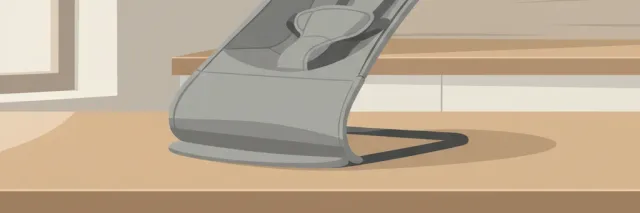
What are the odds an infant in a bouncer chair falls when the chair is placed on an elevated surface?
Pick challenger
Across all inclined-sleep products sold in the US between January 2005 and June 2019, CPSC recorded 73 infant deaths and 1,108 non-fatal incidents. The Fisher-Price Rock ‘n Play accounted for the largest share and the broadest recall (4.7 million units), but the same positional-asphyxia mechanism was documented across competing brands. Dividing the death count by an estimated 15 to 20 million inclined-sleep units sold over the period gives a per-unit rate of about 1 in 240,000. Adjusting for the fact that many units served more than one child raises the per-infant figure to somewhere in the range of 1 in 50,000 to 1 in 100,000 — still rare in absolute terms, but high enough, and concentrated tightly enough in a single mechanism, to justify the eventual federal ban.
What makes this entry unusual is that the headline rate is now historical. The Safe Sleep for Babies Act (Pub.L. 117-126), signed on 2022-05-16 and effective roughly 180 days later, makes it unlawful in the US to manufacture, sell, or distribute inclined sleepers with surfaces greater than 10 degrees. The 10-degree cutoff comes directly from Mannen’s biomechanical assessment cited in CPSC’s 2019 release. For a US parent in 2026 buying a new product, the relevant risk is effectively zero because the product is no longer on shelves. The remaining exposure sits in secondhand units that recall return rates left in circulation, in older units passed between families, and in jurisdictions where the ban does not reach.
The Polish and broader EU market is the cleanest example of the latter case. EN 12790-1/-2:2023, the European standard for reclined cradles, was revised in March 2023 to tighten requirements on powered motion, electrical safety, entrapment, and cord hazards. It does not prohibit the product class. A leżaczek sold today in Warsaw can have an incline above 10 degrees and remain compliant. The per-unit historical rate is the best signal we have for what to expect outside the US regulatory boundary — that, and the underlying mechanism, which the product geometry has not yet been required to fix.
Related tidbits
Inclined infant sleepers were tied to about 1 in 240,000 deaths per unit sold, with 73 infant deaths logged to the CPSC before the products were banned in the US in late 2022. The hazard was real, rare, and now removed from the market.
Claim ledger
Every number below is what each source reported, with the verbatim quote we relied on and how we arrived at our figure. Click any link to verify directly.
1/3 sources independently verified verbatim against the cited source
-
[1] US Consumer Product Safety Commission — Fisher-Price Recalls Rock 'n Play Sleepers Due to Reports of Deaths
Fisher-Price Recalls Rock 'n Play Sleepers Due to Reports of Deaths- Statistic
Over 30 infant fatalities in Rock 'n Play Sleepers since 2009 product introduction; 4.7 million units recalled- Excerpt
“"Since the 2009 product introduction, over 30 infant fatalities have occurred in Rock 'n Play Sleepers, after the infants rolled over while unrestrained, or under other circumstances." ”
- Source data from
- 2019-04-12
- Accessed
- 2026-05-31 · archived copy
- Calculation
- Single-product recall covering 4.7 million Rock 'n Play units. The "over 30 deaths" figure here predates the broader CPSC aggregate of 73 deaths across all inclined-sleep products published six months later (Source B). Used here to anchor the recall denominator on a verified manufacturer-reported unit count.
-
[2] US Consumer Product Safety Commission — CPSC Cautions Consumers Not to Use Inclined Infant Sleep Products Verified
CPSC Cautions Consumers Not to Use Inclined Infant Sleep Products- Statistic
73 infant deaths plus 1,108 non-fatal incidents across all inclined infant sleep products reported to CPSC January 2005 through June 2019- Excerpt
“"CPSC received reports of 1,108 incidents, including 73 infant deaths, related to infant inclined sleep products that occurred from January 2005 through June 2019. Dr. Mannen's report was conclusive that products with inclines 10 degrees or less, with flat and rigid surfaces, are likely safe for infant sleep." ”
- Source data from
- 2019-10-31
- Accessed
- 2026-05-31 · archived copy
- Verification
- Excerpt independently re-fetched and confirmed word-for-word against the cited source during our grounding audit.
- Calculation
- Canonical aggregate figure across all manufacturers. Despite the URL slug showing /2020/, the release date is 2019-10-31. The 10-degree cutoff Mannen identified in the cited biomechanical assessment became the threshold codified into federal law via the Safe Sleep for Babies Act in 2022 (Source C). 73 / 17.5M = 4.17e-6 per unit sold ≈ 1 in 240,000.
-
[3] US Congress / Congress.gov — H.R.3182 — Safe Sleep for Babies Act of 2021
H.R.3182 — Safe Sleep for Babies Act of 2021See all 2 Likelier entries citing this source →
- Statistic
Banned manufacture, sale, and distribution of US infant inclined sleepers with surfaces greater than 10 degrees and crib bumpers; signed 2022-05-16 as Public Law 117-126- Excerpt
“"Safe Sleep for Babies Act of 2021 — This bill makes it unlawful to manufacture, sell, or distribute crib bumpers or inclined sleepers for infants. Specifically, inclined sleepers for infants are those designed for an infant up to one year old and have an inclined sleep surface of greater than 10 degrees. Latest Action: 05/16/2022 Became Public Law No: 117-126." ”
- Source data from
- 2022-05-16
- Accessed
- 2026-05-31 · archived copy
- Calculation
- Public Law 117-126 codifies the CPSC 10-degree threshold from Mannen's assessment. Took effect approximately 180 days after signing, i.e. late 2022. No EU member-state equivalent exists; the Polish and EU market is governed by EN 12790-1/-2:2023 (reclined cradles, revised March 2023), which addresses powered motion, electrical safety, entrapment, and cord hazards but does not ban the product class.