Evidence quality 4.88/5
Eight-dimension review score against the quality rubric . Each dimension scored 1–5.
- D1 Source grounding
- 4/5
- D2 Source authority
- 5/5
- D3 Arithmetic
- 5/5
- D4 Uncertainty
- 5/5
- D5 Scope
- 5/5
- D6 Prose
- 5/5
- D7 Perception honesty
- 5/5
- D8 Caveat completeness
- 5/5
● your factors — click this risk ▾ to reveal
- Your factors
≈ As likely as
Perceived
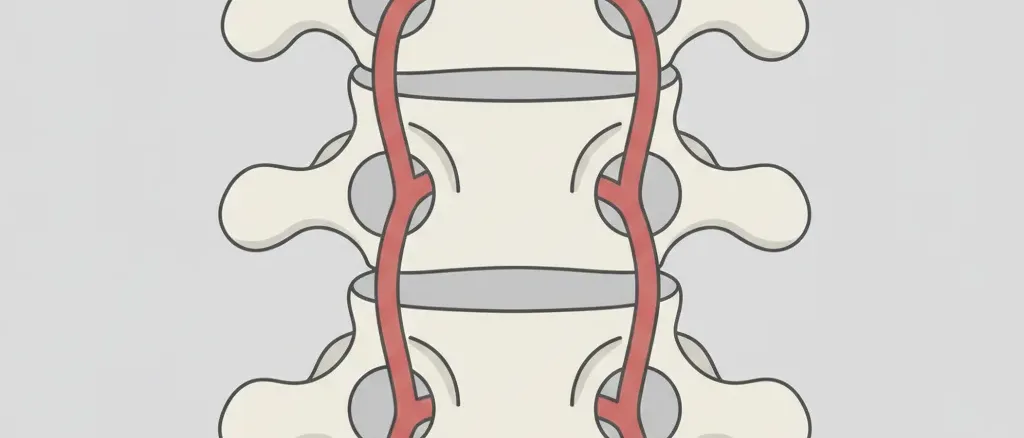
The association between cervical manipulation and stroke has generated headlines, lawsuits, and polarized professional debate for decades. Case reports of vertebral artery dissection following chiropractic neck adjustment have created a perception that the procedure carries a meaningful stroke risk. The chiropractic profession argues that the association is confounded — patients with pre-existing arterial dissection seek care for neck pain before their stroke, creating a temporal but not causal link. Critics argue that even if the absolute risk is small, it is not zero, and that cervical manipulation offers no demonstrated superiority over physiotherapy for neck or back pain, making any stroke risk unacceptable on risk-benefit grounds.
Rough estimate: Widely perceived as carrying a small but real stroke risk; some patients avoid chiropractic care entirely
Source: editorial intuition, not polled
Actual
~1-3 vertebrobasilar events per million cervical manipulations
Patients receiving cervical spine manipulation from chiropractors
Show derivation
Published estimates of vertebrobasilar stroke following cervical manipulation range from 1 per 400,000 to 1 per 5.85 million manipulations, with most reviews converging on approximately 1-3 per million. Using 2 per million as the central estimate. The lifetime estimate depends heavily on exposure assumptions. A "regular chiropractic user" who receives approximately 20 cervical manipulations per year for 30 years (600 lifetime manipulations) would have a cumulative risk of: 1 − (1 − 0.000002)^600 ≈ 0.0012, or roughly 1 in 830. However, the average American receives far fewer lifetime cervical manipulations. Approximately 10% of US adults visit a chiropractor in any given year, and not all visits involve cervical manipulation. A more representative lifetime exposure for the general population might be 30 cervical manipulations. At 2 per million per session: 1 − (1 − 0.000002)^30 ≈ 0.00006, or roughly 1 in 17,000. The Cassidy et al. 2008 case-control study found no excess risk of vertebrobasilar stroke after chiropractic visit compared with primary care visit, suggesting the association may be entirely confounded by pre-existing dissection. If this interpretation is correct, the causal risk is closer to zero.
Caveats: The risk estimate in this entry is conditional on receiving cervical manipulatio…
The risk estimate in this entry is conditional on receiving cervical manipulation. For people who never receive cervical manipulation, the risk is zero by definition. The "overrated" framing refers to the perception that chiropractic neck manipulation carries a high stroke risk — the absolute risk per session, if causal, is in the 1-in-a-million range. However, the risk-benefit framing is the critical context: if cervical manipulation offers no benefit over physiotherapy or exercise for neck pain (as multiple Cochrane reviews suggest), then any non-zero stroke risk — even a very small one — shifts the risk-benefit ratio unfavorably. The entry does not address lumbar or thoracic manipulation, which do not carry the same vascular risk. The Cassidy 2008 and Church 2016 findings of no excess risk compared to PCP visits remain methodologically debated and should not be interpreted as proof that the risk is zero.
Related risks
Other risks on similar themes — for exploring related fears.





Hepatitis A (travel)
What are the odds of contracting hepatitis A as an unvaccinated traveler to an endemic region?


Pick challenger
The risk of vertebrobasilar stroke following cervical spine manipulation has been estimated at approximately 1-3 per million sessions across multiple studies using different methodologies — malpractice claims analysis, practitioner surveys, and population-based case-control designs. The range spans from Haldeman’s estimate of 1 per 5.85 million manipulations (based on Canadian malpractice data) to roughly 1 per 400,000 from a Swiss survey. The most cited population study, Cassidy et al. 2008, found no excess risk of vertebrobasilar stroke after a chiropractic visit compared with a primary care physician visit, leading the authors to conclude that the association is confounded: patients with undiagnosed vertebral artery dissection seek care for the neck pain and headache that precede their stroke, visiting either a chiropractor or a doctor before the event.
The causation question remains unresolved. A 2016 systematic review and meta-analysis (Church et al.) found a small but statistically significant association between chiropractic care and cervical artery dissection (odds ratio ~1.74) — but concluded there is no evidence for causation, noting the association was no greater than that seen for visits to a primary-care physician. A 2024 narrative review acknowledged plausible biomechanical mechanisms — rotational forces on the vertebral artery during high-velocity cervical thrust — but concluded that epidemiological studies do not support a causal link at the population level. The difficulty is structural: vertebral artery dissection is rare, and the temporal association between a chiropractic visit and a stroke is expected even without causation, because neck pain is both a symptom of dissection and a reason to visit a chiropractor. Distinguishing causation from confounding in this scenario would require an impractically large randomized trial.
The more productive question is not whether cervical manipulation causes stroke (probably sometimes, though possibly never), but whether its benefits justify any non-zero risk. Multiple Cochrane reviews have found no evidence that spinal manipulation is superior to physiotherapy, exercise, or standard medical care for neck or back pain. If the benefit is equivalent to that of a physiotherapy session — which carries no plausible stroke risk — then the risk-benefit calculus for cervical manipulation is unfavorable regardless of whether the stroke risk is 1 in 400,000 or 1 in 5 million. The absolute risk per session is low enough that fear of a single chiropractic visit is disproportionate, but the decision to undergo repeated cervical manipulations over years, when equally effective alternatives exist, is where the numbers become worth examining.
Related tidbits
The lifetime stroke risk from cervical manipulation runs around 1 in 17,000 for a regular chiropractic user, with roughly 1-3 vertebrobasilar events per million manipulations.
Claim ledger
Every number below is what each source reported, with the verbatim quote we relied on and how we arrived at our figure. Click any link to verify directly.
3/4 sources independently verified verbatim against the cited source
-
[1] Chiropractic & Manual Therapies (PMC) — Current understanding of the relationship between cervical manipulation and stroke: what does it mean for the chiropractic profession? Verified
Current understanding of the relationship between cervical manipulation and stroke: what does it mean for the chiropractic profession?- Statistic
Published incidence estimates diverge widely: a Swiss survey put 'important complications' at 1:400,000, while Danish chiropractors estimated one case per 1.3 million cervical treatment sessions- Excerpt
“"From these data they estimated an incidence of one case per 362 chiropractor years and one case per 1.3 million cervical treatment sessions." ”
- Source data from
- 2010-06-16
- Accessed
- 2026-04-18 · archived copy
- Verification
- Excerpt independently re-fetched and confirmed word-for-word against the cited source during our grounding audit.
- Calculation
- This review surveys the range of published risk estimates, which diverge widely by methodology (malpractice claims, practitioner surveys, population studies): a Swiss survey put "important complications" at 1:400,000, while Danish chiropractors estimated one case per 1.3 million cervical treatment sessions. The paper does not claim a consensus figure; the spread is roughly two orders of magnitude, so only the order of magnitude (about 1 per million) is reasonably well supported. The review also notes the Cassidy 2008 finding of no excess risk compared to PCP visits, which, if accepted, would move the causal estimate toward zero.
-
[2] Cureus (PMC) — Systematic Review and Meta-analysis of Chiropractic Care and Cervical Artery Dissection: No Evidence for Causation Verified
Systematic Review and Meta-analysis of Chiropractic Care and Cervical Artery Dissection: No Evidence for Causation- Statistic
Meta-analysis found no evidence that chiropractic care causes cervical artery dissection; similar associations found for PCP visits- Excerpt
“"The meta-analysis revealed a small association between chiropractic care and dissection ... The association for chiropractor visit was not greater than for PCP visit. ... There is no convincing evidence to support a causal link between chiropractic manipulation and CAD." ”
- Source data from
- 2016-02-16
- Accessed
- 2026-04-18 · archived copy
- Verification
- Excerpt independently re-fetched and confirmed word-for-word against the cited source during our grounding audit.
- Calculation
- Church et al. 2016 is the most comprehensive meta-analysis to date. The finding of "no evidence for causation" does not mean the risk is zero — absence of evidence is not evidence of absence, and case reports of temporal association are plentiful. The methodological debate centers on whether case-control studies adequately control for the confounding of pre-existing dissection driving both the chiropractic visit (neck pain) and the subsequent stroke. The conservative interpretation: the causal contribution of cervical manipulation, if any, is too small to detect in population-level studies.
-
[3] Cureus (PMC) — Plausible Mechanisms of Causation of Immediate Stroke by Cervical Spine Manipulation: A Narrative Review
Plausible Mechanisms of Causation of Immediate Stroke by Cervical Spine Manipulation: A Narrative Review- Statistic
Biomechanical analysis identifies plausible mechanisms by which cervical manipulation could cause vertebral artery injury- Excerpt
“"The findings of Cassidy et al. support that CSM does not cause cervical artery dissection in cases of post-manipulative stroke and that cervical artery dissection is likely pre-existing to the CSM." ”
- Source data from
- 2024-03-18
- Accessed
- 2026-04-18 · archived copy
- Calculation
- This 2024 narrative review examines the biomechanical plausibility of cervical manipulation causing arterial injury. While it acknowledges plausible mechanisms exist, it also notes that the epidemiological evidence (Cassidy 2008, Church 2016) does not support a causal relationship at the population level. The review highlights the fundamental difficulty: case reports demonstrate temporal association, but controlled studies do not show excess risk compared to other healthcare encounters. The risk-benefit question is therefore not about whether cervical manipulation causes stroke (unclear), but whether it offers benefits superior to alternatives with no plausible stroke mechanism (physiotherapy, exercise).
-
[4] CMAJ (Canadian Medical Association Journal) — Haldeman S, Carey P, Townsend M, Papadopoulos C — Arterial dissections following cervical manipulation: the chiropractic experience Verified
Arterial dissections following cervical manipulation: the chiropractic experience- Statistic
Canadian Chiropractic Protective Association malpractice-claims data (1988-1997, ~134.5 million estimated cervical manipulations): 23 reported cases of stroke or vertebral artery dissection, yielding an estimated rate of 1 per 5.85 million cervical manipulations (1 per 8.06 million office visits)- Excerpt
“"The likelihood that a chiropractor will be made aware of an arterial dissection following cervical manipulation is approximately 1:8.06 million office visits, 1:5.85 million cervical manipulations, 1:1430 chiropractic practice years and 1:48 chiropractic practice careers." ”
- Source data from
- 2001-10-02
- Accessed
- 2026-07-03 · archived copy
- Verification
- Excerpt independently re-fetched and confirmed word-for-word against the cited source during our grounding audit.
- Calculation
- Haldeman et al. analyzed malpractice-claims data from the Canadian Chiropractic Protective Association covering 1988-1997: 23 confirmed cases of stroke or vertebral artery dissection following cervical manipulation, against an estimated 134.5 million cervical manipulations performed over the period (derived from a survey of a 10% sample of practicing Canadian chiropractors, 77.8% response rate). This yields the 1-per-5.85-million-manipulations figure cited in the body text as the low end of the published risk-estimate range, alongside the Swiss 1:400,000 "important complications" estimate from the first source above. The authors note this insurance-claims-based rate is substantially lower than estimates calculated from surveys of neurologists (1:500,000-1,000,000), a discrepancy attributed to underreporting to malpractice insurers versus recall in physician surveys.