Skip to content
Likelier
Kids · reviewed 2026-05-31

What are the odds an infant in a baby walker falls down a flight of stairs?

Evidence quality 4.25/5

Eight-dimension review score against the quality rubric . Each dimension scored 1–5.

D1 Source grounding
5/5
D2 Source authority
5/5
D3 Arithmetic
3/5
D4 Uncertainty
4/5
D5 Scope
5/5
D6 Prose
4/5
D7 Perception honesty
3/5
D8 Caveat completeness
5/5
Average 4.25/5

Lifetime probability · lifetime, activity-specific

1 in 625

0.2% lifetime chance

Most people underestimate this.

range 1 in 2,000 to 1 in 200

lifetime, activity-specific each band = 10× rarer → zoomed to your factors See full scale →
certain 1 in 1K 1 in 1M 1 in 1B
1 in 63 1 in 12,500

● your factors — click this risk ▾ to reveal

≈ As likely as

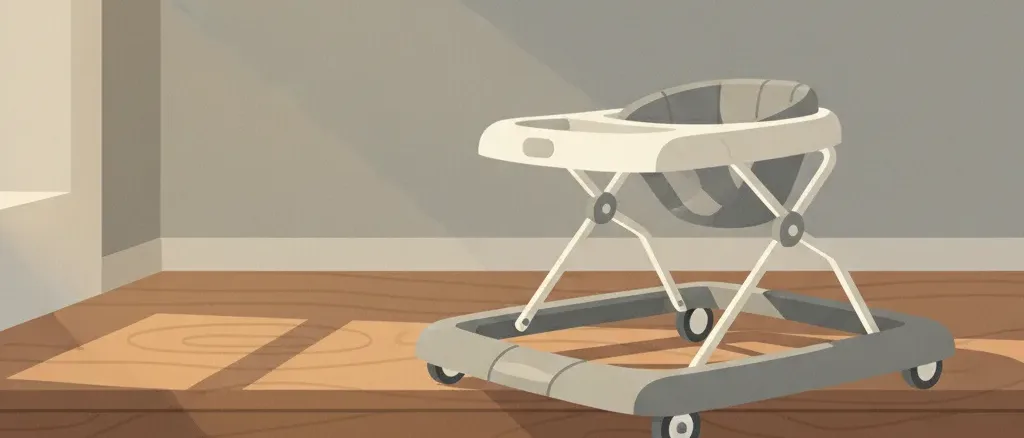
A baby walker positioned at the top of a residential staircase, no child visible, viewed from the side, flat vector illustration in muted tones.

Perceived

The walker-on-stairs image is the canonical visual of this hazard: a wheeled seat with an infant in it, perched at the top step. Most parents have seen it in safety campaigns or warning labels, but the perception is that it is an avoidable edge case rather than the dominant injury mechanism. In Sims et al.'s 25-year US dataset it is the dominant mechanism: roughly three out of four walker injuries are stair falls. The American Academy of Pediatrics and Health Canada both cite stair falls as the specific reason for their ban recommendations.

Rough estimate: ~1 in 10,000 chance per walker-using infant

Source: editorial intuition, not polled

Actual

~1,482 walker stair-fall ER visits in US 2014 for children under 15 months (74.1% of the 2,001 total)

US infants under 15 months exposed to baby walkers, 2014

Show derivation

Sims et al. (2018) reports that 74.1% of walker injuries are stair-related. Applied to the 2014 total of 2,001 ER visits, this gives roughly 1,482 stair-fall ER visits in US children under 15 months in 2014. The denominator of 925,000 walker-using US infants follows the same construction as the sibling entry (baby-walker-injury-any): roughly 25% of the 3.7 million infants in the 0-15 month band. The single largest engineering intervention in this fear's history is the 1997 ASTM F977 voluntary standard requiring either stair-fall brakes or a base width above 36 inches so the walker does not fit through a standard doorway. The 2010 federal mandate made the standard binding. Pre-1997 walkers produced roughly 10x the stair-fall rate of post-2010 compliant units. The uncertainty band is wide because the per-user denominator is an estimate and because compliance with the modern standard varies (secondhand walkers, imported units).

Caveats: The 1,482 numerator is derived: it is 74.1% of the Sims 2018 figure of 2,001 wal…

The 1,482 numerator is derived: it is 74.1% of the Sims 2018 figure of 2,001 walker injuries in 2014. Sims does not publish a stair-fall-specific count by year, so this share is assumed constant across the 25-year window. The denominator of 925,000 is the same estimated walker-using infant population used in the sibling entry; it is not a measured value. The figure does not apply to homes without stairs at all, where the residual risk collapses to tip-overs and reach-related injuries. It also overstates the modern US risk for compliant ASTM F977 walkers, which engineered out the dominant mechanism through stair-fall brakes or oversized bases. Secondhand and imported pre-1997 walkers remain the largest residual risk; these are out of scope of the post-2010 standard. The Petridou 1996 European baseline predates standards reform and reflects mid-1990s walker designs.

Risks at similar odds

Other risks with roughly the same likelihood — useful for calibration.

kids

Baby walker injury

What are the odds an infant in a baby walker is treated in the emergency department for a walker-related injury?

kids

Child window fall

What are the odds of a child being killed or seriously injured by falling from a window or balcony?

kids

Maternal age & birth defects

What are the odds of a baby having a chromosomal disorder based on parental age?
kids

Maternal mortality

What are the odds of dying from pregnancy-related causes?

kids

Untreated childhood flat feet

What are the odds of lasting harm from not treating childhood flat feet?

kids

Untreated childhood scoliosis

What are the odds of serious disability from untreated childhood scoliosis?
kids

Bouncer chair fall

What are the odds an infant in a bouncer chair falls when the chair is placed on an elevated surface?

kids

Toddler stair fall

What are the odds of a toddler suffering serious injury from falling down stairs?

Compare to:

About 74.1% of US walker injuries are stair falls in Sims et al.’s 25-year NEISS dataset. Applied to the 2014 total of 2,001 ER-treated walker injuries, that gives roughly 1,482 stair-fall ER visits for that year. Against a working estimate of 925,000 walker-using US infants, the per-user annual rate is roughly 1 in 625 for a multi-storey home. The mechanism is the canonical walker-injury image: a wheeled seat that fits through a standard doorway, carrying an infant whose centre of gravity sits well above the wheelbase, into a stairwell during a brief inattention window. The AAP and Health Canada both cite this mechanism by name as the reason for their ban positions.

What is interesting about this entry is that the risk is engineered rather than behavioural. The 1997 ASTM F977 voluntary standard required either a stair-fall brake or a base width above 36 inches so the walker would not fit through a standard doorway. The 2010 federal mandate made that binding for new US units. Stair-fall injuries fell roughly 91% between 1990 and 2003 in the Sims data, almost entirely attributable to walkers that physically could not reach the stairwell or could not roll off it. Canada engineered the risk closer to zero by banning the product outright in 2004. The behavioural margin, supervision in the same room, matters but is small compared with removing the mechanism.

The number does not apply equally everywhere. A single-storey home or a correctly fitted stair gate at the top of accessible stairs reduces the stair-fall pathway by roughly 20x. A pre-1997 walker, often acquired secondhand or imported, restores roughly 10x of the risk because it predates both the brake requirement and the oversized-base requirement. The Petridou et al. (1996) Athens study found 16 walker injuries per 1,000 person-years of walker use, similar to the pre-standards US figure, and identified stair falls as the dominant mechanism in a European setting too. EU households using EN 1273+A1:2024-compliant walkers retain stability features but not the US/Canadian stair-fall brake.

Claim ledger

Every number below is what each source reported, with the verbatim quote we relied on and how we arrived at our figure. Click any link to verify directly.

  1. [1] Pediatrics (Sims, Chounthirath, Yang, Hodges, Smith) — Infant Walker-Related Injuries in the United States
    Infant Walker-Related Injuries in the United States

    See all 2 Likelier entries citing this source →

    Statistic
    230,676 walker-related ER visits in US children under 15 months over 1990-2014; 74.1% stair falls; 90.6% head/neck injuries; annual injuries fell 22.7% in the 4 years after the 2010 federal mandatory standard
    Excerpt
    “"An estimated 230,676 children <15 months of age were treated in US emergency departments for an infant walker-related injury from 1990 through 2014. Most of the children sustained head or neck injuries (90.6%) and 74.1% were injured by falling down the stairs in an infant walker. Among patients who were admitted to the hospital (4.5%), 37.8% had a skull fracture... The average annual number of injuries decreased by 22.7% during the 4-year period after the implementation of the federal mandatory safety standard compared with the 4-year period before the standard." ”
    Source data from
    2018-10-01
    Accessed
    2026-05-31 · archived copy
    Calculation
    Sims 2018 is the source of the 74.1% stair-fall share. Applied to the 2014 total of 2,001 walker injuries this gives roughly 1,482 stair-fall ER visits for that year. The 22.7% post-standard decline is the abstract-verifiable headline; the stair-fall-specific decline is larger because the ASTM F977 standard targets the stair-fall mechanism specifically.
  2. [2] Pediatrics (AAP Committee on Injury and Poison Prevention) — Injuries Associated With Infant Walkers
    Injuries Associated With Infant Walkers

    See all 2 Likelier entries citing this source →

    Statistic
    1999: 8,800 ER-treated walker injuries in US children under 15 months. 34 walker-related deaths reported 1973-1998. AAP recommends a ban on manufacture and sale of mobile infant walkers.
    Excerpt
    “"In 1999, an estimated 8800 children younger than 15 months were treated in hospital emergency departments in the United States for injuries associated with infant walkers. Thirty-four infant walker-related deaths were reported from 1973 through 1998... the American Academy of Pediatrics recommends a ban on the manufacture and sale of mobile infant walkers." ”
    Source data from
    2001-09-01
    Accessed
    2026-05-31 · archived copy
    Calculation
    AAP 2001 cites stair falls as the dominant mechanism behind its ban recommendation. The 34 walker-related deaths over 1973-1998 are overwhelmingly stair-fall fatalities; this is the death-count anchor for stair-fall walker injuries as a class.
  3. [3] Government of Canada (Health Canada) — Minister Pettigrew announces ban on baby walkers
    Minister Pettigrew announces ban on baby walkers

    See all 2 Likelier entries citing this source →

    Statistic
    Canada banned sale, advertisement and importation of baby walkers effective April 2004; Health Canada cites stair-fall head injuries as the specific mechanism
    Excerpt
    “"Health Minister Pierre Pettigrew today announced the Government of Canada's immediate prohibition of the sale, advertisement and importation of baby walkers in Canada... 'Canada is the first country in the world to ban the sale of these products.'... Typically, incidents linked to baby walkers involve head injuries that result from falls down stairs." ”
    Source data from
    2004-04-07
    Accessed
    2026-05-31 · archived copy
    Calculation
    Health Canada explicitly names stair-fall head injuries as the cited mechanism for the ban. This is the regulatory anchor for treating the stair-fall pathway as the dominant hazard rather than one of several.
  4. [4] Injury Prevention (Petridou, Simou, Skondras et al.) — Hazards of baby walkers in a European context
    Hazards of baby walkers in a European context
    Statistic
    Athens, May 1994-April 1995: walker-related injury rate of 16 per 1,000 person-years of walker use, equivalent to 3.5 per 1,000 babies per year; falls down stairs the dominant mechanism; peak at 9-10 months
    Excerpt
    “"Baby walkers impart a significant risk of injury from a consumer product that provides no clearly identifiable benefit. The injury rate was 16 per thousand person years of users, or 3.5 per thousand babies per year. The peak age of injury was 9-10 months." ”
    Source data from
    1996-06-01
    Accessed
    2026-05-31 · archived copy
    Calculation
    Petridou 1996 is the canonical European empirical baseline. 16 per 1,000 person-years of walker users corresponds to roughly a 1.6% annual injury rate for active users, consistent with US-era data from the 1990s before standards reform. Useful for cross-Atlantic calibration and as a second authoritative source for the stair-fall mechanism claim.

412 risks with measured probability
1 in 10 1 in 100 1 in 1K 1 in 10K 1 in 100K 1 in 1M 1 in 10M 1 in 100M 1 in 1B certain rarer → Cosmetic surgery abroad risk — 1 in 10 Infant sugar/salt and adult disease — 1 in 10 Endometriosis — 1 in 10 Hair transplant Turkey risk — 1 in 10 Knee replacement — 1 in 10 Chronic painkillers — 1 in 10 Elderly abandonment — 1 in 9.1 Complete tooth loss — 1 in 9.1 Alzheimer's — 1 in 8.3 Sleep deprivation — 1 in 8.3 Smokeless tobacco — 1 in 8.3 Cycling w/o helmet — 1 in 8.0 Bruxism tooth damage — 1 in 7.7 Vision loss — 1 in 6.7 Hernia from lifting — 1 in 6.7 Hip fracture risk — 1 in 6.7 Regular drinking — 1 in 6.7 First heart attack — 1 in 5.9 Infertility — 1 in 5.7 5+ years paid LTC — 1 in 5.6 CTE (football) — 1 in 5.0 Major depression — 1 in 4.9 Hiking injury — 1 in 4.8 Infection from sharing food with child — 1 in 4.2 Lyme disease — 1 in 4.0 Loneliness & health — 1 in 3.8 Job loss & depression — 1 in 3.7 Inheriting AUD risk — 1 in 3.5 Alcohol use disorder — 1 in 3.4 Menopause CV risk acceleration — 1 in 3.0 Silent diabetes — 1 in 3.0 Flying with cold — 1 in 2.9 Tick illness (forest) — 1 in 2.9 Silent high cholesterol — 1 in 2.9 Grandparent loss in childhood — 1 in 2.8 Pacifier floor drop — 1 in 2.8 Drug-resistant infection — 1 in 2.6 No marrow match — 1 in 2.4 Nursing home admission — 1 in 2.2 Skipping dental checkups — 1 in 2.1 False-positive mammogram — 1 in 2.0 Regular smoking — 1 in 2.0 Travelers' diarrhea — 1 in 2.0 Adventure sports — 1 in 1.8 Family caregiver probability — 1 in 1.8 LTC need after 65 — 1 in 1.8 Widowhood probability — 1 in 1.7 Unprotected sex — 1 in 1.5 Silent hypertension — 1 in 1.3 Chronic back pain — 1 in 1.3 Hand hygiene — 1 in 1.0 Cancer (any) — 1 in 7.1 E-scooter no helmet — 1 in 4.5 E-bike no helmet — 1 in 4.0 Mishandled luggage — 1 in 3.7 Deer collision — 1 in 2.7 At-fault injury crash — 1 in 2.5 Flight cancellation — 1 in 1.8 Trip disruption: war or disaster — 1 in 1.7 Home burglary (global) — 1 in 9.1 Hitchhiking assault — 1 in 8.8 Mail check fraud — 1 in 7.7 Child sexual abuse — 1 in 6.8 Stalking — 1 in 6.2 Student sexual assault — 1 in 5.7 Domestic violence — 1 in 3.7 Night walk assault — 1 in 3.6 Bicycle theft — 1 in 2.9 Sexual assault — 1 in 2.9 Home burglary — 1 in 2.6 Sexual harassment (lifetime) — 1 in 1.6 Water scarcity — 1 in 2.5 Carrington-class solar storm — 1 in 1.9 WAIS tipping point — 1 in 1.1 Indoor cat escape harm — 1 in 10 Off-leash dog bite — 1 in 8.9 Rabbit dies in 4 years — 1 in 3.3 Dog bite (non-fatal) — 1 in 1.8 Hamster dies before teenager — 1 in 1.0 Vitamin D gap — 1 in 2.9 Undercooked food — 1 in 1.6 Raw meat cross-contamination — 1 in 1.4 Food left out — 1 in 1.2 AI voice scam — 1 in 2.9 Online scam loss — 1 in 2.5 Teen cyberbullying — 1 in 2.0 Kids & explicit content — 1 in 1.9 Data breach — 1 in 1.1 Miscarriage — 1 in 6.7 Teen suicide attempt — 1 in 5.6 Postpartum depression — 1 in 4.8 Painkiller before infant vaccination — 1 in 3.8 Excessive pregnancy weight — 1 in 2.6 Unvaxxed child & measles — 1 in 2.0 Elder fraud loss — 1 in 10 Pension fund collapse — 1 in 10 Personal bankruptcy — 1 in 10 Housing crash — 1 in 8.3 Crypto total loss — 1 in 6.7 IRS audit — 1 in 6.7 Visa overstay deportation — 1 in 5.6 Long term disability working age — 1 in 4.0 Student loan default — 1 in 3.8 Whistleblower retaliation — 1 in 3.2 Career obsolescence — 1 in 2.9 Forced job exit before retirement — 1 in 2.9 Retirement shortfall — 1 in 2.6 Divorce — 1 in 2.4 Burst pipe damage — 1 in 2.2 Workplace bullying — 1 in 2.1 Deportation (undocumented) — 1 in 1.8 Funeral cost shock — 1 in 1.8 Identity theft — 1 in 1.7 Credit card fraud — 1 in 1.5 School bullying — 1 in 1.5 Insurance claim denial — 1 in 1.4 Frontline soldier casualty — 1 in 1.3 Economic recession — 1 in 1.0 Stock market crash — 1 in 1.0 Hail roof damage — 1 in 3.0 Dry toilet paper harm — 1 in 100 Secondhand smoke — 1 in 91 Gaming disorder (adults) — 1 in 83 High-heel ER visit — 1 in 79 Child throwing object — 1 in 67 Medication reaction — 1 in 58 Cat litter toxoplasmosis — 1 in 48 Mental health LTD claim — 1 in 45 Drug overdose — 1 in 42 Benzo dependence — 1 in 40 Tap water lead — 1 in 40 Medication misuse — 1 in 35 Traumatic brain injury — 1 in 33 Hospital infection — 1 in 31 Air pollution — 1 in 29 End-stage kidney disease — 1 in 29 Traveler's diarrhea (water) — 1 in 26 Skiing injury — 1 in 26 Bipolar disorder — 1 in 23 Dental tourism complication — 1 in 20 Pet parasites — 1 in 20 Undiagnosed ADHD — 1 in 20 Adult-onset food allergy — 1 in 19 Indoor cooking smoke — 1 in 18 Non-Alzheimer's dementia — 1 in 17 Working-age disabling stroke — 1 in 17 Cannabis use disorder — 1 in 16 Stroke — 1 in 15 Parent death/disability — 1 in 14 Severe hearing loss — 1 in 14 Type 2 diabetes — 1 in 13 Appendicitis — 1 in 13 Untreated depression — 1 in 13 Untreated back pain disability — 1 in 13 Heart disease — 1 in 12 Medical error death — 1 in 12 Compulsive sexual behavior — 1 in 12 Eating disorder — 1 in 11 Hip replacement — 1 in 11 Kidney stones — 1 in 11 Sedentary lifestyle — 1 in 11 Salon infection — 1 in 11 Ovarian cancer — 1 in 91 Colorectal cancer — 1 in 77 Breast cancer — 1 in 59 Liver cancer — 1 in 59 Lung cancer — 1 in 56 Prostate cancer — 1 in 50 Melanoma (UV) — 1 in 29 Low-fiber CRC risk — 1 in 23 Red meat & CRC — 1 in 21 Charred meat & cancer — 1 in 20 Maintenance crash — 1 in 83 Driving on sedating meds — 1 in 77 Texting + driving — 1 in 56 Driving after cannabis — 1 in 53 Eating while driving — 1 in 53 Unbelted crash death — 1 in 53 Speeding 20% over limit — 1 in 48 Motorcycle no helmet — 1 in 45 Spaceflight (astronaut) — 1 in 42 Video watching + driving — 1 in 32 Drowsy driving — 1 in 26 E-scooter injury — 1 in 26 Cruise ship norovirus — 1 in 24 Driving at 0.10% BAC — 1 in 16 Catalytic converter theft — 1 in 83 Pickpocketed while traveling — 1 in 38 Stabbed in an assault — 1 in 37 Vehicle theft — 1 in 34 Street robbery / mugging — 1 in 26 Wrongful conviction — 1 in 24 Drink spiking — 1 in 17 Protest under autocracy — 1 in 12 AMOC collapse — 1 in 20 Sting anaphylaxis — 1 in 50 Cat collar injury — 1 in 25 Fish bone injury — 1 in 68 Restaurant food poisoning — 1 in 58 Vegetarian deficiency — 1 in 25 Intimate deepfake — 1 in 25 Social media problematic use — 1 in 13 Infant fall — 1 in 100 Childbirth death (SSA) — 1 in 55 Co-sleeping death — 1 in 43 Toddler stair fall — 1 in 37 Play swing & slide injury — 1 in 33 Autism diagnosis — 1 in 31 C-section complications — 1 in 29 Toy injury requiring ER (child) — 1 in 21 Preeclampsia — 1 in 20 Severe birth tearing — 1 in 17 Gestational diabetes — 1 in 13 Child fall head injury — 1 in 12 Sports betting financial ruin — 1 in 100 Fighter pilot death — 1 in 48 Commercial fishing career death — 1 in 45 Logging career death — 1 in 34 Dying without heir — 1 in 33 Medical bankruptcy — 1 in 25 Compulsive buying disorder — 1 in 20 Rental listing scam loss — 1 in 20 Mortgage foreclosure — 1 in 14 Musculoskeletal LTD claim — 1 in 14 Day-trading losses — 1 in 13 Extremist govt catastrophe — 1 in 13 Hurricane home destruction — 1 in 17 LASIK complications — 1 in 1,000 Infant pool submersion — 1 in 800 MS — 1 in 769 Workplace fatality — 1 in 690 Typhoid fever — 1 in 654 Unsafe imported products — 1 in 565 Brain aneurysm — 1 in 400 COVID-19 — 1 in 400 Fireworks injury — 1 in 385 Sickle cell disease — 1 in 365 Counterfeit medicine — 1 in 361 Spinal cord injury — 1 in 313 Childhood cancer diagnosis — 1 in 285 Next pandemic death — 1 in 208 Dengue (travel) — 1 in 200 Skipping daily showers — 1 in 200 Not scrubbing feet — 1 in 200 Marrow donation risk — 1 in 167 Schizophrenia — 1 in 143 Accidental fall — 1 in 135 Parkinson's — 1 in 125 Sudden death during exercise — 1 in 123 Suicide (US) — 1 in 121 Opioid addiction — 1 in 114 Tuberculosis (global) — 1 in 108 Radon cancer — 1 in 435 Testicular cancer — 1 in 250 Cervical cancer — 1 in 167 Pancreatic cancer — 1 in 125 Pedestrian death — 1 in 806 Motorcycle crash — 1 in 694 Boating drowning — 1 in 685 Driver kills pedestrian — 1 in 552 Phone-distracted walking injury — 1 in 400 EV battery fire — 1 in 333 Cyclist killed by car — 1 in 196 Hand-held phone call + driving — 1 in 143 Petrol car fire — 1 in 125 Self-driving car fatality — 1 in 115 Car crash — 1 in 105 Firefighter duty death — 1 in 455 Police duty death — 1 in 313 Homicide — 1 in 287 Pig-butchering scam — 1 in 106 Extreme heat — 1 in 333 Climate change death — 1 in 204 Swallowed bee/wasp — 1 in 500 Bat bite & rabies — 1 in 238 Mosquito-borne disease — 1 in 190 Food poisoning (global) — 1 in 317 Solar panel fire — 1 in 667 Untreated childhood scoliosis — 1 in 1,000 Child window fall — 1 in 855 Walker stair fall — 1 in 625 Baby walker injury — 1 in 455 Maternal mortality — 1 in 272 Untreated childhood flat feet — 1 in 250 Maternal age & birth defects — 1 in 200 Child death (<18) — 1 in 143 Caving career death — 1 in 167 EMS duty death — 1 in 794 Civilian war casualty — 1 in 499 Soldier in combat — 1 in 270 Mining career death — 1 in 214 Gambling financial ruin — 1 in 159 Wildfire home destruction — 1 in 120 Lightning home fire — 1 in 105 Malaria (travel) — 1 in 10,000 Infection from shared drink — 1 in 10,000 Chagas disease — 1 in 8,475 Wild berry fox tapeworm — 1 in 8,475 Schistosomiasis death — 1 in 6,667 Sudden death (young adult) — 1 in 3,922 Unsafe wiring — 1 in 3,390 Sepsis from wound — 1 in 2,857 Anesthesia awareness — 1 in 2,500 Heat stroke (outdoor) — 1 in 1,905 House fire — 1 in 1,818 Rabies from dogs — 1 in 1,449 Drowning — 1 in 1,379 Shallow-water diving SCI — 1 in 1,111 Choking — 1 in 1,099 EVALI vaping hospitalization — 1 in 1,064 Betel nut cancer — 1 in 1,290 Blood clot (flight) — 1 in 4,651 Killing a cyclist — 1 in 3,937 Teen road-crash death — 1 in 3,030 Child rear bike seat — 1 in 2,500 Child without restraint — 1 in 2,000 Fatal police encounter — 1 in 4,739 Honor killing — 1 in 2,381 Intimate-partner homicide — 1 in 1,767 Hurricane — 1 in 8,929 Drought famine death — 1 in 6,536 Blizzard death — 1 in 4,367 Earthquake — 1 in 3,802 Dog chocolate death — 1 in 2,000 Food poisoning (US) — 1 in 1,862 Fish mercury — 1 in 1,695 Phone/laptop battery fire — 1 in 1,136 SIDS — 1 in 7,143 Laundry pod ingestion — 1 in 6,494 Untreated infant hip dysplasia — 1 in 5,000 Pool drowning — 1 in 2,299 War (civilian) — 1 in 2,000 Fatal bee/wasp sting — 1 in 76,923 Anesthesia death — 1 in 50,000 Dog hot car death — 1 in 41,667 Anaphylaxis — 1 in 27,548 Chiropractic neck manipulation — 1 in 16,667 CO poisoning — 1 in 14,006 Hepatitis A (travel) — 1 in 12,500 Skipping allergy immunotherapy — 1 in 11,111 Acrylamide & cancer — 1 in 16,667 Bus crash — 1 in 100,000 Plane crash — 1 in 58,824 Child pedestrian (residential) — 1 in 45,455 Railroad crossing death — 1 in 20,704 Child bike trailer — 1 in 14,286 Acid attack — 1 in 89,286 Terrorism — 1 in 77,519 Child stranger abduction — 1 in 38,760 Stranger kidnapping — 1 in 35,211 Dowry death — 1 in 13,158 Accidental gun death — 1 in 11,299 Wildfire — 1 in 100,000 Tornado — 1 in 80,645 Tsunami — 1 in 52,632 Ocean drowning — 1 in 29,155 Flood — 1 in 20,202 Landslide death — 1 in 18,416 Supervolcano eruption — 1 in 12,376 Crocodile attack — 1 in 84,746 Bee sting — 1 in 78,927 Fatal scorpion sting — 1 in 26,110 Plastic container leaching — 1 in 16,949 Infant in car seat — 1 in 64,935 Bouncer chair fall — 1 in 60,606 Toddler choking — 1 in 50,000 Unsupervised infant choking — 1 in 50,000 Magnet ingestion — 1 in 12,048 Snorkeling death — 1 in 21,739 Pet in transport — 1 in 20,000 Landmine or UXO injury — 1 in 14,728 Vaccine reaction — 1 in 763,359 Aluminum & Alzheimer's — 1 in 169,492 Residential gas leak — 1 in 140,845 Child hot car death — 1 in 102,041 Glyphosate & cancer — 1 in 1,000,000 Teflon cookware cancer — 1 in 169,492 Roller coaster injury — 1 in 312,500 Cruise ship accident — 1 in 188,679 Ferry sinking — 1 in 133,333 Turbulence injury — 1 in 114,943 School shooting — 1 in 192,308 Mass shooting — 1 in 113,636 Nuclear accident — 1 in 833,333 Avalanche — 1 in 210,526 Lightning — 1 in 209,205 Snake bite — 1 in 884,956 Spider bite — 1 in 833,333 Hippo attack — 1 in 564,972 Dog bite — 1 in 142,045 Pesticide residue — 1 in 1,000,000 Dirty can illness — 1 in 200,000 PLA bioplastic harm — 1 in 169,492 Charger left plugged in — 1 in 200,000 Infant swing death — 1 in 714,286 Child blind cord strangulation — 1 in 416,667 Child plastic bag suffocation — 1 in 263,158 Button battery — 1 in 250,000 Inclined sleeper death — 1 in 238,095 Elevator/escalator death — 1 in 188,324 Japanese encephalitis (travel) — 1 in 2,000,000 Kid + front airbag — 1 in 10,000,000 Asteroid impact — 1 in 1,351,351 Banana spider eggs — 1 in 10,000,000 Shark attack — 1 in 5,681,818 Bear attack — 1 in 3,787,879 Wild berry poisoning — 1 in 2,222,222 Space debris hits property — 1 in 10,000,000 Piranha attack — 1 in 135,135,135 Phone at gas pump — 1 in 1,000,000,000 Phone on plane — 1 in 1,000,000,000 Alien contact — 1 in 169,491,525
Lottery jackpot 1 in 95,238