Evidence quality 4.5/5
Eight-dimension review score against the quality rubric . Each dimension scored 1–5.
- D1 Source grounding
- 5/5
- D2 Source authority
- 5/5
- D3 Arithmetic
- 4/5
- D4 Uncertainty
- 4/5
- D5 Scope
- 5/5
- D6 Prose
- 4/5
- D7 Perception honesty
- 4/5
- D8 Caveat completeness
- 5/5
● your factors — click this risk ▾ to reveal
- Your factors
≈ As likely as

Perceived
Car-seat asphyxia is one of the quieter items on the new-parent fear list, usually surfacing around the first long drive or the first naptime in a bucket seat. The mental model most parents carry is that a sleeping infant in a reclined rear-facing seat could let their chin fall to their chest, block the airway, and be found unresponsive before the driver notices in the mirror. The fear is specific, posture-driven, and rarely broken out separately from the broader food-choking and SIDS conversations even though it has its own distinct surveillance literature.
Rough estimate: Most parents have no specific number; the fear is vivid but unquantified
Source: editorial intuition, not polled
Actual
~30 US infant sitting-device asphyxia deaths per year (2004-2014)
US infants, sleep-related deaths in sitting/carrying devices (car seats, bouncers, swings, strollers, slings)
Show derivation
Scope is the first two years of life per US live-born infant, not US-adult-lifetime. Liaw et al. (Pediatrics 2019) reviewed 11,779 US sleep-related infant deaths from 2004 through 2014 and found 348 (3.0%) occurred in sitting or carrying devices — roughly 32 such deaths per year across the surveillance window. Batra et al. (J Pediatr 2015), working from the US Consumer Product Safety Commission database, documented 47 fatalities in sitting and carrying devices over 2004-2008, 31 of them in car seats, with asphyxia as the mechanism in all but one case. Against roughly 3.6-4.0 million US live births per year, 32 deaths per year is about 8 per million infants per year. Compounded across the first two years of life (1 - (1 - 8e-6)^2 ≈ 1.6e-5), that is roughly 1 in 65,000 per infant during the 0-2 window. The overwhelming majority of these deaths — per Liaw et al., more than 90% — occurred when the car seat was NOT being used as directed, typically placed on a bed, couch, or floor with the infant sleeping unbuckled or loosely strapped rather than secured in a moving vehicle. Restricting the headline to strictly in-vehicle, correctly-buckled use drops the rate by roughly an order of magnitude. The uncertainty band brackets the narrower car-seat-only subset (≈1 in 130,000) and the wider all-sitting-device umbrella used here (≈1 in 65,000).
Caveats: The headline per-infant figure combines all sitting and carrying devices — car s…
The headline per-infant figure combines all sitting and carrying devices — car seats, bouncers, swings, strollers, and slings — because the peer-reviewed surveillance data (Liaw 2019, Batra 2015) counts them as a single mechanism-of-death category. Parents asking specifically about a reclined rear-facing car seat during a drive are inside a much narrower subset: Liaw et al. found fewer than 10% of these deaths involved a car seat used as directed, and more than half occurred at the child's home rather than in a moving vehicle. The dominant mechanism is positional asphyxia from chin-to-chest slumping in an unbuckled or loosely-strapped infant, with a second mechanism (strap strangulation, ~52% of car-seat cases in Batra et al.) that is distinct from choking on food or bedding. This entry excludes food-related choking in car seats — that risk lives in the toddler-choking-while-eating page — and excludes SIDS/SUID deaths in cribs and adult beds, which are coded separately and dominate the overall sleep-related infant mortality count. Mean elapsed time between the infant last being seen and being found unresponsive in Batra's car-seat cases was 140 minutes, which is the single most useful operational fact for parents trying to understand the supervision dimension of the risk.
How the risk varies
The headline figure averages across very different situations. Here’s how the probability varies by scenario or context:
1 in 64,935
~32 deaths per year across car seats, bouncers, swings, strollers, and slings combined, compounded across the first two years of life.
1 in 100,000
~20 car-seat deaths per year (62.9% of the Liaw et al. sitting-device total), compounded across the first two years of life. Most occur with the seat placed outside the vehicle on a bed, couch, or floor.
1 in 1,000,000
Liaw et al. found that fewer than 10% of car-seat sleep deaths involved seats used as directed. Restricting to correctly-used in-vehicle cases drops the per-infant rate by roughly an order of magnitude, into the "rounds down to zero for most parents" band.
Bar length and shade rank these scenarios against each other, not against other risks. The exact odds are shown beside each.
Related risks
Other risks on similar themes — for exploring related fears.


Unsupervised infant choking
What are the odds of a choking emergency if an infant eats unsupervised?

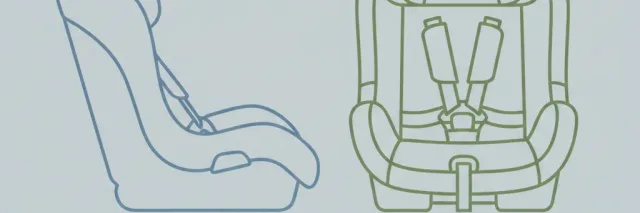
Forward-facing toddler death
Is a forward-facing toddler really more likely to die in a car crash?
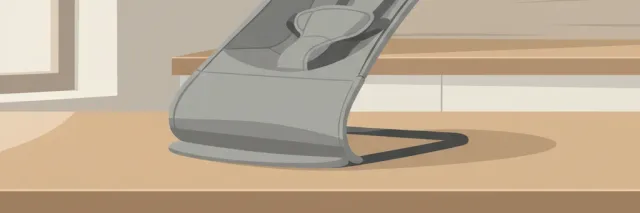
Bouncer chair fall
What are the odds an infant in a bouncer chair falls when the chair is placed on an elevated surface?


Inclined sleeper death
What were the odds an infant placed in an inclined sleeper (Rock 'n Play and similar) died from positional asphyxia?

Infant swing death
What are the odds an infant in a powered swing or rocker dies from strangulation or suffocation?
Pick challenger
About 32 US infants per year die in sitting or carrying devices — car seats, bouncers, swings, strollers, and slings combined — according to Liaw and colleagues in Pediatrics (2019), who reviewed 11,779 sleep-related infant deaths in the National Center for Fatality Review and Prevention files for 2004 through 2014 and found that 3.0% of those deaths (348 cases) occurred in sitting devices. Roughly 63% of the sitting-device subset — about 20 deaths per year — involved car safety seats specifically. Against a US birth cohort near 3.8 million, that works out to a per-infant probability on the order of 1 in 65,000 across the first two years of life for all sitting devices, or about 1 in 100,000 for car seats alone. Both numbers sit an order of magnitude below the narrowly-classified SIDS rate and roughly 25 times below the full SUID umbrella.
The important finding is not the headline — it is the usage pattern under it. Liaw et al. reported that in the car-seat deaths they reviewed, the seat was used as directed in fewer than 10% of cases, and more than half of those deaths occurred at the child’s home rather than in a moving vehicle. Batra, Midgett, and Moon had reached the same conclusion in the Journal of Pediatrics four years earlier from a different dataset: of 47 CPSC-reported infant and toddler sitting-device deaths between 2004 and 2008, 31 were in car seats, asphyxiation was the mechanism in all but one, and 52% of the car-seat cases were strap strangulation from unbuckled or partially buckled harnesses rather than the chin-to-chest positional asphyxia most parents picture. The mean elapsed time between the infant last being seen and being found unresponsive in Batra’s car-seat cases was 140 minutes, which is the operational number behind the recommendation that infants not be left asleep in a car seat outside of active supervised travel.
The heterogeneity is the whole story. A rear-facing infant securely harnessed in a correctly-installed car seat during a supervised drive is inside a very narrow subset of the dominator — probably an order of magnitude safer than the already-small headline number. An infant sleeping unbuckled in a car seat that has been lifted out of its base and placed on a couch, bed, or floor is carrying most of the risk the surveillance data captures. Likelier tags this entry calibrated rather than debunked because the arithmetic is small but the mechanism is real and the behavioural gradient between “correct in-vehicle use” and “household sleeper” is steep enough to move individual cases across roughly two orders of magnitude. For specific restraint, positioning, and supervision guidance, the peer-reviewed AAP sources linked above are the right place to read next.
Related tidbits
An infant's odds of dying in a sitting or carrying device are about 1 in 65,000 across the first two years. In the surveillance data, more than 90% of these deaths happened with the seat used off-label as a bed or couch perch, not buckled in a moving car.
Claim ledger
Every number below is what each source reported, with the verbatim quote we relied on and how we arrived at our figure. Click any link to verify directly.
2/3 sources independently verified verbatim against the cited source
-
[1] Pediatrics — Liaw P, Moon RY, Han A, Colvin JD — Infant Deaths in Sitting Devices Verified
Infant Deaths in Sitting Devices- Statistic
348 of 11,779 US sleep-related infant deaths (3.0%) occurred in sitting devices, 2004-2014; 62.9% of those in car safety seats; car seat used as directed in <10% of cases; 81.9% had ≥1 risk factor- Excerpt
“"Of 11 779 infant sleep-related deaths, 348 (3.0%) occurred in sitting devices. Of deaths in sitting devices, 62.9% were in CSSs, and in these cases, the CSS was used as directed in <10%. [...] 81.9% had ≥1 risk factor, and 54.9% had ≥2 risk factors. [...] Using CSSs for sleep in nontraveling contexts may pose a risk to the infant." ”
- Source data from
- 2019-07-01
- Accessed
- 2026-04-11 · archived copy
- Verification
- Excerpt independently re-fetched and confirmed word-for-word against the cited source during our grounding audit.
- Calculation
- 348 sitting-device deaths / 11 surveillance years ≈ 31.6 deaths per year. Against ~3.8 million US live births per year during the 2004-2014 window, that is roughly 8.3 per million infants per year. Compounded across the 0-2 window (1 - (1 - 8.3e-6)^2 ≈ 1.66e-5), the per-infant probability of dying in a sitting or carrying device between birth and age two works out to roughly 1 in 60,000-65,000. The "<10% used as directed" figure is the empirical basis for the personal factor multipliers and for treating correct in-vehicle use as an order-of-magnitude risk reducer.
- Independence
- Liaw et al. draws from the National Center for Fatality Review and Prevention CDR files, which are fed in part by state death-certificate records (overlapping with CDC NCHS). Batra et al. uses the separate CPSC product-incident database; treat Liaw as the primary peer-reviewed anchor and Batra as the complementary surveillance stream with different inclusion criteria.
-
[2] Journal of Pediatrics — Batra EK, Midgett JD, Moon RY — Hazards Associated with Sitting and Carrying Devices for Children Two Years and Younger Verified
Hazards Associated with Sitting and Carrying Devices for Children Two Years and Younger- Statistic
47 US infant/child deaths in sitting and carrying devices reported to CPSC, 2004-2008; 31 in car seats; asphyxiation in all but one case; 52% of car seat deaths from strap strangulation, rest from positional asphyxia- Excerpt
“"A retrospective review of deaths involving sitting and carrying devices (car seats, bouncers, swings, strollers, and slings) reported to the US Consumer Product Safety Commission between 2004 and 2008. [...] Of the 47 deaths, 31 occurred in car seats, 5 in slings, 4 each in swings and bouncers, and 3 in strollers. [...] The cause of death was asphyxiation in all cases except one. Fifty-two percent of deaths in car seats were attributed to strangulation from straps; the others were attributed to positional asphyxia. [...] Infants and children 2 years of age and younger should be properly restrained and not be left unsupervised in sitting and carrying devices." ”
- Source data from
- 2015-07-01
- Accessed
- 2026-04-11 · archived copy
- Verification
- Excerpt independently re-fetched and confirmed word-for-word against the cited source during our grounding audit.
- Calculation
- Batra et al. draw from the CPSC product-incident database, which captures a different subset of deaths than the National Center for Fatality Review and Prevention file Liaw et al. analyse. The 47 deaths / 4.7 years ≈ 10 CPSC-reported deaths per year understates the true total because not every infant asphyxia death is reported to CPSC as a product incident. Used as an independent cross-check and as the authoritative source for the mechanism split (strap strangulation vs positional asphyxia) and for the mean 140-minute elapsed-time window between the infant last being seen and being found unresponsive.
- Independence
- Batra draws from CPSC's product-incident reporting system; Liaw draws from the National Center for Fatality Review and Prevention's CDR files. The two datasets have different inclusion criteria and only partially overlap, so they function as complementary surveillance streams rather than two independent counts of the same deaths.
-
[3] US Centers for Disease Control and Prevention (CDC) — Data and Statistics for SUID and SIDS
Data and Statistics for SUID and SIDSSee all 3 Likelier entries citing this source →
- Statistic
~3,700 US sudden unexpected infant deaths in 2022 (SIDS, accidental suffocation and strangulation in bed, and unknown cause)- Excerpt
“"In 2022, there were about 3,700 sudden unexpected infant deaths (SUID) in the United States. These deaths occur among infants less than 1 year old and have no immediately obvious cause. [...] 1,529 deaths from SIDS [...] 1,131 deaths from unknown causes [...] 1,040 deaths from accidental suffocation and strangulation in bed." ”
- Source data from
- 2024-04-01
- Accessed
- 2026-04-11 · archived copy
- Calculation
- Anchors the sitting-device subset inside the broader sudden unexpected infant death (SUID) umbrella. The Liaw et al. figure of ~32 sitting-device deaths per year is on the order of 1% of all SUID deaths in a given year, which is why this fear is real but small relative to the SIDS / ASSB bulk of the sleep-related infant death count. Used as the denominator context for comparison_anchors and to position the sitting-device subset against the full SUID umbrella.
- Independence
- CDC NCHS mortality data partly feeds the Liaw et al. case-file data, so the three sources here form a linked chain rather than three fully independent counts. Treated as complementary views of overlapping surveillance streams.