Evidence quality 4.63/5
Eight-dimension review score against the quality rubric . Each dimension scored 1–5.
- D1 Source grounding
- 4/5
- D2 Source authority
- 5/5
- D3 Arithmetic
- 5/5
- D4 Uncertainty
- 4/5
- D5 Scope
- 5/5
- D6 Prose
- 5/5
- D7 Perception honesty
- 5/5
- D8 Caveat completeness
- 4/5
● your factors — click this risk ▾ to reveal
- Your factors
≈ As likely as
Perceived
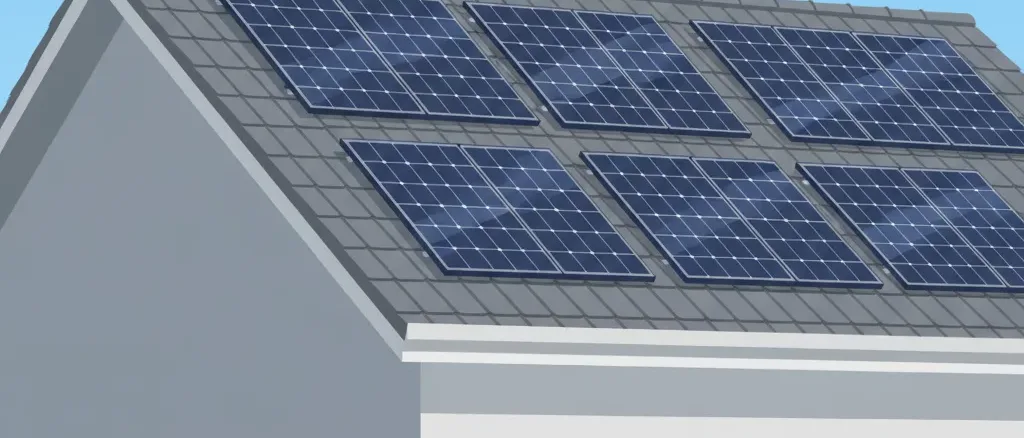
Solar panel fire anxiety has grown alongside adoption. News coverage of rooftop fires, insurance premium debates, and high-profile recalls (GAF Energy shingles, Siemens meter combos) contribute to a sense that photovoltaic systems are a smouldering risk bolted to the roof. The fact that DC systems remain energized whenever sunlight hits them -- and that firefighters must account for electrocution risk -- amplifies the perceived danger. Some homeowners and insurers treat solar as a meaningful increment to household fire risk.
Rough estimate: ~1-5% chance of a fire over the system's lifetime
Source: editorial intuition, not polled
Actual
~1 residential fire per 17,500 residential solar installations per year (0.006%)
UK residential solar installations, QBE FOI analysis of 37/49 fire services (2024); 97 of 171 total fires were residential
Show derivation
QBE Insurance's 2025 FOI analysis of 37 of 49 UK fire services found 171 solar panel fire incidents in 2024 across ~1.7 million installations. Of these, 97 were residential fires (the remainder were commercial, industrial, or solar farm incidents). Using residential fires only: 97 / 1,697,231 = 0.0057%, or ~1 in 17,500 per year. The Fraunhofer ISE / TUV Rheinland 2013 study of 1.3 million German systems found 0.006% caused fires with "large damage" (~1 in 16,700) — closely matching the residential-only QBE figure. We use the residential-only QBE figure (6 per 100,000) as the primary estimate. Over a 25-year system lifetime (typical warranty period): 1 - (1 - 0.00006)^25 = 0.0015, or ~0.15%. For context, the annual probability of any house fire from all causes is ~0.24% (NFPA/USFA), meaning solar adds roughly a 4% relative increase to baseline household fire risk. Solar fires are 25-40x less likely per year than a general house fire and do not appear on any top-10 list of domestic fire causes. Australian data shows just 1.5% of residential fires were linked to solar PV systems. The BRE (UK government) study of 80+ incidents found installation error (36%) and faulty products (12%) as the top attributable causes, with 47% undetermined. Note: The primary fire rate (1 in 10,000 per year) is derived from UK data and is used as a proxy; US-specific solar panel fire rates may differ due to differences in installation standards, climate exposure, installer certification requirements, and the age profile of the installed fleet.
Caveats: The QBE data covers only 37 of 49 UK fire services, so the true incident count i…
The QBE data covers only 37 of 49 UK fire services, so the true incident count is higher. The annual rate of ~1 in 10,000 is a UK figure that may not perfectly generalize to the US, where installation standards, climate, and installer certification requirements differ. The Fraunhofer figure of 0.006% uses a stricter threshold ("large damage") and is from 2013 when the fleet was younger. Solar fire rates may increase as early installations age and components degrade. Modern systems with AFCI protection and microinverters are likely substantially safer than string-inverter systems from 2010-2015. The 0.15% lifetime figure assumes a constant annual rate over 25 years, which may understate risk for older systems. Most solar fires cause property damage, not injury or death; the fatality rate from PV fires is not separately tracked but appears very low.
Related risks
Other risks on similar themes — for exploring related fears.


Lightning home fire
What are the odds that lightning will cause a fire in your home during your lifetime?


Baby walker injury
What are the odds an infant in a baby walker is treated in the emergency department for a walker-related injury?

Child window fall
What are the odds of a child being killed or seriously injured by falling from a window or balcony?

Infant fall
What are the odds of serious injury when an infant falls from furniture (sofa, bed, changing table)?
Pick challenger
UK fire services responded to 171 solar panel fires in 2024 (97 of them residential) across roughly 1.7 million residential installations — about one every two days, yielding an annual rate of roughly 1 in 17,500 for residential buildings (0.006%). Fraunhofer ISE and TUV Rheinland studied 1.3 million German systems and found a closely matching rate of 0.006% for fires causing significant damage. Over a 25-year system lifetime, the cumulative probability works out to about 0.15% — a small fraction of the annual probability of any house fire from all causes combined (~0.24%).
The root cause data tells a workmanship story, not a technology story. The BRE’s forensic investigation of 80+ UK incidents attributed 36% to installation error (loose connectors, wrong crimping tools, incompatible components), 12% to faulty products, and 5% to system design. DC isolators and connectors were the most common failure points. A properly installed system with arc fault protection and quality components has a fire risk that Fraunhofer concluded was “no greater than that presented by other electrical installations in the household.” The risk concentrates in cut-rate installations and aging systems that have never been inspected.
For perspective, solar adds roughly a 4% relative increase to a home’s baseline fire risk. Cooking causes roughly half of all US house fires (NFPA), with heating equipment and electrical distribution and lighting well behind it. Solar panels do not appear on any published top-10 list of domestic fire causes. The perception gap is driven by the novelty of the technology and the visceral image of a fire on a roof that cannot simply be disconnected — DC circuits stay energized whenever the sun shines, which complicates firefighting but does not change the probability of ignition.
Related tidbits
A residential solar system carries roughly a ~0.15% cumulative probability of a fire over a 25-year system lifetime, about 1 fire per 17,500 installations a year. Owners who worry tend to guess a 1 to 5% chance, an order of magnitude higher than the record.
Claim ledger
Every number below is what each source reported, with the verbatim quote we relied on and how we arrived at our figure. Click any link to verify directly.
2/3 sources independently verified verbatim against the cited source
-
[1] QBE Insurance (FOI analysis of UK fire services) — UK fire services tackle a solar panel fire every two days Verified
UK fire services tackle a solar panel fire every two days- Statistic
171 solar panel fire incidents in 2024 across ~1.7 million UK installations; 60% increase since 2022 (107 incidents)- Excerpt
“"Freedom of Information data from 37 of 49 UK fire and rescue services revealed 171 solar panel fire incidents in 2024, up from 128 in 2023 and 107 in 2022. Fires rose 60 percent over two years, outpacing the 29.6 percent growth in installations." ”
- Source data from
- 2025-11-01
- Accessed
- 2026-04-24 · archived copy
- Verification
- Excerpt independently re-fetched and confirmed word-for-word against the cited source during our grounding audit.
- Calculation
- 171 total solar fires reported (37/49 fire services), of which 97 were residential. 97 / 1,697,231 UK residential installations = 0.0057% or ~1 in 17,500 per year. Only 37 of 49 fire services responded, so the true UK total is likely higher; but we use the unadjusted residential-only figure. The 60% increase in fires vs 30% increase in installations suggests a worsening per-unit rate, possibly due to aging of earlier installations or quality issues in the installation boom.
-
[2] Fraunhofer ISE / TUV Rheinland — Fire Protection in Photovoltaic Systems: Facts Replace Fiction Verified
Fire Protection in Photovoltaic Systems: Facts Replace Fiction- Statistic
0.006% of 1.3 million German PV systems caused fires with large damage (~1 in 16,700 annually)- Excerpt
“"Of the 1.3 million photovoltaic systems installed in Germany, approximately 0.006 percent have caused a fire involving large-scale damage. The risk posed by PV systems is no greater than that presented by other electrical installations in the household." ”
- Source data from
- 2013-06-01
- Accessed
- 2026-04-24 · archived copy
- Verification
- Excerpt independently re-fetched and confirmed word-for-word against the cited source during our grounding audit.
- Calculation
- Fraunhofer ISE and TUV Rheinland jointly studied fire risk across the German PV fleet (then the world's largest). The 0.006% figure uses a stricter "large damage" threshold than the QBE data, explaining the lower rate. The study concluded that PV fire risk is comparable to other household electrical installations, not elevated above baseline. Germany's electrical safety standards and installer certification requirements may contribute to a lower rate than in countries with less regulated installation markets.
-
[3] BRE / UK Department for Communities and Local Government — Fire and Solar PV Systems: Investigations and Evidence
Fire and Solar PV Systems: Investigations and Evidence- Statistic
Of 80+ investigated incidents: 36% caused by installation error, 12% by faulty products, 5% by system design, 47% undetermined; DC isolators and connectors were the most common failure points- Excerpt
“"Installation error accounted for 36 percent of incidents where a root cause could be determined. Faulty products accounted for 12 percent and system design 5 percent. In 47 percent of cases the root cause could not be determined. DC isolators and DC connectors were the most frequent component failure points." ”
- Source data from
- 2017-01-01
- Accessed
- 2026-04-24 · archived copy
- Calculation
- The BRE study is the only government-commissioned forensic investigation of solar PV fire causes. The 36% installation-error finding is critical: it means the single largest controllable risk factor is workmanship, not inherent technology risk. DC isolators (18 incidents) and connectors (10 incidents) were the most common failure points. Incompatible MC4-compatible connectors from different manufacturers remain a persistent industry problem. The 47% undetermined rate reflects the difficulty of post-fire forensic analysis on rooftop systems.