Evidence quality 4.38/5
Eight-dimension review score against the quality rubric . Each dimension scored 1–5.
- D1 Source grounding
- 4/5
- D2 Source authority
- 5/5
- D3 Arithmetic
- 3/5
- D4 Uncertainty
- 4/5
- D5 Scope
- 5/5
- D6 Prose
- 5/5
- D7 Perception honesty
- 4/5
- D8 Caveat completeness
- 5/5
● your factors — click this risk ▾ to reveal
- Your factors
≈ As likely as
Perceived
Problematic social media use occupies an unusual position in the public risk landscape: it is simultaneously over-discussed in the media and under-estimated in terms of clinical prevalence. Parents, educators, and policymakers focus heavily on adolescent risk, often underweighting the proportion of adults who also meet problematic-use thresholds on validated scales. At the same time, the absence of a DSM-5 or ICD-11 diagnosis for social media addiction (in contrast to gaming disorder, which entered ICD-11 as 6C51 in 2022) creates widespread uncertainty about whether the phenomenon is real, exaggerated, or simply heavy use mislabeled as disorder. Popular discourse alternates between treating social media as mildly habit-forming and framing it as an existential crisis for mental health — both positions overshoot what the epidemiological data actually show.
Rough estimate: ~5-15% of adults
Source: editorial intuition, not polled
Actual
~5% of adults meet strict problematic social media use criteria on validated scales (pooled across representative studies; monothetic/strict classification)
adults across multiple countries (meta-analytic pooled estimate using strict/monothetic cut-off classifications)
Show derivation
The pooled prevalence of problematic social media use (PSU) using strict monothetic or severe cut-off criteria on validated scales (primarily the Bergen Social Media Addiction Scale, BSMAS) is approximately 5% (95% CI: 3%–7%) in representative adult samples, based on meta-analytic synthesis. Using moderate cut-off or polythetic criteria raises this to approximately 13-25%. We use the 5% strict-criteria figure as the native rate. For lifetime normalization, we apply a modest upward adjustment from the point-prevalence 5%: problematic social media use patterns are dynamic — individuals cycle in and out of problematic use over a lifetime, particularly as platforms and life circumstances change — so a larger share of adults will meet criteria at some point across a lifetime than at any single measurement. A lifetime_us_adult of 0.08 (8%) reflects a conservative 1.6x multiplier on the point prevalence, acknowledging that the cumulative lifetime fraction exceeds the cross-sectional rate. The uncertainty range (0.04–0.15) spans from a strict-criteria lower bound close to the point-prevalence floor to the moderate-criteria upper bound, given the substantial instrument-dependence of the estimate.
Caveats: Problematic social media use (PSU) is not listed in DSM-5 and does not appear in…
Problematic social media use (PSU) is not listed in DSM-5 and does not appear in ICD-11 as of 2026. Internet Gaming Disorder entered ICD-11 (6C51) in 2022; social media use did not receive analogous recognition, reflecting ongoing scientific debate about whether the evidence base meets the threshold for a formal disorder category. All prevalence estimates here are based on validated scale scores (primarily BSMAS), not clinical diagnoses. The prevalence estimate is extremely sensitive to the cut-off or classification scheme used: strict monothetic criteria yield approximately 5%, while moderate polythetic criteria yield approximately 25% in the same underlying data. The lifetime_us_adult figure (0.08) involves a cross-sectional-to-lifetime extrapolation for which no longitudinal data currently exist. BSMAS studies are predominantly from non-US populations and from younger adult samples; US-specific representative adult data are limited. The concept of "social media addiction" remains contested — some researchers argue that high use reflects platform design incentives rather than individual pathology, and that addiction framing may stigmatize ordinary behavior.
Related risks
Other risks on similar themes — for exploring related fears.


Compulsive sexual behavior
What are the odds of developing compulsive sexual behavior disorder?


Intimate deepfake
What are the odds an AI-generated intimate deepfake of you will be created or shared without consent in your lifetime?

Bipolar disorder
What are the odds of developing bipolar disorder at some point in your lifetime?


Major depression
What are the odds of experiencing a major depressive episode in your lifetime?
Decisions this risk informs
Choices that turn on this risk — how people weigh the trade-off.

Pick challenger
Using strict monothetic criteria on validated scales — primarily the Bergen Social Media Addiction Scale (BSMAS) — approximately 5% of adults across studies meet the threshold for problematic social media use (PSU), based on a 2023 meta-analysis of 139 independent samples from 32 countries (n=133,955) published in Drug and Alcohol Dependence. That figure rises to roughly 13% using a severe cut-off and to 25% using moderate polythetic criteria, which is to say: the number produced depends almost entirely on where researchers choose to draw the line. In Western countries — a reasonable geographic proxy for the US — the reported range sits between 1.5% and 15%, bracketing the strict-criteria estimate from below and above. These are scale-positive prevalence figures, not clinical diagnoses; there is no DSM-5 or ICD-11 code for social media addiction, which makes any comparison with formally diagnosed disorders inexact.
The contrast with gaming disorder is instructive. Internet Gaming Disorder entered ICD-11 as code 6C51 in 2022, having accumulated sufficient clinical and epidemiological research to satisfy WHO’s criteria for disorder recognition. Social media use did not receive equivalent recognition in the same revision cycle — the evidence base was judged insufficient or the phenomenology too diffuse to specify. That distinction matters: without a diagnostic code, there is no systematic clinical surveillance, insurance reimbursement for treatment is difficult to arrange, and researchers lack a shared case definition. The BSMAS, developed by Andreassen and colleagues (2016), has become the de facto standard instrument, but cut-off scores remain debated and the scale was not designed as a clinical diagnostic tool.
The 8% lifetime estimate here applies the strict-criteria 5% cross-sectional figure with a conservative upward adjustment for the likelihood that more adults cross a PSU threshold at some point in a lifetime than at any given measurement — PSU patterns are dynamic and platform-dependent. That extrapolation carries real uncertainty, and there are no longitudinal US adult studies that would anchor it precisely. The US-specific evidence base is thin; most BSMAS data come from European, Asian, and Middle Eastern samples. The heavy-use patterns most predictive of PSU (passive scrolling, late-night use, use as primary mood regulation) correlate with depression and anxiety bidirectionally, making causal inference difficult from cross-sectional data. None of this settles the contested framing question — whether PSU reflects individual pathology, platform design optimization for engagement, or ordinary behavioral variation that scale-based measurement systematically medicalizes.
Related tidbits
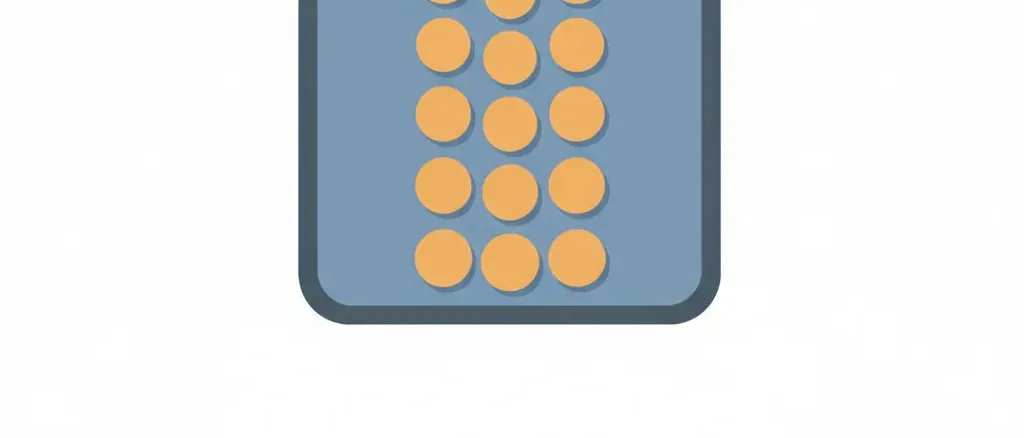
Under strict validated-scale criteria, about ~1 in 12 adults is estimated to meet problematic social media use criteria at some point in a lifetime. There is no formal diagnosis, which leaves the phenomenon both over-discussed and under-measured.
Claim ledger
Every number below is what each source reported, with the verbatim quote we relied on and how we arrived at our figure. Click any link to verify directly.
1/3 sources independently verified verbatim against the cited source
-
[1] Drug and Alcohol Dependence / ScienceDirect — Has the prevalence of problematic social media use increased over the past seven years and since the start of the COVID-19 pandemic? A meta-analysis of the studies published since the development of the Bergen social media addiction scale
Has the prevalence of problematic social media use increased over the past seven years and since the start of the COVID-19 pandemic? A meta-analysis of the studies published since the development of the Bergen social media addiction scale- Statistic
Pooled prevalence of problematic social media use: ~5% (95% CI 3%–7%) using strict/monothetic classifications; 13% using severe cut-off; 25% using moderate cut-off; 139 independent samples, 32 countries, n=133,955- Excerpt
“"The pooled prevalence estimate was 5% (95% CI: 3%–7%) for studies adopting monothetic or strict monothetic classifications, with a higher pooled prevalence estimate (13%; 95% CI: 8%–19%) found for studies adopting a cutoff for severe level or strict polythetic classifications, and 25% (95% CI: 21%–29%) for studies adopting a cutoff for moderate level or polythetic classifications. PSMU as assessed by the BSMAS was significantly higher in low-income countries." ”
- Source data from
- 2023-08-01
- Accessed
- 2026-05-04 · archived copy
- Calculation
- Primary prevalence source. The 5% strict-criteria figure is used as the native rate (numerator=5, denominator=100). The 139-sample meta-analysis (n=133,955) spanning 32 countries provides the most comprehensive synthesis of BSMAS-based PSU prevalence to date. For normalization to lifetime_us_adult=0.08, we apply a conservative upward adjustment from the cross-sectional 5% to account for the dynamic, cyclical nature of PSU over a lifetime (individuals enter and leave problematic use states). The 95% CI range from strict (3%–7%) to moderate (21%–29%) criteria bounds the uncertainty range; we use 4%–15% as the uncertainty bounds to reflect realistic variability in strict-to-moderate definitions for a US adult context.
-
[2] Journal of Behavioral Addictions / PMC — Psychometric properties of the Bergen Social Media Addiction Scale: An analysis using item response theory Verified
Psychometric properties of the Bergen Social Media Addiction Scale: An analysis using item response theory- Statistic
BSMAS-assessed problematic social media use prevalence ranges widely (3.5%–36.9%), with lower rates in Western countries (1.5%–15%) than in Asia (31%) and the Middle East (29%); an item-response-theory analysis proposes a conditional diagnostic cut-off of ≥26 (of 30) for high PSMU risk- Excerpt
“"High disparities in PSMU prevalence have been reported with rates ranging from 3.5% to 36.9%. This difference could be explained by seemingly lower prevalence rates in Western countries (1.5%-15%) compared to those found in Asia (31%) and the Middle East (29%). [...] prior to clinical assessment confirmation, a score of ≥26 could be taken as a conditional diagnostic cut-off point for risk of PSMU." ”
- Source data from
- 2022-12-01
- Accessed
- 2026-05-04 · archived copy
- Verification
- Excerpt independently re-fetched and confirmed word-for-word against the cited source during our grounding audit.
- Calculation
- Supporting source establishing the psychometric properties of the BSMAS, the primary instrument underlying the meta-analytic estimates in the primary source. This item-response- theory analysis documents the extreme cross-study disparity in PSMU prevalence (3.5%–36.9%), with markedly lower rates in Western countries (1.5%–15%) than in Asia (31%) or the Middle East (29%) — context for why the strict-criteria 5% native figure is conservative for a US adult population. It also proposes a high-risk cut-off of ≥26 (only 1.1% of its sample scored at or above this threshold). This source establishes that BSMAS is not a clinical diagnostic instrument — it measures scale-positive problematic use, not a recognized DSM-5 or ICD-11 disorder.
-
[3] Drug and Alcohol Dependence / PubMed — Prevalence of social media addiction across 32 nations: Meta-analysis with subgroup analysis of classification schemes and cultural values
Prevalence of social media addiction across 32 nations: Meta-analysis with subgroup analysis of classification schemes and cultural values- Statistic
Pooled social media addiction prevalence varies by classification scheme: 5% (95% CI 3%–7%) strict/monothetic, 13% (8%–19%) severe, 25% (21%–29%) moderate/polythetic; 14% (9%–19%) in individualist nations vs 31% (26%–36%) in collectivist nations; 63 independent samples, 34,798 respondents, 32 nations- Excerpt
“"The meta-analysis involved 63 independent samples with 34,798 respondents from 32 nations spanning seven world regions. [...] the pooled prevalence estimate obtained in collectivist nations (31%; 95% CI: 26%-36%) to be twofold higher than that obtained in individualist nations (14%; 95% CI: 9%-19%)." ”
- Source data from
- 2021-04-01
- Accessed
- 2026-05-04 · archived copy
- Calculation
- Earlier meta-analysis (Cheng et al. 2021; 63 independent samples, 34,798 respondents, 32 nations) reporting prevalence by classification scheme: 5% (strict/monothetic), 13% (severe), and 25% (moderate/polythetic). The 14% figure for individualist nations (which better approximates the US context) provides an upper-bound anchor, and the 5% strict-monothetic figure corroborates the strict-criteria native rate. The roughly fivefold spread across classification schemes illustrates the extreme instrument-dependence of PSU estimates. This source is used to contextualize the strict-criteria 5% native figure within the broader evidence base — demonstrating that the estimate is highly sensitive to measurement choice.