Evidence quality 4.75/5
Eight-dimension review score against the quality rubric . Each dimension scored 1–5.
- D1 Source grounding
- 5/5
- D2 Source authority
- 5/5
- D3 Arithmetic
- 4/5
- D4 Uncertainty
- 5/5
- D5 Scope
- 5/5
- D6 Prose
- 5/5
- D7 Perception honesty
- 4/5
- D8 Caveat completeness
- 5/5
● your factors — click this risk ▾ to reveal
- Your factors
≈ As likely as

Perceived
Dengue sits in a strange corner of the traveler’s risk imagination. Most Likelier readers heading to Bali or Cancun don’t carry a specific fear of dengue the way they carry a specific fear of malaria or Japanese encephalitis; they carry a vague “tropical mosquito disease” worry that folds dengue, chikungunya, Zika, and malaria into one bucket. That intuition is roughly calibrated for the wet-season urban traveler — symptomatic attack rates on a two-week trip to peak-season Southeast Asia or the Caribbean sit in the low-single-digit-per-thousand range, which is neither negligible nor alarming. We haven’t found a rigorous recent survey that isolates “fear of catching dengue on a trip” from general travel-health anxiety, so the perceived side of this entry is marked as editorial intuition rather than polled data.
Rough estimate: most travelers file dengue under 'tropical mosquito disease, unlikely but real'
Source: editorial intuition, not polled
Actual
~1 in 200 per 2-week trip to an endemic region in peak transmission season
reference traveler: 2-week leisure visit to a dengue-endemic urban area during peak transmission season
Show derivation
The headline is an order-of-magnitude estimate for a reference traveler: a two-week leisure visit to a dengue-endemic urban area (Southeast Asia wet season or Caribbean / Latin America peak season), with baseline precautions but no vaccine. It is NOT a lifetime figure for a US adult; travel dengue risk is overwhelmingly a per-trip, per-destination, per-season question, so this entry uses scope “activity_specific_lifetime” to mean “per traveler-trip.” Off-peak travel to the same destinations is roughly an order of magnitude lower. An estimated 40–80% of dengue infections are asymptomatic (CDC Yellow Book), so the true infection rate is higher than the symptomatic attack rate this figure represents — but asymptomatic infections still count toward the antibody-dependent enhancement (ADE) risk on a future trip, which is why the personal_factor_multipliers call out prior infection. Severe dengue occurs in roughly 5% or fewer of symptomatic cases (CDC Yellow Book); per-trip severe-dengue risk is therefore on the order of 1 in 4,000 at the headline figure, and per-trip mortality is lower still given modern supportive care. The uncertainty band reflects the spread across destinations, seasons, and serosurvey-vs-case-report methodology.
Caveats: The headline ~1-in-200 per-trip figure is an order-of-magnitude estimate for a t…
The headline ~1-in-200 per-trip figure is an order-of-magnitude estimate for a two-week leisure stay in a peak-season endemic urban area, not a precise rate. True attack rates vary by country, city, neighborhood, accommodation type, month, and prevailing serotype, and published traveler serostudies span roughly 0.2–2% per two-week trip depending on destination. An estimated 40–80% of dengue infections are asymptomatic, so the true infection rate is substantially higher than the symptomatic attack rate represented here; asymptomatic infections still carry forward the antibody-dependent enhancement (ADE) risk profile for any future trip, which is the main reason a “I had it once and it was nothing” traveler should not treat that as reassurance. Severe dengue (dengue hemorrhagic fever / dengue shock syndrome) occurs in up to 5% of symptomatic cases per CDC Yellow Book, with a lower ~0.45% figure specifically in GeoSentinel travelers who have access to modern supportive care (Huits et al. 2023). This entry measures the probability of contracting dengue, not of dying from it: per-trip mortality is roughly two orders of magnitude lower than the per-trip infection risk, and dominated by diagnostic delay in non-endemic emergency rooms. Returning travelers with fever within two weeks of an endemic trip should be evaluated for dengue alongside malaria. This entry deliberately measures travel-acquired dengue; locally-acquired (autochthonous) dengue caught inside the continental US is a separate and much smaller risk. Of 3,798 dengue cases reported from US states and DC in 2024, only 105 (2.8%) were locally acquired — the rest were travel-associated — and those 105 were confined to Florida (85 across 10 counties), California (18 across three counties), and Texas (2 across two counties) per CDC MMWR Vol. 75 No. 18 (2026). The per-resident base rate for catching dengue without leaving the country is therefore far below the per-trip traveler figure and sharply concentrated in Aedes-range counties along the Gulf Coast and in southern California; no stable per-resident rate is quoted here because the local count is small, geographically concentrated, and volatile year to year as Aedes range expands. The sibling entry `malaria-travel` covers malaria specifically and `mosquito-borne-disease` covers the aggregate mortality figure across all mosquito-borne diseases globally.
How the risk varies
The headline figure averages across very different situations. Here’s how the probability varies by scenario or context:
1 in 200
Southeast Asia accounts for ~50% of GeoSentinel traveler dengue cases; wet-season urban risk in Thailand, Vietnam, Indonesia, and the Philippines dominates.
1 in 333
The Americas reported >13 million dengue cases in 2024, more than triple a normal year. Caribbean and Latin America together account for ~20% of traveler cases in GeoSentinel.
1 in 2,000
Dry-season or cooler-month travel cuts transmission roughly an order of magnitude; GeoSentinel reports ~3× lower proportionate morbidity in non-epidemic years.
1 in 100,000
Short shore excursions with limited overnight exposure approximate non-endemic baseline.
1 in 20 · 5.0%
Year-round exposure in a peak-transmission city can push annual infection odds into the percent-plus range; repeat exposure across serotypes compounds.
Bar length and shade rank these scenarios against each other, not against other risks. The exact odds are shown beside each.
Related risks
Other risks on similar themes — for exploring related fears.

Locally-acquired dengue (continental US)
What are the odds of catching dengue without leaving the continental US?





Unsafe imported products
What are the odds of being harmed by an unsafe imported consumer product?

Childhood cancer diagnosis
What are the odds of a child being diagnosed with cancer before age 20?

Counterfeit medicine
What are the odds of being harmed or killed by a counterfeit or substandard medicine?
Decisions this risk informs
Choices that turn on this risk — how people weigh the trade-off.
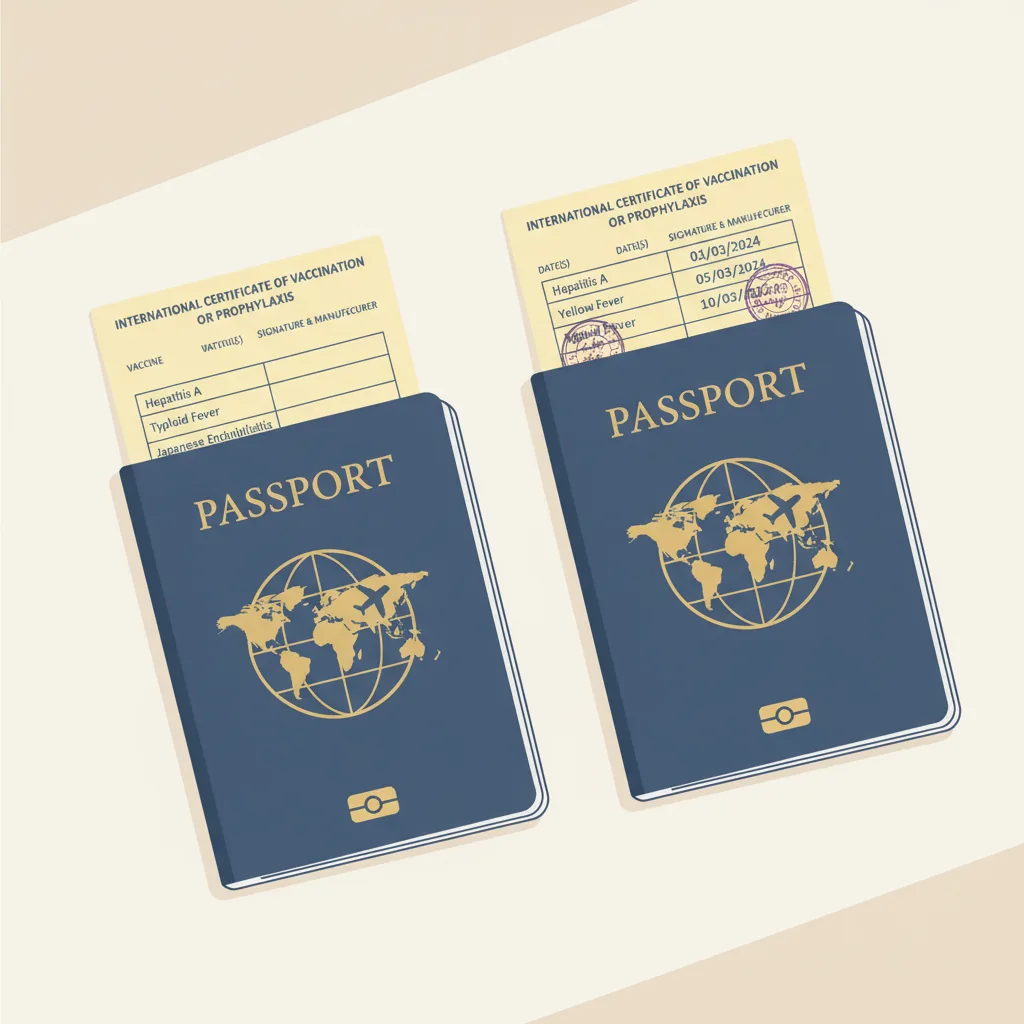
Skip travel vaccines vs. take them
% who regret this choice
Action dominates
Action regret 5.0× higher
Pick challenger
Dengue is the rare travel-disease question where the intuitive answer — “small but real” — happens to be roughly correct for the modal Likelier reader. For a two-week trip to a dengue-endemic urban area during peak transmission season, the working estimate is on the order of 1 in 200 per trip for a symptomatic infection, with another 40–80% of infections running asymptomatic underneath that number per the CDC Yellow Book. Most symptomatic dengue is a miserable but uncomplicated febrile illness: fever, headache, joint pain, rash, a week of feeling terrible. Severe dengue — the hemorrhagic and shock variants — occurs in up to 5% of symptomatic cases globally but just ~0.45% of diagnosed cases in the GeoSentinel traveler series (Huits et al., 2023; 27 severe out of 5,958 cases over fifteen years). Per-trip severe-dengue risk at the headline figure is therefore on the order of 1 in 4,000, and per-trip mortality is roughly another order of magnitude lower than that.
What makes dengue unusual among travel diseases is the second-infection inversion. For almost every other infectious disease in this collection, prior exposure is protective: antibodies you already carry are the reason you have less to worry about next time. Dengue runs the opposite way. Antibody-dependent enhancement means that the antibodies generated by a first dengue infection can make a second infection with a different serotype worse, not better, and the severe-dengue case fatality rate in endemic-country pediatric second infections is the main reason dengue is a global public health priority at all. For a traveler this flips the usual mental accounting: the person who shrugs off a mild first episode on a Bali trip, and who might reasonably assume they are now immune, is the person the epidemiology would single out as higher risk on a future trip to Cartagena.
The backdrop also matters. Dengue activity in the Americas has expanded sharply since 2020. The WHO reported a historic high of more than 14.6 million cases globally in 2024, more than triple a typical year, and the US CDC recorded >1,400 travel-associated cases in each of 2022, 2023, and 2024 — roughly 50% above the prior 2016 peak of 919. Locally acquired (autochthonous) transmission remains a small fraction of US dengue: of 3,798 cases reported from US states and DC in 2024, just 105 (2.8%) were locally acquired, confined to Florida, California, and Texas, including a Los Angeles County cluster in the second half of 2024. A traveler to the Caribbean or Latin America in 2025 is not facing the same per-trip risk profile as a traveler to the same destinations a decade ago; the headline figure on this page reflects the higher end of the 2010s range and the lower end of the 2023–2025 range, and whether it drifts up or down over the next few years will depend more on vector ecology and climate than on anything a traveler does.
Related tidbits
About 1 in 200 per 2-week trip to an endemic region in peak transmission season for contracting dengue fever. The rate swings with destination, season, and how much time is spent outdoors.
Claim ledger
Every number below is what each source reported, with the verbatim quote we relied on and how we arrived at our figure. Click any link to verify directly.
5/5 sources independently verified verbatim against the cited source
-
[1] US Centers for Disease Control and Prevention (CDC) — Dengue — CDC Yellow Book (Health Information for International Travel) Verified
Dengue — CDC Yellow Book (Health Information for International Travel)- Statistic
~390 million DENV infections and ~96 million symptomatic cases per year globally; 7,528 travel-related US dengue cases reported 2010-2021 with 3,135 hospitalizations and 19 deaths; >1,400 travel-associated US cases in 2019 and 2022-2024; 40-80% of DENV infections asymptomatic; up to 5% of symptomatic cases develop severe disease.- Excerpt
“"The incidence of dengue among travelers to the tropics has increased in recent years, and dengue burden continues to grow in Sub-Saharan Africa, Latin America, and Asia, with estimates of 390 million DENV infections and 96 million symptomatic cases per year. … During 2010–2021, a total 7,528 travel-related dengue cases were reported in the United States; a total of 3,135 patients required hospitalization, and 19 died. … Travel-associated dengue case numbers also increased during 2019, and 2022–2024, with >1,400 cases reported each year, compared to a previous peak of 919 cases in 2016. … An estimated 40–80% of DENV infections are asymptomatic. … ≤5% of all people experiencing symptoms from dengue develop severe, life-threatening disease." ”
- Source data from
- 2024-05-01
- Accessed
- 2026-04-11 · archived copy
- Verification
- Excerpt independently re-fetched and confirmed word-for-word against the cited source during our grounding audit.
- Calculation
- CDC Yellow Book is the authoritative traveler-facing guidance. The ~96 million symptomatic infections per year across the ~4 billion people living in dengue-endemic areas implies a roughly 2% annual per-capita symptomatic rate averaged across endemic regions; travelers undersample the high-transmission rural pockets and over-sample urban areas and shorter exposure windows, so the per-trip figure for a two-week stay in a peak-season urban area lands roughly an order of magnitude below that (0.3–1%). CDC’s observation that US travel-associated cases jumped from ~919 in 2016 to >1,400 in 2019 and each year 2022–2024 anchors the “risk is rising, not falling” note in the body text. The 40–80% asymptomatic share is the basis for the ADE personal factor, and the ≤5% severe-dengue share is what takes the ~1-in-200 per-trip infection risk to ~1 in 4,000 per-trip severe-dengue risk.
- Independence
- CDC Yellow Book is the primary US traveler-facing clinical guidance, built from CDC dengue surveillance (ArboNET) and the peer-reviewed travel-medicine literature. Shares the Bhatt et al. 2013 modelled 390M/96M estimate with the WHO fact sheet below — treat the CDC/WHO modelled figures as one upstream; GeoSentinel (Duvignaud/Huits) is the genuine independent traveler-case stream.
-
[2] World Health Organization — Dengue and severe dengue — Fact sheet Verified
Dengue and severe dengue — Fact sheet- Statistic
100-400 million dengue infections per year globally; modelling estimate of 390 million infections with 96 million symptomatic; 2024 historic high of >14.6 million cases and >12,000 deaths reported to WHO; 308 locally-acquired cases in France, Italy and Spain reported in 2024.- Excerpt
“"About half of the world’s population is now at risk of dengue, with an estimated 100–400 million infections occurring each year. … One modelling estimate indicates 390 million dengue virus infections per year, of which 96 million manifest clinically. … During 2024, ongoing transmission, combined with an unexpected spike in dengue cases, resulted in a historic high of over 14.6 million cases and more than 12 000 dengue-related deaths reported. … Dengue is spreading to new areas, including the European and Eastern Mediterranean regions. In 2024, 308 cases were reported to WHO from three European countries (France, Italy and Spain). … From January to July 2025, over 4 million cases and over 3000 deaths have been reported to WHO from 97 countries." ”
- Source data from
- 2025-08-01
- Accessed
- 2026-04-11 · archived copy
- Verification
- Excerpt independently re-fetched and confirmed word-for-word against the cited source during our grounding audit.
- Calculation
- WHO provides the global denominator and the 2024-2025 trajectory. The >14.6 million reported cases in 2024 — more than triple a normal year — is the main empirical basis for the “per-trip risk in 2024–2025 is higher than a decade ago” framing in the body. WHO case reports undercount the true infection total by roughly an order of magnitude (modelling gives ~96 million symptomatic vs ~14.6 million reported), but the year-over-year growth signal is robust. Independent of CDC: WHO pulls country-level case reports and the modelled Bhatt et al. burden estimate; CDC Yellow Book quotes the same modelled figure but uses its own US surveillance stream for the traveler-case counts.
- Independence
- WHO and CDC both cite the Bhatt et al. (2013) modelling estimate for the 390M / 96M figure, so that number is not independent between them. WHO’s 14.6M 2024 reported cases and CDC’s US travel-associated case counts come from different surveillance pipelines and corroborate each other on the 2024 spike.
-
[3] Journal of Travel Medicine (Duvignaud, Stoney, Angelo, et al.) — Epidemiology of travel-associated dengue from 2007 to 2022: A GeoSentinel analysis Verified
Epidemiology of travel-associated dengue from 2007 to 2022: A GeoSentinel analysis- Statistic
5,958 confirmed or probable dengue cases in travelers evaluated at GeoSentinel sites 2007-2022; 50.4% acquired in Southeast Asia, 14.9% South Central Asia, 10.9% Caribbean, 9.2% South America; ~2% had complicated dengue; median travel duration 21 days; 67.3% tourism, 12.2% visiting friends and relatives.- Excerpt
“"This analysis included 5,958 travellers with confirmed (n = 4,859; 81.6%) or probable (n = 1,099; 18.4%) dengue. The most frequent regions of acquisition were South East Asia (50.4%), South Central Asia (14.9%), the Caribbean (10.9%) and South America (9.2%). … In Southeast Asia, annual proportionate morbidity increased from 50 dengue cases per 1000 ill returned travellers in non-epidemic years to an average of 159 cases per 1000 travellers during epidemic years. … the median travel duration was 21 days … the most frequent reasons for travel were tourism (67.3%), visiting friends or relatives (12.2%) and business (11.0%)." ”
- Source data from
- 2024-10-19
- Accessed
- 2026-04-11 · archived copy
- Verification
- Excerpt independently re-fetched and confirmed word-for-word against the cited source during our grounding audit.
- Calculation
- GeoSentinel is the closest thing the travel-medicine literature has to a representative traveler case series. The 50 vs 159 dengue cases per 1,000 ill returned travelers (non-epidemic vs epidemic years) in Southeast Asia is a proportionate morbidity, not an attack rate — it describes what share of sick returning travelers have dengue, not what share of all travelers catch it — but the ~3× swing between epidemic and non-epidemic years is what anchors the regional_breakdown ordering and the seasonal personal factors. Median travel duration of 21 days in this case series matches the two-week reference trip used for the headline figure.
- Independence
- GeoSentinel is a global network of travel and tropical medicine clinics with its own case-reporting pipeline, methodologically independent of CDC US surveillance and WHO country-level case reports. Genuine independent corroboration on the regional distribution of traveler dengue (SE Asia dominates, Caribbean and Latin America are next).
-
[4] Annals of Internal Medicine (Huits, Angelo, Leder, et al.) — Clinical Characteristics and Outcomes Among Travelers With Severe Dengue: A GeoSentinel Analysis Verified
Clinical Characteristics and Outcomes Among Travelers With Severe Dengue: A GeoSentinel Analysis- Statistic
Among 5,958 dengue cases in travelers 2007-2022, 95 (2%) had complicated dengue, of whom 27 (31%) were classified as severe; 91% hospitalized; one death (non-dengue-related).- Excerpt
“"Of 5958 patients with dengue, 95 (2%) had complicated dengue. … 27 (31%) were classified as severe. … Seventy-eight (91%) patients were hospitalized. One patient died of nondengue-related illnesses." ”
- Source data from
- 2023-06-20
- Accessed
- 2026-04-11 · archived copy
- Verification
- Excerpt independently re-fetched and confirmed word-for-word against the cited source during our grounding audit.
- Calculation
- The Huits et al. analysis found 2% of traveler dengue cases had complicated dengue, and 31% of those complicated cases (27/95) met WHO severe-dengue criteria — i.e., 27/5958 ≈ 0.45% of all diagnosed traveler dengue cases were severe. This is much lower than the CDC Yellow Book’s “up to 5%” ceiling for symptomatic cases globally. The gap is consistent with the two populations: GeoSentinel travelers are adults with access to modern supportive care, while the global figure includes endemic-country pediatric second infections, which dominate severe-dengue incidence. The sole death was attributed to non-dengue-related illness. Applied to the headline 1-in-200 per-trip infection risk, the traveler severe-dengue risk lands on the order of 1 in 20,000–40,000 per reference trip, and per-trip mortality is roughly another order of magnitude lower.
- Independence
- Same GeoSentinel case pool as the Duvignaud et al. paper, so these two are not independent on the case count. They are cited for different purposes: Duvignaud for the regional distribution and traveler demographics, Huits for the severe-dengue and mortality fractions.
-
[5] US Centers for Disease Control and Prevention (MMWR Vol. 75, No. 18) — Increase in Travel-Associated and Locally Acquired Dengue Cases — United States, 2024 Verified
Increase in Travel-Associated and Locally Acquired Dengue Cases — United States, 2024See all 2 Likelier entries citing this source →
- Statistic
3,798 dengue cases reported from the 50 US states and DC in 2024 (a 359% increase above the 2010-2023 annual average of 828); 3,693 (97.2%) travel-associated and 105 (2.8%) locally acquired; locally acquired cases reported only from Florida (85, across 10 counties), California (18, three counties), and Texas (2, two counties).- Excerpt
“"During 2024, a total of 3,798 dengue cases, including 2,252 (59.3%) confirmed and 1,546 (40.7%) probable cases, were reported to CDC from the 50 U.S. states and DC. Among these cases, 3,693 (97.2%) were travel associated, and 105 (2.8%) were locally acquired. … These represent a 359% increase above the annual average of 828 cases per year during 2010–2023. … Three jurisdictions reported locally acquired cases, including Florida (85 cases reported from 10 counties), California (18 from three counties), and Texas (two from two counties)." ”
- Source data from
- 2026-05-14
- Accessed
- 2026-06-14 · archived copy
- Verification
- Excerpt independently re-fetched and confirmed word-for-word against the cited source during our grounding audit.
- Calculation
- This MMWR report is the granular 2024 US case tally that anchors the new locally-acquired (autochthonous) caveat. Of 3,798 cases reported from US states/DC in 2024, only 105 (2.8%) were locally acquired — the other 97.2% were travel-associated, i.e. the population this entry's headline already covers. The 105 local cases were confined to three states and a handful of counties (Florida 85/10 counties, California 18/3, Texas 2/2), so the per-resident base rate for catching dengue without leaving the continental US is far below the per-trip traveler figure and is sharply concentrated in Aedes-range counties along the Gulf and southern California. No per-resident denominator is published here and the count is volatile year to year, so the caveat characterizes this risk qualitatively rather than quoting a "1 in N US residents" rate.
- Independence
- MMWR draws on the same CDC ArboNET surveillance pipeline as the Yellow Book source above — it is NOT an independent stream, just the granular 2024 jurisdiction-level case tally. Cited specifically for the locally-acquired vs travel-associated split, which the Yellow Book and WHO/GeoSentinel sources do not break out for the US.