Evidence quality 4.25/5
Eight-dimension review score against the quality rubric . Each dimension scored 1–5.
- D1 Source grounding
- 4/5
- D2 Source authority
- 5/5
- D3 Arithmetic
- 4/5
- D4 Uncertainty
- 4/5
- D5 Scope
- 4/5
- D6 Prose
- 4/5
- D7 Perception honesty
- 4/5
- D8 Caveat completeness
- 5/5
≈ As likely as
Perceived
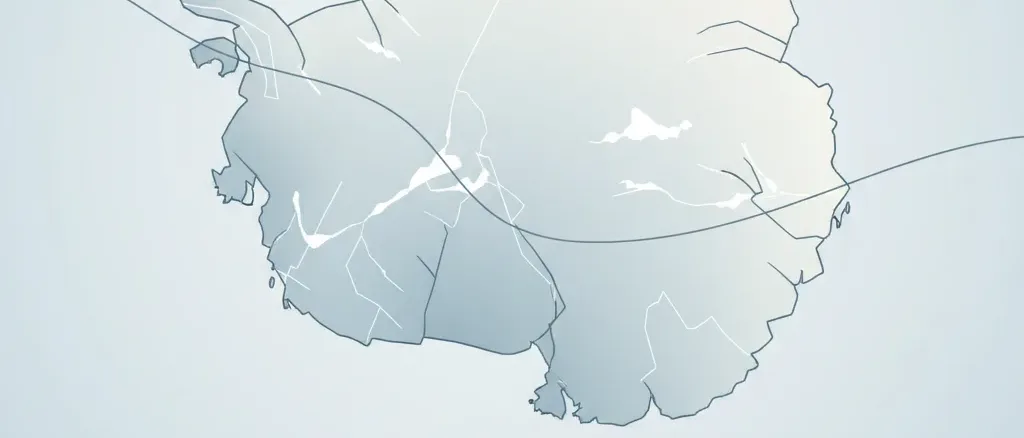
West Antarctic Ice Sheet instability is discussed in scientific literature and climate policy circles but has not yet acquired a fixed cultural image in the way that flooding cities or forest fires have. Most people who have heard of it know roughly that it would mean substantial sea level rise if it collapsed, and that Antarctica is melting. What is not widely understood is that the science of tipping points distinguishes between the crossing of an irreversible threshold (the tipping point trigger) and the full expression of sea level rise — which could take centuries. Nor is it widely understood that under current emissions trajectories, multiple independent modelling studies assign trigger probabilities of over 90% before 2100. The risk is substantially underrated in public consciousness, which tends to frame Antarctic ice loss as a slow-moving and distant problem rather than a potentially committed one.
Rough estimate: ~47.7% of US adults report being 'afraid' or 'very afraid' of global warming and climate change broadly (Chapman University Survey, Wave 10, 2024) — no WAIS-specific survey exists
Actual
>90% probability of crossing the WAIS tipping threshold before 2100 (current emissions, SSP2-4.5)
Global — crossing the WAIS tipping point is a planetary-scale event, not population-specific
Show derivation
Wunderling et al. (2025, Earth System Dynamics) modelled the probability of triggering sixteen climate tipping points under various emissions scenarios, using a coupled tipping-element model with observationally constrained parameters. Under SSP2-4.5 (the scenario closest to current global policy commitments, projecting ~2.6-2.8°C warming by 2100), the WAIS triggering probability exceeded 90%. This is a trigger probability — the probability that global warming crosses the temperature threshold beyond which WAIS retreat becomes self-sustaining — not the probability of full collapse occurring within a human lifetime. Full collapse of the WAIS would release approximately 3.3-5.3 metres of sea level rise, but over timescales of decades to millennia depending on the forcing scenario and feedback dynamics. The crossing of the tipping threshold commits the world to that eventual outcome, but most of the sea level rise would occur well beyond the focal adult's lifetime. Armstrong McKay et al. (2022, Science) estimated the central threshold at ~1.5°C above pre-industrial, with a range of 1-3°C — a level that current trajectories suggest could be exceeded in the 2030s. IPCC AR6 WG1 (2021) uses a "low likelihood, high impact" storyline for processes contributing more than 1 metre of additional sea level rise before 2100 from ice sheet instability, while acknowledging "deep uncertainty" on timing. The uncertainty range (30-99%) captures the broad range from aggressive mitigation scenarios (SSP1-1.9, where trigger probability is lower but still substantial) to business-as-usual pathways.
Caveats: The >90% figure is a tipping-point trigger probability under current emissions (…
The >90% figure is a tipping-point trigger probability under current emissions (SSP2-4.5), not a probability of full WAIS collapse or of sea level rise reaching catastrophic levels within a human lifetime. Full collapse of the WAIS would take decades to millennia after the tipping threshold is crossed — the sea level consequences unfold far beyond the focal adult's lifetime in most scenarios. The central threshold of ~1.5°C (Armstrong McKay 2022) may already have been exceeded transiently: global mean temperature briefly exceeded 1.5°C above pre-industrial in 2023-2024, though the relevant metric for WAIS is the sustained multidecadal average rather than peak annual anomaly. IPCC AR6's more cautious framing differs from Wunderling 2025's >90% trigger probability because the two assessments measure different things: IPCC explicitly excludes the abrupt onset of marine ice sheet instability from its likely-range projections, treating it as a "deep uncertainty" / low-likelihood-high-impact storyline assessed in CMIP models that do not simulate WAIS instability; Wunderling models crossing the threshold that commits eventual collapse in a tipping-element framework. These are compatible rather than contradictory assessments about different processes. Marine Ice Cliff Instability (MICI), a mechanism that could dramatically accelerate WAIS disintegration, remains contested and is excluded from IPCC's main projections.
Related risks
Other risks on similar themes — for exploring related fears.
AMOC collapse
What are the odds of the AMOC experiencing an abrupt collapse before the end of your lifetime?






Pick challenger
The West Antarctic Ice Sheet contains enough ice to raise global sea levels by 3.3 to 5.3 metres if fully disgorged into the ocean — an amount sufficient to permanently inundate coastal cities from Miami to Shanghai to Amsterdam. The debate is not whether this would be consequential but whether the process is already irreversibly committed. Wunderling et al. (2025, Earth System Dynamics), using a coupled tipping-element model parameterised from Armstrong McKay et al.’s (2022, Science) threshold synthesis, found that under SSP2-4.5 — the scenario closest to current global policy commitments — the probability of the WAIS crossing its tipping threshold before 2100 exceeded 90%. Armstrong McKay estimated the central threshold at roughly 1.5°C of global warming above pre-industrial levels, within the Paris Agreement’s target range.
The critical distinction is between triggering and completing. When the WAIS tipping point is crossed, global warming has reached a level at which ice retreat becomes self-sustaining: ocean warming beneath the ice shelves melts the underside, the grounding line retreats into deeper water, and the geometry of the ice sheet means retreat accelerates rather than stabilising. But this process unfolds over decades to millennia, not years. Naughten et al. (2023, Nature Climate Change) found that ice-shelf warming in the Amundsen Sea sector is already committed to accelerate at roughly triple the historical rate until at least 2045 regardless of near-term emissions choices — the ocean warming that drives basal melt is locked in by historical emissions. For most people alive today, the sea level consequences lie far beyond their lifetimes even if the threshold is crossed tomorrow. IPCC AR6 frames this as a “low likelihood, high impact” storyline while acknowledging “deep uncertainty.”
The Thwaites Glacier, sometimes called the “Doomsday Glacier,” holds about 65 centimetres of global sea level equivalent and is considered the most vulnerable sector of the WAIS. Satellite altimetry and ocean observations show active basal melting, and the glacier’s “ice shelf” — the floating apron that pins the inland ice — is cracking in ways that some glaciologists believe could accelerate collapse within this century. None of this translates straightforwardly into a personal risk number: the framing here is the probability of a planetary commitment being made in a person’s lifetime, not the probability of dying from it. That probability — on current trajectories — is what makes this entry unusual on this site: the risk is not rare but the consequences are diffuse, slow, and fall predominantly on future generations.
Related tidbits
Under current emissions, models put the probability of crossing the West Antarctic tipping threshold before 2100 above 90%. No survey even measures how likely the public thinks this is.
Claim ledger
Every number below is what each source reported, with the verbatim quote we relied on and how we arrived at our figure. Click any link to verify directly.
1/5 sources independently verified verbatim against the cited source
-
[1] Earth System Dynamics — Wunderling, Sakschewski, Rockström, Flores, Hirota, Staal, 2025 — High probability of triggering climate tipping points under current policies modestly amplified by Amazon dieback and permafrost thaw
High probability of triggering climate tipping points under current policies modestly amplified by Amazon dieback and permafrost thaw- Statistic
WAIS triggering probability >90% under SSP2-4.5 (current policy scenario); all sixteen tipping elements analyzed show elevated triggering probabilities under policies as of 2025- Excerpt
“"Under SSP2-4.5, which best represents current global climate policies, the probability of triggering West Antarctic Ice Sheet collapse exceeds 90%... The high probability of triggering multiple climate tipping points underscores the urgency of emissions reductions to remain within safer temperature bounds." ”
- Source data from
- 2025-05-01
- Accessed
- 2026-05-09 · archived copy
- Calculation
- Wunderling et al. 2025 is the primary quantitative source for the >90% headline. SSP2-4.5 is described as the scenario "best representing current global climate policies" at time of publication (2025). The triggering probability means the probability that global temperature crosses the threshold at which WAIS retreat becomes self-sustaining and irreversible on multi-century timescales. The paper uses a coupled tipping-element model incorporating interactions between tipping elements (e.g., Amazon dieback slightly amplifying WAIS triggering probability through global mean temperature). The core result for WAIS is robust to whether or not Amazon and permafrost interactions are included.
- Independence
- Wunderling et al. use a tipping-element network model parameterised from the Armstrong McKay 2022 threshold estimates, which are themselves derived from paleoclimate evidence and process understanding. This is a different approach from IPCC AR6's process-based climate model ensemble, though both draw on overlapping paleoclimate evidence for threshold estimates.
-
[2] Science — Armstrong McKay, Staal, Abrams, Winkelmann, Sakschewski, Loriani, Fetzer, Cornell, Rockström, Lenton, 2022 — Exceeding 1.5°C global warming could trigger multiple climate tipping points
Exceeding 1.5°C global warming could trigger multiple climate tipping points- Statistic
WAIS central temperature threshold ~1.5°C (range 1-3°C); 'likely' to be triggered above 1.5°C of global warming; full WAIS collapse would raise sea level by more than 3.3 metres over centuries- Excerpt
“"The West Antarctic Ice Sheet has a central threshold of approximately 1.5°C of global warming above pre-industrial levels, with a range of 1 to 3°C... Above 1.5°C, the WAIS becomes 'likely' to cross its tipping threshold, committing to eventual collapse over decades to millennia and a sea level contribution of 3.3-5.3 metres." ”
- Source data from
- 2022-09-09
- Accessed
- 2026-05-09 · archived copy
- Calculation
- Armstrong McKay et al. 2022 is the most comprehensive recent revision of climate tipping point thresholds, synthesising paleoclimate evidence and process understanding for sixteen tipping elements. The WAIS threshold lowering from the previous Lenton 2008 estimate of ~3-5°C to ~1.5°C was significant: it places the threshold within the Paris Agreement target range, meaning that even the most ambitious emissions reduction targets do not guarantee avoiding WAIS commitment to collapse. The 1-3°C range captures deep uncertainty in the threshold itself.
- Independence
- Armstrong McKay et al. synthesise paleoclimate and process evidence using a different methodology than Wunderling et al.'s probabilistic network model. Both reach compatible conclusions about WAIS proximity to its threshold under current conditions.
-
[3] Nature Climate Change — Naughten et al., 2023 — Unavoidable future increase in West Antarctic ice-shelf melting over the twenty-first century
Unavoidable future increase in West Antarctic ice-shelf melting over the twenty-first century- Statistic
All four tested emissions scenarios produce similar accelerated Amundsen Sea warming until at least 2045; ice-shelf warming projected at ~triple the historical rate regardless of near-term mitigation- Excerpt
“"These results suggest that mitigation of greenhouse gases now has limited power to prevent ocean warming that could lead to the collapse of the West Antarctic Ice Sheet... Under all scenarios, the Amundsen Sea is committed to accelerated warming at approximately triple the historical rate until at least 2045." ”
- Source data from
- 2023-10-23
- Accessed
- 2026-05-09 · archived copy
- Calculation
- Naughten et al. 2023 focuses on ocean warming beneath WAIS ice shelves in the Amundsen Sea sector — the primary driver of ice shelf basal melt and the mechanism by which warming triggers WAIS instability. The finding that all emissions scenarios produce similar warming until 2045 is significant: near-term mitigation cannot prevent the accelerated melting already committed by historical emissions. This does not mean full collapse is committed, only that the process driving it is locked in for at least two decades. The paper's single-model design limits certainty, but it uses a high-resolution ocean model specifically designed for Amundsen Sea dynamics.
- Independence
- Naughten et al. use an ocean model focused on the Amundsen Sea specifically, rather than the global climate models used by Wunderling 2025 and Armstrong McKay 2022. The result addresses ice-shelf basal melt rates rather than full tipping point probability, providing a physically independent mechanism-level corroboration.
-
[4] Intergovernmental Panel on Climate Change (IPCC), Working Group I, Sixth Assessment Report — Climate Change 2021: The Physical Science Basis — Chapter 9: Ocean, Cryosphere and Sea Level Change
Climate Change 2021: The Physical Science Basis — Chapter 9: Ocean, Cryosphere and Sea Level ChangeSee all 2 Likelier entries citing this source →
- Statistic
Antarctic Ice Sheet 'likely' to keep losing mass all century; MISI/MICI excluded from likely-range projections as 'deep uncertainty'; 'low likelihood, high impact' storyline for >1m additional SLR from these instability processes by 2100- Excerpt
“"Both the Greenland Ice Sheet (virtually certain) and the Antarctic Ice Sheet (likely) will continue to lose mass throughout this century under all considered SSP scenarios... Under high-emissions scenarios, poorly understood processes related to marine ice sheet instability and marine ice cliff instability, characterized by deep uncertainty, have the potential to strongly increase Antarctic mass loss on century to multi-century time scales... These likely range projections do not include those ice-sheet-related processes that are characterized by deep uncertainty... In a low-likelihood, high-impact storyline, under high emissions such processes could in combination contribute more than one additional metre of sea level rise by 2100." ”
- Source data from
- 2021-08-09
- Accessed
- 2026-05-09 · archived copy
- Calculation
- IPCC AR6 does not assign a numerical probability to WAIS collapse before 2100. Instead it explicitly excludes the abrupt, widespread onset of marine ice sheet instability (MISI) and marine ice cliff instability (MICI) from its likely-range projections because those processes are "characterized by deep uncertainty arising from limited process understanding." It does assess that the Antarctic Ice Sheet is likely to keep losing mass throughout this century, and treats a >1 m additional sea-level-rise contribution from these instability processes by 2100 as a low-likelihood, high-impact storyline under high emissions. The Bamber et al. 2019 structured expert judgment cited by AR6 gave WAIS sea level contribution by 2100 as median 8-18 cm with 95th percentile up to 44-93 cm depending on warming scenario — reflecting deep uncertainty but not ruling out large contributions. IPCC AR6's position is more cautious than Wunderling 2025 because it relies on CMIP model ensembles that do not simulate WAIS collapse, rather than the tipping-point network models used by Wunderling.
-
[5] Columbia Climate School — State of the Planet — Crucial Antarctic Glacier Likely to Collapse Much Earlier than Expected Verified
Crucial Antarctic Glacier Likely to Collapse Much Earlier than Expected- Statistic
Thwaites Glacier alone holds approximately 65 centimetres of global sea-level-rise equivalent if it melted entirely; identified as the most vulnerable, structurally unstable sector of the West Antarctic Ice Sheet.- Excerpt
“"If the entire glacier were to melt then global sea levels would rise by 65 centimeters, or about two feet." ”
- Source data from
- 2021-12-17
- Accessed
- 2026-07-03 · archived copy
- Verification
- Excerpt independently re-fetched and confirmed word-for-word against the cited source during our grounding audit.
- Calculation
- Supplies the Thwaites-specific sea-level-equivalent figure used in the body prose (65 cm). This is a subset of, and consistent with, the 3.3-5.3 m full-WAIS collapse range from Armstrong McKay et al. 2022 (source above) — Thwaites is one glacier within the broader ice sheet. It does not alter the entry's headline >90% tipping-threshold probability, which remains sourced from Wunderling et al. 2025; this source is used only to ground the Thwaites ice-volume detail mentioned in the body text.
- Independence
- Science journalism from a university climate research center, reporting on glaciological modelling distinct from the tipping-point probability studies (Wunderling 2025, Armstrong McKay 2022) and the ocean-forcing study (Naughten 2023) cited above; used only for the Thwaites-specific ice-volume figure, not for probability estimates.