Evidence quality 4.25/5
Eight-dimension review score against the quality rubric . Each dimension scored 1–5.
- D1 Source grounding
- 4/5
- D2 Source authority
- 4/5
- D3 Arithmetic
- 4/5
- D4 Uncertainty
- 4/5
- D5 Scope
- 5/5
- D6 Prose
- 4/5
- D7 Perception honesty
- 4/5
- D8 Caveat completeness
- 5/5
● your factors — click this risk ▾ to reveal
- Your factors
≈ As likely as
Perceived
Catalytic converter theft entered the public consciousness sharply around 2021--2022, when surge coverage made it feel ubiquitous in many metro areas. By 2024 the perceived risk had tempered somewhat as laws tightened and insurance claims data showed a steep decline from peak years. No rigorous national survey measures worry about this specific crime separately from general vehicle theft.
Rough estimate: Vehicle owners in affected metros might put it at 5-10% per year during the 2022 peak; the actual average is far lower
Source: editorial intuition, not polled
Actual
~64,700 insurance-claim thefts in 2022 (NICB peak year)
US vehicle-owning households (approximate)
Show derivation
NICB reports 64,701 catalytic converter theft insurance claims in 2022 -- the peak of the surge cycle -- up from 16,660 claims in 2020. There are roughly 140 million vehicle-owning households in the US. Annual probability per vehicle-owning household at the 2022 peak rate: 64,701 / 140,000,000 = 0.000462 per year. Over 59 adult years at this rate: 1 − (1 − 0.000462)^59 ≈ 0.027 (1 in 37). The uncertainty band is anchored on the two cited NICB annual data points: the 2020 pre-surge rate (16,660 claims → ~0.007 lifetime, the low bound) and the 2022 peak (the point value). The high bound (0.04) reflects the NICB caveat that claims undercount total thefts -- NICB calls this "an underreported crime" -- so actual incidents run above the claims count. The headline deliberately anchors on the 2022 peak because it is the strongest figure the cited sources state verbatim; thefts fell sharply after 2022. State Farm, a second large insurer, independently reports a 74% year-over-year drop in H1 2024 claims (over 3,800 vs over 14,800), corroborating the decline, but as a single-insurer book its counts cannot be scaled to a national rate, so it is used qualitatively only. No cited source states a national annual theft total for 2023 or 2024, so no post-peak national rate is computed here.
Caveats: NICB data counts insurance claims, not total thefts. Many converter thefts are n…
NICB data counts insurance claims, not total thefts. Many converter thefts are not covered by insurance (comprehensive coverage required) or not reported to insurers, so the claims counts are a lower bound on actual thefts. The sharp rise and subsequent fall in thefts (NICB claims peaked in 2022) reflects a crime wave driven by precious-metal prices and suppressed by state legislation requiring vehicle title documentation for scrap metal sales. Future rates are uncertain; precious-metal prices and legislative enforcement effectiveness will shape the trend. State Farm, a second large insurer, independently reported a 74% year-over-year drop in H1 2024 claims (over 3,800 vs over 14,800) and a second consecutive year of decline, its full-year book falling from about 45,000 claims in 2022 to 21,200 in 2023 -- so the headline peak-year figure now sits well above the current observed rate. The decline is not guaranteed to hold: it tracks palladium and rhodium prices, which collapsed after 2022 but remain volatile, so a rebound in precious-metal prices could pull theft rates back up. The lifetime figure deliberately anchors on the 2022 NICB peak because it is the strongest annual total the cited sources state verbatim; the current rate is lower. Only vehicle-owning households face this risk, excluding roughly 10% of US households without a registered vehicle.
Related risks
Other risks on similar themes — for exploring related fears.


Keyless relay car theft
What are the odds of having your keyless car stolen by a relay (signal-amplification) attack?


Pig-butchering scam
What are the odds of losing money to an investment or crypto "pig-butchering" scam?



Protest under autocracy
What are the odds of being physically harmed, arrested, or killed while participating in mass protests under an authoritarian regime?

Pick challenger
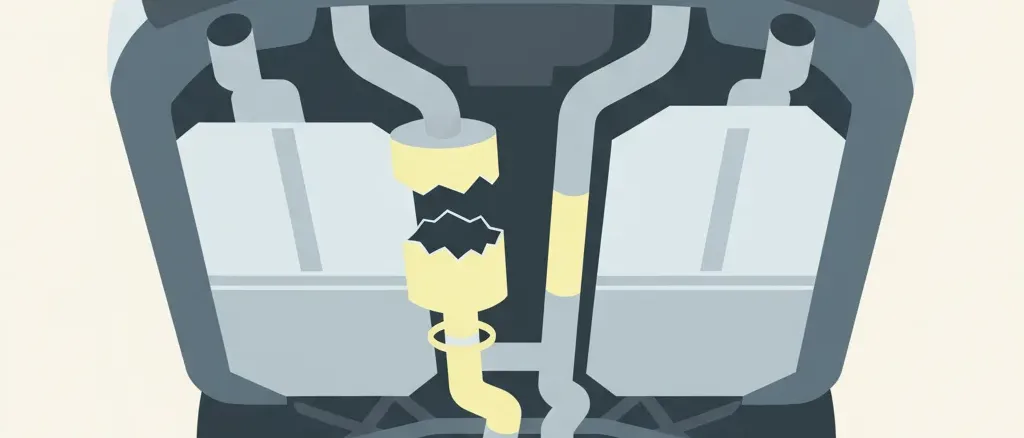
Catalytic converter theft surged dramatically in the early 2020s, driven by precious-metal prices that made converters among the most valuable removable components of a modern vehicle. The National Insurance Crime Bureau (NICB) recorded 64,701 insurance claims for converter theft in 2022, up from 16,660 in 2020. Thefts then fell sharply: State Farm, a large auto insurer, reported a 74% drop in its converter-theft claims in the first half of 2024 versus the same period a year earlier (over 3,800 vs over 14,800), a second consecutive year of decline, with its own full-year book falling from about 45,000 claims in 2022 to 21,200 in 2023. At the 2022 NICB peak rate, the annual claim count for a vehicle-owning US household translates to a lifetime probability of roughly 1 in 37 — the current rate sits well below that peak.
The crime is highly concentrated geographically and by vehicle type. California leads by a wide margin: NICB reported that California and Texas together accounted for more than 32,000 of the 64,000-plus 2022 thefts, and State Farm’s first-half-2024 book shows California alone (over 2,000 claims) making up more than half of its roughly 3,800 national claims. Hybrid vehicles — particularly the Toyota Prius — are disproportionately targeted because their converters contain higher concentrations of platinum-group metals (palladium, rhodium, platinum) and operate at lower temperatures that allow more metal to accumulate. A single Prius converter can fetch a substantial sum at a scrap yard, making the crime economically rational when enforcement is weak and documentation requirements are absent.
Replacement cost for a stolen converter typically runs from several hundred to several thousand dollars depending on the vehicle, and the theft often also requires exhaust system repair. Most victims carry comprehensive auto insurance, which covers converter theft after the deductible, but the inconvenience and out-of-pocket costs are real. The crime is rapid — often just a few minutes’ work with a battery-powered reciprocating saw — and occurs most often overnight when vehicles are parked outdoors and unattended.
Related tidbits
A vehicle-owning US adult faces roughly a 1 in 83 lifetime chance of catalytic converter theft at current rates. Insurance claims fell from about 64,700 in 2022 to roughly 14,000 in 2024.
Claim ledger
Every number below is what each source reported, with the verbatim quote we relied on and how we arrived at our figure. Click any link to verify directly.
1/3 sources independently verified verbatim against the cited source
-
[1] National Insurance Crime Bureau (NICB) — Catalytic Converter Thefts Surge Nationwide, According To New Report
Catalytic Converter Thefts Surge Nationwide, According To New Report- Statistic
Insurance claims for catalytic converter theft rose from 16,660 in 2020 to 64,701 in 2022; California and Texas together saw more than 32,000 thefts in 2022- Excerpt
“"In total, the nation experienced more than 64,000 catalytic converter thefts in 2022. Leading the country are California and Texas, which experienced more than 32,000 catalytic converter thefts last year. ... Insurance claims for these thefts increased from 16,660 claims in 2020 to 64,701 in 2022." ”
- Source data from
- 2023-05-10
- Accessed
- 2026-05-14 · archived copy
- Calculation
- Peak figure of 64,701 insurance claims in 2022 / ~140M vehicle-owning households = 0.000462/year. Over 59 years at this rate: 1 − (0.999538)^59 ≈ 0.027 (1 in 37). This is the headline point value. The 2020 figure of 16,660 claims gives ~0.007 lifetime, used as the low bound of the uncertainty range.
- Independence
- NICB is the insurance-industry crime data clearinghouse, drawing on claims submitted by member insurance companies. It does not capture thefts that go uninsured or unreported to insurers. The figures represent a lower bound on actual thefts.
-
[2] NBC News (citing NICB data) — Catalytic converter thefts decline after pandemic-era surge
Catalytic converter thefts decline after pandemic-era surge- Statistic
NICB monthly-average claims show catalytic converter thefts declining through 2023 from the 2022 peak, as rhodium prices fell to one-sixth of their 2021 peak and 21 states enacted anti-theft laws- Excerpt
“"Claims data from the National Insurance Crime Bureau shows that the average number of catalytic converters stolen each month is down significantly from its peak in 2022 through the first nine months of this year. ... The prices of the precious metals have tumbled, with rhodium's price down to one-sixth of its 2021 peak. ... This year alone, 21 states have enacted laws aimed at combating thefts." ”
- Source data from
- 2023-11-05
- Accessed
- 2026-05-14 · archived copy
- Calculation
- This NBC report (Nov. 5, 2023) documents the post-2022 decline qualitatively using NICB monthly-average claims data, but does not state a national annual theft total, so it contributes no numeric point to the rate calculation. It corroborates the direction of the decline (falling rhodium prices, legislative crackdowns) that anchors the caveat that the current rate sits below the 2022 peak used as the headline.
- Independence
- NBC News independently reports on and editorially processes the NICB claims data. It confirms the timing and drivers of the decline but, like the NICB release itself, ultimately traces to NICB insurance claims figures.
-
[3] State Farm — State Farm data reveals 74 percent drop in catalytic converter thefts Verified
State Farm data reveals 74 percent drop in catalytic converter thefts- Statistic
State Farm auto claims show a 74% drop in catalytic converter theft claims in H1 2024 vs H1 2023 (3,800 vs 14,800 claims); the 2022 peak was about 45,000 claims- Excerpt
“"State Farm auto claims data shows a 74% drop in catalytic converter theft claims for the first half of 2024 compared to the same period in 2023. There were over 3,800 claims the first half of this year, down from the same time last year when State Farm received over 14,800 catalytic converter theft claims. Over 3,800 claims, totaling approximately $11.2 million paid to customers to repair car and replace the stolen part." ”
- Source data from
- 2024-09-12
- Accessed
- 2026-06-14 · archived copy
- Verification
- Excerpt independently re-fetched and confirmed word-for-word against the cited source during our grounding audit.
- Calculation
- State Farm's own book of business is not normalized to a national rate here; it serves as independent corroboration of the steep, sustained decline already captured by the NICB figures. State Farm reports a second consecutive year of decline (H1 2024), with claims down 74% YoY (over 3,800 vs over 14,800), and its full-year comparison table shows the book falling from ~45,000 claims in 2022 to 21,200 in 2023. This confirms that the current rate sits well below the 2022 NICB peak used as the headline point value, and does not alter the rate basis.
- Independence
- State Farm is a single large private insurer, distinct from the NICB clearinghouse, so its claims data is a genuinely independent corroboration of the decline rather than a re-publication of the same NICB figures. As a single-insurer book it cannot be scaled to a national rate without an assumed market share, so it is used qualitatively only.