Evidence quality 4.5/5
Eight-dimension review score against the quality rubric . Each dimension scored 1–5.
- D1 Source grounding
- 4/5
- D2 Source authority
- 5/5
- D3 Arithmetic
- 4/5
- D4 Uncertainty
- 4/5
- D5 Scope
- 5/5
- D6 Prose
- 5/5
- D7 Perception honesty
- 4/5
- D8 Caveat completeness
- 5/5
● your factors — click this risk ▾ to reveal
- Your factors
≈ As likely as
Perceived
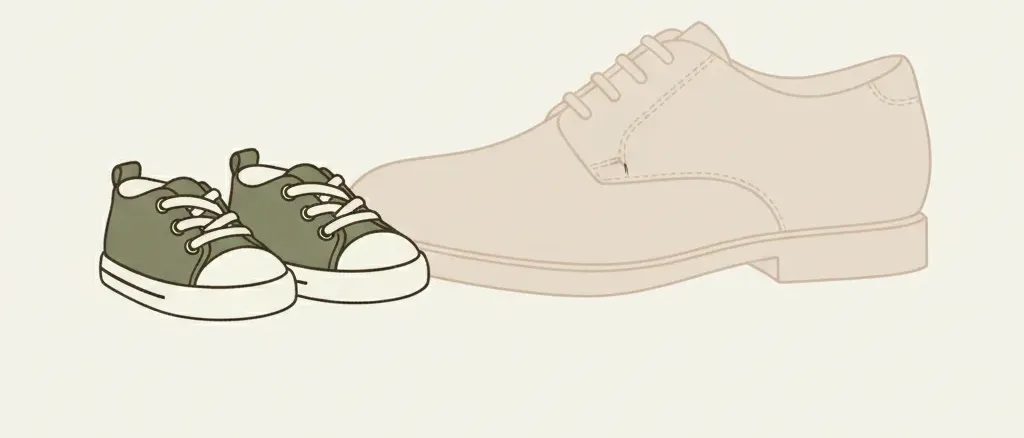
This is the fear that sells life insurance — and the one most people drastically underweight when they decline to buy it. Young parents tend to anchor on their own felt invincibility: "I'm 30, healthy, and not going anywhere." The LIMRA 2025 Insurance Barometer Study found that adults under 30 overestimate the cost of term life insurance by 10-12x, suggesting the risk itself barely registers as real. Meanwhile, only about half of US adults carry any life insurance at all, down from 63 percent in 2011. Disability insurance ownership is even lower — the Council for Disability Awareness reports that fewer than a third of working adults carry individual long-term disability coverage, despite disability being far more common than death during working years. The perception gap here is not that people think the risk is zero — it is that they treat it as negligibly small and therefore not worth insuring against, when the combined probability is high enough to warrant attention.
Rough estimate: Most young parents sense some risk but treat it as negligibly small — well below the actual combined figure
Source: editorial intuition, not polled
Actual
~9 in 100 over 18 years (death or lasting disability, 30-year-old parent)
US 30-year-old parents
Show derivation
Starting point: the SSA 2022 period life table (l(x) survivor column) gives cumulative mortality of about 5.76% for a 30-year-old male reaching age 48 (survivors fall from l(30)=96,992 to l(48)=91,405) and about 3.03% for a female of the same age (l(30)=98,415 to l(48)=95,429), a sex-blended ~4.4% for a single randomly-selected parent. The SSA Actuarial Note 2025.6 shows that the probability of surviving from age 20 to normal retirement age (67) without ever being disabled is 66% for men and 71% for women — i.e. roughly 1 in 4 become disabled over that 47-year window. Scaling that down to the narrower 18-year parenting window (age 30 to 48) is a disclosed proportional estimate yielding an approximate 5% qualifying-disability probability; this 18-year figure is not directly stated by SSA. Combining the source-stated mortality (~4.4%) with the estimated lasting-disability leg (~5%) and subtracting partial overlap gives a central estimate of roughly 9% for either outcome for a single parent over 18 years. The uncertainty range reflects sex differences (male risk higher), health variation, and the definitional ambiguity of "lasting disability."
Caveats: The 9% central estimate is a population-level average for a 30-year-old US paren…
The 9% central estimate is a population-level average for a 30-year-old US parent over 18 years, combining both death and qualifying disability (defined by SSA as inability to perform substantial gainful activity for 12+ months). Individual risk varies enormously by sex (males ~2× females for mortality), race, occupation, health status, and health-care access. The disability component is especially sensitive to definition: SSA's bar is high (complete work incapacity for 12+ months), so milder but still life-altering disabilities are excluded. Using a broader definition of disability would push the combined figure well above 10%. For a two-parent household, the probability that at least one parent is affected roughly doubles.
How the risk varies
The headline figure averages across very different situations. Here’s how the probability varies by scenario or context:
1 in 23 · 4.4%
SSA life table cumulative mortality (5.76% male / 3.03% female), sex-blended average
1 in 20 · 5.0%
Disclosed proportional estimate from SSA disability incidence scaled to the 18-year window (not directly stated by SSA)
1 in 11 · 9.0%
Combined with partial overlap subtracted
1 in 5.9 · 17%
1 − (1 − 0.09)^2 ≈ 0.17; assumes independent risks between parents
Bar length and shade rank these scenarios against each other, not against other risks. The exact odds are shown beside each.
Related risks
Other risks on similar themes — for exploring related fears.

Grandparent loss in childhood
What are the odds a 9-year-old loses at least one grandparent before turning 18?

What is the chance I will become too disabled to work before I retire?
What is the chance I will become too disabled to work before I retire?

Infant sugar/salt and adult disease
How much does added sugar and salt in the first two years of life raise a child's risk of developing type 2 diabetes and hypertension in adulthood?

Infection from sharing food with child
What are the odds of getting a lasting infection from sharing food or drinks with your child?

Skipping care over ICE fear
How likely is an immigrant adult in the US to avoid needed medical care because of immigration-enforcement fear?


Decisions this risk informs
Choices that turn on this risk — how people weigh the trade-off.

Pick challenger
A 30-year-old parent has roughly an 18-year window before the youngest child turns 18 — and over that span the combined probability of dying or becoming permanently disabled is somewhere around 1 in 11. The death component alone is modest: SSA period life tables put cumulative mortality from age 30 to 48 at about 5.8% for men and 3% for women (a sex-blended ~4.4%). It is the disability component that inflates the total further. The SSA’s own actuarial tables project that roughly one in four 20-year-olds will qualify for disabled-worker benefits before reaching normal retirement age, and even over the shorter 18-year parenting window the estimated disability hazard is at least comparable to the mortality hazard. A parent is, roughly speaking, about as likely to become unable to work as to die during those years — and possibly somewhat likelier, though the disability leg is a scaled estimate rather than a directly published 18-year figure.
What makes this risk interesting is the behavioral mismatch it produces. About 4.2% of US children under 18 have already lost a parent or primary caregiver, according to a 2025 modeling study in Nature Medicine — a prevalence that rose nearly 50% between 2000 and 2021, driven largely by drug overdose deaths. Yet only half of US adults carry life insurance at all, down from 63% a decade ago, and disability insurance coverage is even thinner. LIMRA reports that adults under 30 overestimate the annual cost of a term life policy by a factor of 10 to 12, which goes a long way toward explaining the gap: the risk feels remote, and the imagined price of addressing it is an order of magnitude too high. The result is a population that systematically underinsures against one of the more consequential financial risks a family faces.
The disability angle deserves particular emphasis because it is the half of this risk that almost nobody discusses. A 30-year-old parent is at least as likely to experience a lasting disability as to die before age 48 — the estimated disability leg (~5%) is on par with the source-stated ~4.4% mortality — yet “disability insurance” barely registers in popular financial planning discourse compared with life insurance. Death, at least, is final — the surviving family’s expenses shrink by one member. Disability often increases household costs (medical bills, home modifications, caregiving) while simultaneously eliminating the disabled parent’s income. The actuarial tables do not have a column for “financially devastating,” but if they did, disability would likely outrank death as the more consequential threat to a young family’s finances.
Related tidbits
A child has about a 7% chance of losing a parent before turning 18. The probability of a child dying before 18 is ~0.7%. Parents are 10x more likely to die during their child's youth than the reverse.
Claim ledger
Every number below is what each source reported, with the verbatim quote we relied on and how we arrived at our figure. Click any link to verify directly.
1/4 sources independently verified verbatim against the cited source
-
[1] Social Security Administration, Office of the Chief Actuary — Actuarial Life Table — Period Life Table, 2022
Actuarial Life Table — Period Life Table, 2022- Statistic
Cumulative mortality from age 30 to age 48 is approximately 5.76% for males and 3.03% for females (from the l(x) survivor column of the 2022 period life table)- Excerpt
“"Male: age 30 l(x)=96,992, age 48 l(x)=91,405. Female: age 30 l(x)=98,415, age 48 l(x)=95,429. (l(x) is the number of survivors out of 100,000 born alive, from the 2022 period life table for the Social Security area population used in the 2025 Trustees Report.)" ”
- Source data from
- 2025-06-01
- Accessed
- 2026-04-19 · archived copy
- Calculation
- The SSA period life table provides a survivor column l(x) — the number of an original 100,000 births still alive at each age. For males, l(30)=96,992 falls to l(48)=91,405, so cumulative mortality from age 30 to 48 is (96,992 − 91,405) / 96,992 = 0.0576, i.e. ~5.76%. For females, l(30)=98,415 falls to l(48)=95,429, giving (98,415 − 95,429) / 98,415 = 0.0303, i.e. ~3.03%. A sex-blended average is approximately 4.4%.
-
[2] Social Security Administration, Office of the Chief Actuary — Disability and Death Probability Tables for Insured Workers Born in 2005 — Actuarial Note 2025.6 Verified
Disability and Death Probability Tables for Insured Workers Born in 2005 — Actuarial Note 2025.6- Statistic
About 1 in 4 of today's 20-year-olds will become disabled before reaching normal retirement age (67); probability of surviving from age 20 to NRA without disability is 66% for men and 71% for women- Excerpt
“"For those who attain age 20 in 2025, it is projected that the probability of surviving from age 20 to NRA without ever being disabled is 66 percent for men and 71 percent for women." ”
- Source data from
- 2025-09-01
- Accessed
- 2026-04-19 · archived copy
- Verification
- Excerpt independently re-fetched and confirmed word-for-word against the cited source during our grounding audit.
- Calculation
- SSA defines disability here as qualifying for Social Security disabled worker benefits — a high bar requiring inability to engage in substantial gainful activity for 12+ months. The source states that the probability of surviving from age 20 to NRA (67) without ever being disabled is 66% for men and 71% for women — i.e. roughly 1 in 4 become disabled over that full 47-year window. For the narrower 18-year window relevant to parenting (age 30 to 48), proportional scaling of that 47-year figure is a disclosed estimate (not directly stated by SSA) yielding an approximate 5% qualifying-disability probability. Combining with the source-stated mortality (~4.4% sex-blended) and subtracting partial overlap gives the ~9% central estimate for death or lasting disability.
-
[3] Nature Medicine — Orphanhood and caregiver death among children in the United States by all-cause mortality, 2000–2021
Orphanhood and caregiver death among children in the United States by all-cause mortality, 2000–2021- Statistic
An estimated 2.91 million US children (4.2% of children under 18) had experienced the death of a parent or caregiver as of 2021, with incidence increasing 49.5% since 2000- Excerpt
“"In 2021, an estimated 2.91 million children (4.2% of children) had in their lifetime experienced prevalent orphanhood and caregiver death combined, with incidence increasing by 49.5% and prevalence by 7.9% since 2000." ”
- Source data from
- 2025-01-10
- Accessed
- 2026-04-19 · archived copy
- Calculation
- This cross-sectional prevalence figure (4.2% of children) captures a snapshot: at any given time, roughly 1 in 24 US children under 18 have already lost a parent or primary caregiver. This is consistent with (and slightly higher than) the per-parent mortality probability derived from life tables, because it aggregates across all parental ages at birth, both parents, and includes caregiver deaths beyond biological parents. The increase since 2000 is largely driven by drug overdose deaths surpassing COVID-19 as the leading cause of parental death by 2021.
- Independence
- This study uses CDC WONDER mortality data as its upstream, independent of the SSA life tables which use SSA-area population data. The two datasets overlap substantially but are compiled by different agencies with different methodologies.
-
[4] LIMRA and Life Happens — 2025 Facts About Life Insurance
2025 Facts About Life Insurance- Statistic
51% of US consumers report having life insurance (down from 63% in 2011); 40% say they need or need more coverage; adults under 30 overestimate term life cost by 10-12x- Excerpt
“"Just 51 percent of consumers say they have life insurance coverage, down from 63 percent in 2011. Adults age 30 and younger overestimate the cost of life insurance by 10 to 12 times." ”
- Source data from
- 2025-09-01
- Accessed
- 2026-04-19 · archived copy
- Calculation
- LIMRA data is used here for context on the perception gap — the disconnect between the actuarial probability and the behavioral response (insurance ownership). The 10-12x cost overestimate among young adults helps explain why a ~9% combined risk goes largely uninsured: the perceived cost of addressing it is wildly inflated relative to the actual premium.