Evidence quality 4.75/5
Eight-dimension review score against the quality rubric . Each dimension scored 1–5.
- D1 Source grounding
- 5/5
- D2 Source authority
- 5/5
- D3 Arithmetic
- 5/5
- D4 Uncertainty
- 5/5
- D5 Scope
- 5/5
- D6 Prose
- 5/5
- D7 Perception honesty
- 3/5
- D8 Caveat completeness
- 5/5
● your factors — click this risk ▾ to reveal
- Your factors
≈ As likely as
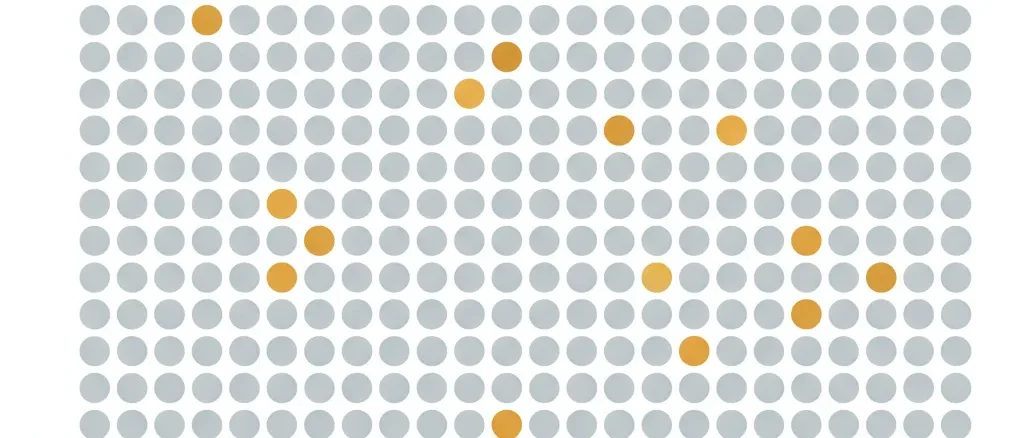
Perceived
Most women undergoing routine mammography screening expect the test to deliver a clean binary: cancer or no cancer. The possibility of a false alarm — being called back, re-imaged, possibly biopsied, only to learn the finding was benign — is not prominently communicated in screening brochures. No large-scale survey isolates "fear of a false-positive mammogram" as a standalone item, so the perceived side here is editorial intuition based on clinical-communication literature suggesting that most patients dramatically underestimate the cumulative callback rate.
Rough estimate: most patients guess well under 10% over a decade of screening
Source: editorial intuition, not polled
Actual
~9.6% false-positive recall per screening (subsequent mammograms)
US women undergoing screening mammography, BCSC registry
Show derivation
The Elmore et al. 1998 NEJM study estimated a 49.1% cumulative probability of at least one false-positive mammogram after 10 screening rounds (95% CI 40.3%–64.1%), based on 9,762 mammograms among 2,400 women aged 40–69. The later Hubbard et al. 2011 BCSC analysis of 386,799 mammograms found 61.3% (CI 59.4%–63.1%) for annual screening starting at age 40, and 41.6% for biennial screening. The normalized figure uses the Elmore point estimate as the central value because it is the more widely cited landmark; the uncertainty band spans the biennial-to-annual range from both studies.
Caveats: This entry normalizes on a 10-year screening window, not a biological lifetime, …
This entry normalizes on a 10-year screening window, not a biological lifetime, because the clinically relevant question is "how likely is a false alarm over a decade of routine mammography?" not "how likely over 59 years of being alive." The per-screening false-positive rate (~9.6% for subsequent exams) is roughly flat across age groups, but the cumulative figure depends entirely on screening frequency: biennial screening roughly halves the 10-year cumulative. Breast density, prior biopsies, hormone therapy use, and radiologist recall thresholds all modulate individual risk substantially. These are false-positive recalls and biopsies, not false-positive cancer diagnoses — downstream workup almost always resolves the finding, but not without cost, anxiety, and time.
Related risks
Other risks on similar themes — for exploring related fears.


Adventure sports
What are the odds of a serious injury from regular participation in surfing, mountain biking, or rock climbing?


Drug-resistant infection
What is the risk of developing a serious antibiotic-resistant infection?



Inheriting AUD risk
If a parent had alcohol use disorder, what are the odds you'll develop alcohol use disorder yourself?

Pick challenger
The single most surprising number in cancer screening may be this one: a woman who follows the standard US recommendation of annual mammography starting at age 40 has roughly a 1-in-2 chance of receiving at least one false-positive result over a decade. Elmore et al.’s 1998 NEJM landmark put the cumulative figure at 49.1% after 10 mammograms; a larger 2011 BCSC replication using 386,799 exams found 61.3% for annual screening. The NCI rounds it to “approximately 50%.” The per-screening false-positive recall rate is about 9.6% for subsequent exams and 16.3% for a woman’s first mammogram, driven partly by the absence of prior images for comparison.
What makes this number interesting is the gap between individual-exam performance and cumulative experience. A 90% specificity per exam sounds excellent in isolation. But compound ten independent 10% false-positive chances and the probability of at least one alarm approaches a coin flip. Most screening-communication materials emphasize sensitivity (catching real cancers) and underplay the cumulative callback rate, which helps explain why patients are routinely shocked when the call comes. The downstream cascade is not trivial: among women with a false-positive recall, 7%–17% proceed to biopsy, and a 2024 BCSC cohort study found that a false-positive result requiring short-interval follow-up cuts the likelihood of returning for the next scheduled screening by nearly a third (54.7% vs. 76.9% after a true-negative result).
The strongest modifier is screening frequency. Switching from annual to biennial mammography cuts the 10-year cumulative false-positive rate nearly in half (from ~61% to ~42% in the BCSC data), with only a modest delay in cancer detection for average-risk women. Breast density, hormone replacement therapy, and radiologist recall thresholds also shift individual risk meaningfully. None of this argues against screening — mammography remains one of the better-validated population screening tools — but it does argue for informed consent that includes the base rate of false alarms, not just the sensitivity for true positives.
Related tidbits
A single screening mammogram carries about a 9.6% false-positive recall rate. Over 10 annual mammograms the cumulative chance of at least one false alarm reaches roughly 49%.
Claim ledger
Every number below is what each source reported, with the verbatim quote we relied on and how we arrived at our figure. Click any link to verify directly.
2/4 sources independently verified verbatim against the cited source
-
[1] New England Journal of Medicine — Ten-Year Risk of False Positive Screening Mammograms and Clinical Breast Examinations Verified
Ten-Year Risk of False Positive Screening Mammograms and Clinical Breast Examinations- Statistic
49.1% cumulative false-positive probability after 10 mammograms (95% CI 40.3%–64.1%)- Excerpt
“"The estimated cumulative risk of a false positive result was 49.1 percent (95 percent confidence interval, 40.3 to 64.1 percent) after 10 mammograms." ”
- Source data from
- 1998-04-16
- Accessed
- 2026-04-12 · archived copy
- Verification
- Excerpt independently re-fetched and confirmed word-for-word against the cited source during our grounding audit.
- Calculation
- Elmore et al. conducted a 10-year retrospective cohort of 2,400 women aged 40–69 with 9,762 screening mammograms. The per-examination false-positive rate was approximately 6.5% (mammogram alone); the cumulative 10-exam figure of 49.1% follows from the complement rule across independent screens. This is the native-to-normalized bridge: the "lifetime" here is 10 years of annual screening, not a biological lifetime.
- Independence
- Elmore's cohort predates the BCSC registry and uses a single HMO population (Group Health Cooperative of Puget Sound). The BCSC analysis below draws from a separate, larger, multi-site dataset, providing an independent replication.
-
[2] Annals of Internal Medicine (via PMC) — Cumulative probability of false-positive recall or biopsy recommendation after 10 years of screening mammography
Cumulative probability of false-positive recall or biopsy recommendation after 10 years of screening mammography- Statistic
61.3% cumulative false-positive recall after 10 annual screens starting at age 40 (95% CI 59.4%–63.1%); 41.6% for biennial screening- Excerpt
“"The estimated cumulative probability of a false-positive recall after 10 years of annual screening starting at age 40 was 61.3% (95% CI, 59.4% to 63.1%). For biennial screening, the cumulative probability was 41.6% (CI, 40.6% to 42.5%)." ”
- Source data from
- 2011-10-18
- Accessed
- 2026-04-12 · archived copy
- Calculation
- Hubbard et al. analyzed 386,799 mammograms from the NCI-funded Breast Cancer Surveillance Consortium (BCSC), interpreted by 997 radiologists. Per-screening false-positive recall was 16.3% at first screen, 9.6% at subsequent screens. Cumulative 10-year rates are computed via discrete-time survival analysis. The higher headline (61.3% vs. Elmore's 49.1%) likely reflects larger sample size, more recent practice patterns, and inclusion of digital mammography.
- Independence
- BCSC is a multi-site NCI-funded registry covering seven US mammography registries. Hubbard's dataset is entirely independent of Elmore's single-HMO cohort.
-
[3] National Cancer Institute — Breast Cancer Screening (PDQ) — Health Professional Version Verified
Breast Cancer Screening (PDQ) — Health Professional Version- Statistic
Approximately 50% of women screened annually for 10 years experience a false-positive exam- Excerpt
“"Approximately 50% of women screened annually for 10 years in the United States experience a false-positive exam; of these, 7% to 17% will undergo biopsies." ”
- Source data from
- 2025-03-14
- Accessed
- 2026-04-12 · archived copy
- Verification
- Excerpt independently re-fetched and confirmed word-for-word against the cited source during our grounding audit.
- Calculation
- NCI's PDQ summary synthesizes the Elmore and BCSC findings into a round policy figure. Used here as the authoritative government source confirming the order of magnitude. The "7% to 17% biopsy" range corresponds to the BCSC false-positive biopsy recommendations.
- Independence
- NCI PDQ is an independent editorial synthesis maintained by a board of cancer-screening experts. It cites both Elmore and Hubbard but applies its own editorial judgment on the summary statistic.
-
[4] Miglioretti DL, Abraham L, Sprague BL, Lee CI, Bissell MCS, et al. — Annals of Internal Medicine, 2024; 177(10):1297-1307 — Association Between False-Positive Results and Return to Screening Mammography in the Breast Cancer Surveillance Consortium Cohort
Association Between False-Positive Results and Return to Screening Mammography in the Breast Cancer Surveillance Consortium Cohort- Statistic
76.9% of women returned for screening after a true-negative result, vs. 54.7% after a false-positive short-interval follow-up recommendation and 61.0% after a false-positive biopsy recommendation (adjusted absolute differences -15.9 and -10.0 percentage points)- Excerpt
“"Women were significantly less likely to return after a false-positive short-interval follow-up or biopsy recommendation than after a true-negative result (adjusted absolute differences=-15.9 percentage points and -10.0 percentage points, respectively)." ”
- Source data from
- 2024-09-03
- Accessed
- 2026-07-03 · archived copy
- Calculation
- Separate BCSC cohort analysis of return-to-screening behavior, distinct from the false-positive incidence rates above (Elmore, Hubbard, NCI). True-negative return rate was 76.9%; false-positive short-interval follow-up return rate was 54.7%, a relative decline of about 29% ("nearly a third"); false-positive biopsy recommendation return rate was 61.0%, a relative decline of about 21%. Used to support the body's discussion of the behavioral consequences of a false-positive result, not the headline cumulative false-positive probability.
- Independence
- Miglioretti et al. draws on the same NCI-funded Breast Cancer Surveillance Consortium registry as Hubbard et al. (2011) above, but is a separate, more recent cohort answering a different question (return-to-screening behavior rather than false-positive incidence).