
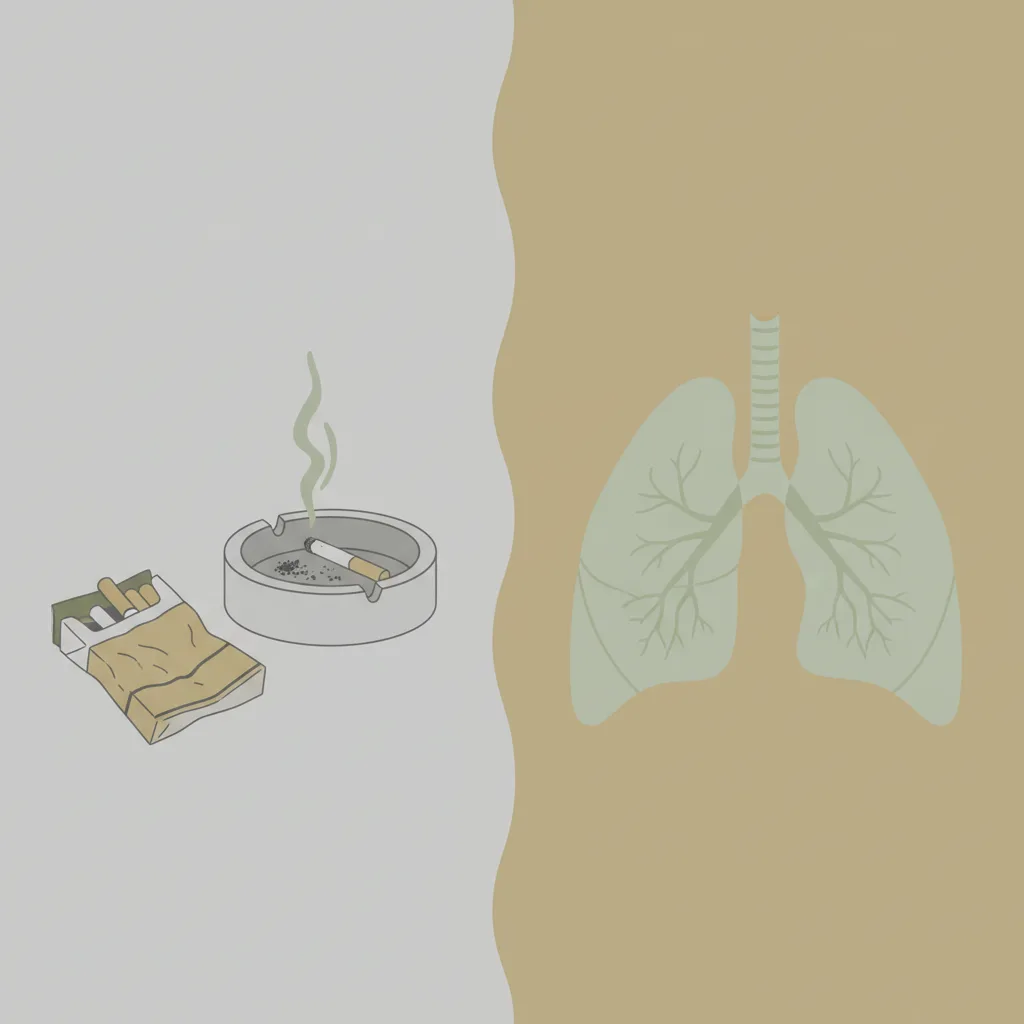






The most lopsided regret asymmetry in the dataset sits here. Approximately 90% of current smokers in the US, UK, Canada, and Australia agree they would not start smoking if they could do it over, according to the ITC Four Country Survey. The figure is consistent across sex, age, education, and (with minor variation) culture — Asian ITC surveys find 74-93% depending on the country. On the quitting side, no published survey of former smokers has identified a measurable regret rate for having quit. The CDC tracks cessation extensively and does not even include a quitting-regret item, because the phenomenon is too rare to study.
This makes smoking the closest thing to a one-way door in the regret literature. Gilovich and Medvec’s temporal theory predicts that inaction regrets dominate over time, and smoking is the extreme case: the longer someone continues, the deeper the regret about not having quit sooner. The 0.01 floor used for action-side regret is almost certainly an overestimate — it exists only because no study can report a true zero from survey data. Former smokers overwhelmingly describe relief, improved health, and financial savings, not second thoughts.
The caveat that matters is agency. Nicotine dependence means that “continuing to smoke” is not a simple preference for most smokers — it is a behavior sustained by addiction against expressed wishes. Framing it as “inaction” understates the pharmacological lock-in. The 90% regret figure is itself a measure of how deeply smokers feel trapped: they know they would choose differently, and most of them cannot.