







Skip to content
Likelier
Lifestyle

Living in the city vs living in the suburbs

Last reviewed 2026-04-26

Evidence quality 4.25/5

Eight-dimension review score against the quality rubric . Each dimension scored 1–5.

D1 Source verification
5/5
D2 Source authority & independence
4/5
D3 Regret-rate accuracy
2/5
D4 Source comparability
5/5
D5 Gilovich pattern
4/5
D6 Prose quality
5/5
D7 Caveat completeness
4/5
D8 Sample quality
5/5
Average 4.25/5
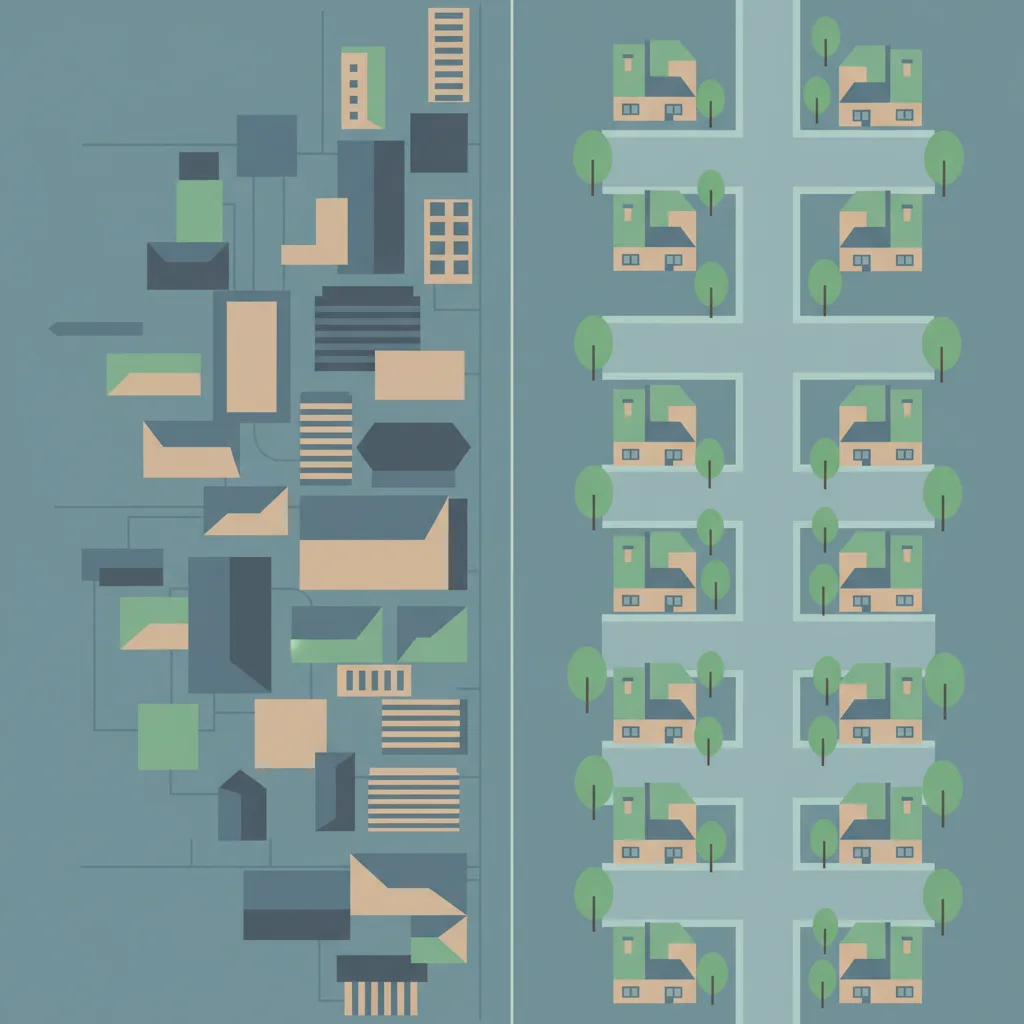
A city skyline and a quiet suburban street separated by a thin vertical line.

Action regret

Living in the city

43%

43% of city dwellers want to leave (proxy -- see caveats)

US adults living in big cities

retrospective, no fixed timeframe

Inaction regret

Living in the suburbs

35%

35% of suburbanites want to leave (proxy -- see caveats)

US adults living in suburbs of big cities

retrospective, no fixed timeframe

% who regret this choice

action dominates — Action dominates — most regret acting.

Related decisions

Semantically similar decisions — same territory, different trade-offs.

lifestyle

Leave hometown

% who regret this choice

Inaction dominates

Inaction regret 1.5× higher

lifestyle

Move abroad

% who regret this choice

Inaction dominates

Inaction regret 5.7× higher

lifestyle

Embracing change

% who regret this choice

Inaction dominates

Inaction regret 3.3× higher

lifestyle

Tattoo

% who regret this choice

Action dominates

Action regret 1.6× higher

lifestyle

Leave religion

% who regret this choice

Inaction dominates

Inaction regret 2.9× higher

lifestyle

Keeping vs rehoming a pet

% who regret this choice

Inaction dominates

Inaction regret 5.7× higher

lifestyleDirect

Vietnam: migrate to city vs. stay

% who regret this choice

Action dominates

Action regret 2.1× higher

lifestyle

Procrastination

% who regret this choice

Inaction dominates

Inaction regret 4.7× higher

Pew Research found in late 2021 that 43% of urban residents would move to a different community if they could, compared with 35% of suburban residents — an 8-point gap that puts city living on the action-regret side of the ledger. The gap is real but narrow, and it widened during the pandemic: between 2018 and 2021, the share of Americans preferring suburbs climbed from 42% to 46%, while urban preference dropped from 23% to 19%. Separately, Home Bay’s 2023 survey of 1,000 recent movers found that 75% expressed some regret about their move regardless of direction, suggesting that relocation itself — not the destination — is the primary regret generator.

The asymmetry here is unusually weak compared to most regret-pair entries in this dataset. Gilovich and Medvec’s temporal framework predicts that inaction regret dominates over time, yet the city-vs-suburb question resists that pattern: choosing the city (action) produces slightly more dissatisfaction than staying in the suburbs (inaction). One explanation is that urban living imposes daily friction — cost, noise, space constraints — that keeps action regret salient rather than allowing it to fade. Another is that suburbs are not really an “inaction” in any meaningful sense; both choices are active, and framing suburbs as the default is itself a cultural artifact of post-war American planning.

The main caveat is measurement. Pew asked about desire to leave, not about regret for a past choice. A 25-year-old renting in Brooklyn who wants to leave may be responding to rent pressure, not regretting a life decision. The 75% Home Bay figure is similarly blunt — it includes people who regret their moving company, their timing, or their square footage, not the city-vs-suburb axis specifically. The directional finding (city dwellers are modestly more dissatisfied than suburbanites) is consistent across multiple surveys, but the 8-point gap should be read as a signal of mild asymmetry, not a strong verdict.

Sources: action

Claim ledger

Every number below is what each source reported, with the verbatim quote we relied on and how we arrived at our figure. Click any link to verify directly.

  1. [1] Pew Research Center — Americans Are Less Likely Than Before COVID-19 To Want To Live in Cities
    Americans Are Less Likely Than Before COVID-19 To Want To Live in Cities
    Statistic
    43% of urban dwellers say they would like to move to a different community if they could
    Excerpt
    “"43% of urban dwellers say they would like to move to a different community if they could, compared with 35% of suburban residents and 25% of rural residents." ”
    Source data from
    2021-12-16
    Accessed
    2026-04-26
    Calculation
    Pew Research Center survey of 9,676 US adults conducted Oct 18–Nov 1, 2021. The 43% figure refers to urban residents who express a desire to move to a different community. We treat this as a proxy for city-living regret: the question captures dissatisfaction intense enough to motivate relocation intent.
  2. [2] Home Bay — 2023 Data: 75% of Americans Have Regrets About Moving
    2023 Data: 75% of Americans Have Regrets About Moving
    Statistic
    75% of Americans who moved in 2022 have regrets about their move
    Excerpt
    “"Three out of four Americans (75%) have regrets about their move, including not liking their new home after all (15%) or wishing they had chosen a bigger home (20%)." ”
    Source data from
    2023-03-01
    Accessed
    2026-04-26
    Calculation
    Home Bay online survey of 1,000 Americans who moved in 2022, fielded December 29, 2022. The 75% figure covers all movers, not just city-to-suburb movers, and captures any regret (cost, size, location, timing). Included as contextual evidence that moving regret is pervasive regardless of direction.

Sources: inaction

Claim ledger

Every number below is what each source reported, with the verbatim quote we relied on and how we arrived at our figure. Click any link to verify directly.

  1. [1] Pew Research Center — Americans Are Less Likely Than Before COVID-19 To Want To Live in Cities
    Americans Are Less Likely Than Before COVID-19 To Want To Live in Cities
    Statistic
    35% of suburban residents say they would like to move to a different community if they could
    Excerpt
    “"35% of suburban residents say they would like to move to a different community if they could, compared with 43% of urban dwellers." ”
    Source data from
    2021-12-16
    Accessed
    2026-04-26
    Calculation
    Same Pew survey as action_side. The 35% figure represents suburban residents expressing desire to move — 8 percentage points lower than the city-dweller rate, suggesting modestly lower dissatisfaction in suburban settings.

Caveats

The Pew figures measure desire to leave a community type, not retrospective regret about a past decision — they are a proxy for dissatisfaction, not a direct regret survey. The 8-percentage-point gap is modest and may fall within the survey's margin of error for subgroup comparisons. The Home Bay 75% figure applies to all movers regardless of origin or destination, so it cannot be decomposed into city-to-suburb vs suburb-to-city regret rates. Post-COVID sentiment shifted preferences toward suburbs (Pew showed suburban preference rising from 42% to 46% between 2018 and 2021), which may overstate city-living regret relative to long-run equilibrium. Age is a major confound: adults under 30 prefer cities at 31% vs 14% among those 65+, so the aggregate gap conflates lifecycle stage with genuine locational regret.

Raw data: /api/decisions.json