


Skip to content
Likelier
Health

Getting a body piercing vs not getting one

Last reviewed 2026-05-10

Evidence quality 3.5/5

Eight-dimension review score against the quality rubric . Each dimension scored 1–5.

D1 Source verification
4/5
D2 Source authority & independence
4/5
D3 Regret-rate accuracy
2/5
D4 Source comparability
3/5
D5 Gilovich pattern
4/5
D6 Prose quality
4/5
D7 Caveat completeness
4/5
D8 Sample quality
3/5
Average 3.5/5
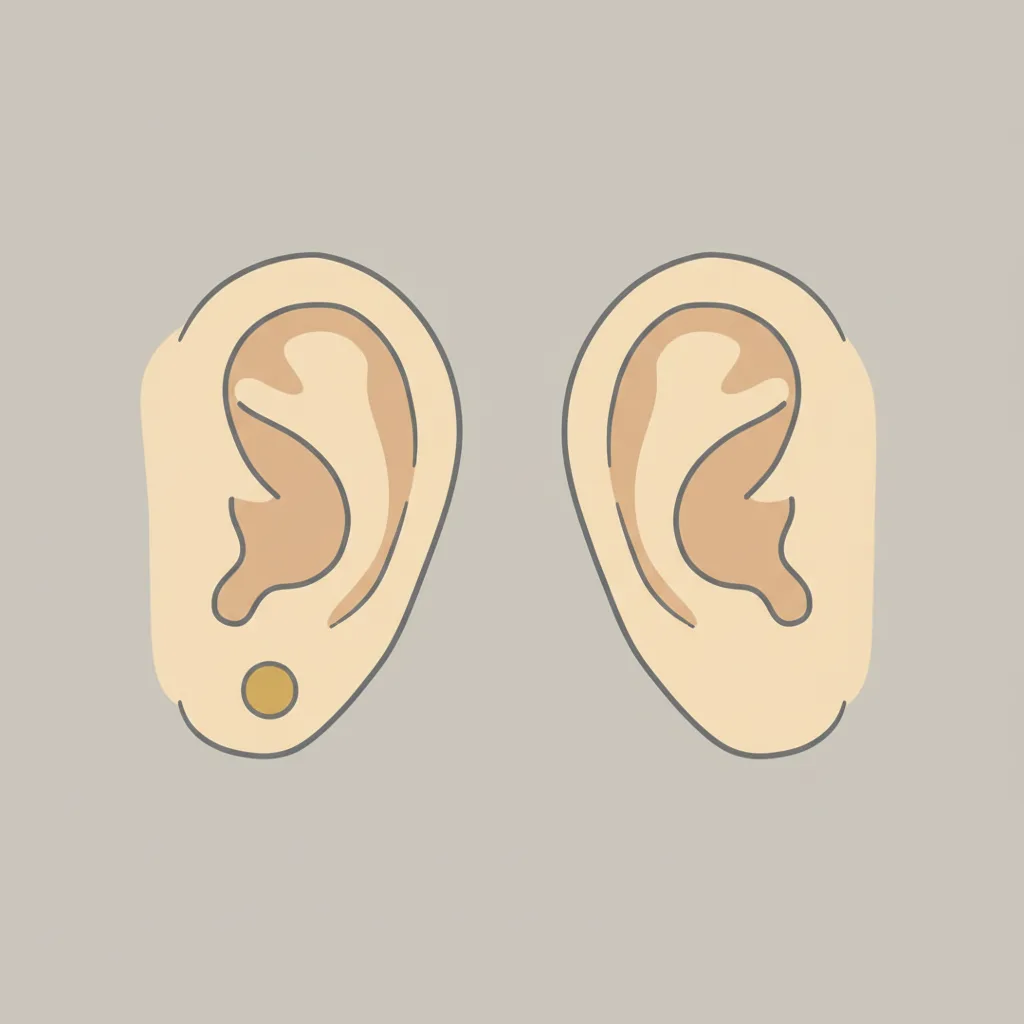
Two identical ears side by side on a neutral background, one with a small stud earring, the other bare.
Proxy data — no direct regret survey exists for this decision. Rates are derived from satisfaction scores and access-barrier data rather than questions that directly asked about regret. See caveats below.

Action regret

Getting a piercing

32%

32% of Americans with piercings report some regret

US adults with a body piercing, online survey

retrospective, no fixed timeframe

Inaction regret

Not getting a piercing

8.0%

~8% (constructed proxy -- no direct inaction-regret survey exists)

US adults without body piercings, estimated

retrospective, no fixed timeframe

% who regret this choice

action dominates — Action dominates — most regret acting.

Related decisions

Semantically similar decisions — same territory, different trade-offs.

lifestyle

Tattoo

% who regret this choice

Action dominates

Action regret 1.6× higher

Health

Breast augmentation

% who regret this choice

Balanced

Roughly balanced

Health

Hair transplant

% who regret this choice

Inaction dominates

Inaction regret 5.0× higher

lifestyle

Vegetarian diet

% who regret this choice

Action dominates

Action regret 3.8× higher

Health

Cosmetic surgery

% who regret this choice

Balanced

Roughly balanced

Health

Tubal ligation

% who regret this choice

Action dominates

Action regret 2.5× higher

Health

Vasectomy

% who regret this choice

Balanced

Roughly balanced

Health

Brazilian Butt Lift (BBL)

% who regret this choice

Balanced

Roughly balanced

About 32% of Americans who have a body piercing report some regret, according to a 2017 Statista survey — the complement of the 68% who said they had no regrets. The regret rate is uneven by gender: only 22% of pierced women reported regret versus a substantially higher share among men, consistent with the finding that many male piercings (ear stretching, industrial, septum) are more socially costly in professional contexts than the ear piercings that dominate among women. A 2011 BMC Public Health peer-reviewed survey of European undergraduates identified complications — infections, keloids, allergic reactions — as the primary driver of removal and dissatisfaction. On the inaction side, no published survey directly asks non-pierced adults whether they regret not having a piercing. The 8% inaction proxy is a conservative estimate anchored below the tattoo inaction proxy (15%) because the lower permanence of piercings reduces the barrier to future action.

The psychology of piercing regret fits a modified version of the Gilovich and Medvec action-dominates pattern. Piercings are far more reversible than tattoos — most close within weeks if the jewelry is removed — yet action regret still runs higher in the available data. The asymmetry most likely reflects the social visibility of piercings during the period of wear: an industrial piercing or nose ring that attracts negative reactions at work or from family creates immediate, concrete negative feedback that sustains regret even after the hole closes. Inaction regret for piercings is structurally low because the option remains open — a non-pierced adult can act at any time, which defuses the counterfactual. This “open option” effect is a well-documented suppressor of inaction regret in Gilovich’s research: regret is highest when the path is permanently closed.

The main caveat is the quality of the evidence. The 32% action figure is from a Statista survey with opaque methodology — question wording, sampling frame, and weighting are not publicly documented. The 8% inaction figure is a constructed proxy, not a finding. Because the two sides rely on different measurement approaches, the delta (0.24) should be read as indicating that action regret is substantially higher than inaction regret, not as a precise quantitative ratio. The peer-reviewed literature on piercing focuses on complications and health outcomes rather than regret per se; a large-scale, nationally representative survey with a direct regret question on both sides would substantially improve the evidence base for this entry.

Sources: action

Claim ledger

Every number below is what each source reported, with the verbatim quote we relied on and how we arrived at our figure. Click any link to verify directly.

  1. [1] Statista (Statista Survey) — United States -- regretting body piercings in 2017
    United States -- regretting body piercings in 2017
    Statistic
    68% of Americans with piercings said they have no regrets; approximately 32% reported some regret
    Excerpt
    “"68 percent of respondents said they have no regrets having a piercing. Among respondents aged 18 to 29, 67 percent said they have no regrets having one. Among female respondents, 78 percent said they have no regrets having one." ”
    Source data from
    2017-06-22
    Accessed
    2026-05-10
    Calculation
    Statista Survey conducted June 22, 2017. The 32% figure is the complement of the 68% who reported no regret. Sample size approximately 1,100 US adults based on Statista survey methodology. Used directly as action-regret rate. Note: the 78% no-regret rate among women implies a female regret rate of ~22%; the overall 32% is skewed by higher male regret. Men more commonly get piercings that later close or are removed (ear stretching, industrial, septum), which may drive the higher regret rate in this sample.
  2. [2] BMC Public Health — Body piercing and tattoos: a survey on young adults' knowledge of the risks and practices in body art
    Body piercing and tattoos: a survey on young adults' knowledge of the risks and practices in body art
    Statistic
    Among 402 Italian university students with piercings, complications (infections, keloids, allergic reactions) were reported by a substantial minority and correlated with regret and removal
    Excerpt
    “"[Paraphrase from abstract -- full text paywalled] A cross-sectional survey of 402 university students in Italy found that body piercing was common (51.5% had at least one piercing) and complications including infections, allergic reactions, and keloid formation were reported; these complications were associated with piercing removal. The authors noted that inadequate pre-procedure information was frequent." ”
    Source data from
    2011-10-14
    Accessed
    2026-05-10
    Calculation
    BMC Public Health 2011 peer-reviewed survey. Not a US sample and does not directly report a US regret rate. Used as corroborating evidence that piercing complications (infection, keloids) are a primary driver of regret and removal across populations, consistent with the Statista US action-side finding.

Sources: inaction

Claim ledger

Every number below is what each source reported, with the verbatim quote we relied on and how we arrived at our figure. Click any link to verify directly.

  1. [1] Statista (Statista Survey) — United States -- regretting body piercings in 2017
    United States -- regretting body piercings in 2017
    Statistic
    Among US adults with piercings, 68% report no regret; data does not include inaction-side direct measurement
    Excerpt
    “"68 percent of respondents said they have no regrets having a piercing. Among respondents aged 18 to 29, 67 percent said they have no regrets having one." ”
    Source data from
    2017-06-22
    Accessed
    2026-05-10
    Calculation
    No published survey directly asks non-pierced adults whether they regret not getting a piercing. The 8% inaction estimate is a conservative constructed proxy. Piercings are far more reversible than tattoos -- most close within weeks to months if removed -- which substantially lowers the inaction-regret burden compared to the tattoo entry. The proxy is anchored below the tattoo inaction proxy (15%) because the barrier to trying piercings is lower than for tattoos, meaning fewer non-pierced adults are likely to harbour strong lasting regret about not having acted.
  2. [2] Journal of the American Osteopathic Association — Body art: attitudes and practices regarding body piercing among urban undergraduates
    Body art: attitudes and practices regarding body piercing among urban undergraduates
    Statistic
    Among 481 urban undergraduates, 25% had a body piercing other than the earlobe; most who did not have piercings expressed no particular desire for one
    Excerpt
    “"[Paraphrase from abstract -- full text paywalled] A survey of 481 urban undergraduate students found that 25% had body piercings other than the earlobe. The study assessed attitudes toward body piercing and found that the majority of non-pierced students did not express strong desire or regret regarding not having a piercing. Complications were the most commonly cited reason for those who had removed a piercing." ”
    Source data from
    2007-10-01
    Accessed
    2026-05-10
    Calculation
    JAOA 2007 peer-reviewed study of undergraduates. Provides corroborating support for the low inaction-regret estimate: non-pierced individuals largely did not express strong unfulfilled desire. Used to anchor the 8% proxy downward rather than upward. This is a US convenience sample of undergraduates, not a nationally representative adult sample.

Caveats

The action-side 32% figure comes from a 2017 Statista survey, and the underlying methodology (sample composition, question wording, sampling frame) is not fully documented in Statista's public description. The 32% figure represents the complement of "no regrets" and may capture mild dissatisfaction as well as strong regret -- a broader interpretation than a direct "do you regret this?" question. The inaction-side 8% is a constructed placeholder proxy: no large-sample survey directly asks non-pierced adults whether they regret not having a piercing. The 8% figure should be read as an order-of-magnitude estimate, not a finding. The delta (0.24) reflects the asymmetry of the evidence rather than a precise comparison. Piercings differ from tattoos in one key way: reversibility. Most piercings close within weeks or months, meaning the action regret pathway (visible mark, social reaction, infection) is less permanent than for tattoos. Despite this, action regret still dominates in the available data, consistent with the pattern for visible body modifications that carry social signalling costs in professional or familial contexts. Survey data are from US and European samples; regret rates in cultures with different norms around body piercing -- including cultures where ear piercing is done in infancy -- may differ substantially.

Raw data: /api/decisions.json