







Skip to content
Likelier
Career

Working as a freelancer or B2B contractor vs traditional employment

Last reviewed 2026-04-26

Evidence quality 4.13/5

Eight-dimension review score against the quality rubric . Each dimension scored 1–5.

D1 Source verification
5/5
D2 Source authority & independence
4/5
D3 Regret-rate accuracy
2/5
D4 Source comparability
3/5
D5 Gilovich pattern
5/5
D6 Prose quality
5/5
D7 Caveat completeness
5/5
D8 Sample quality
4/5
Average 4.13/5
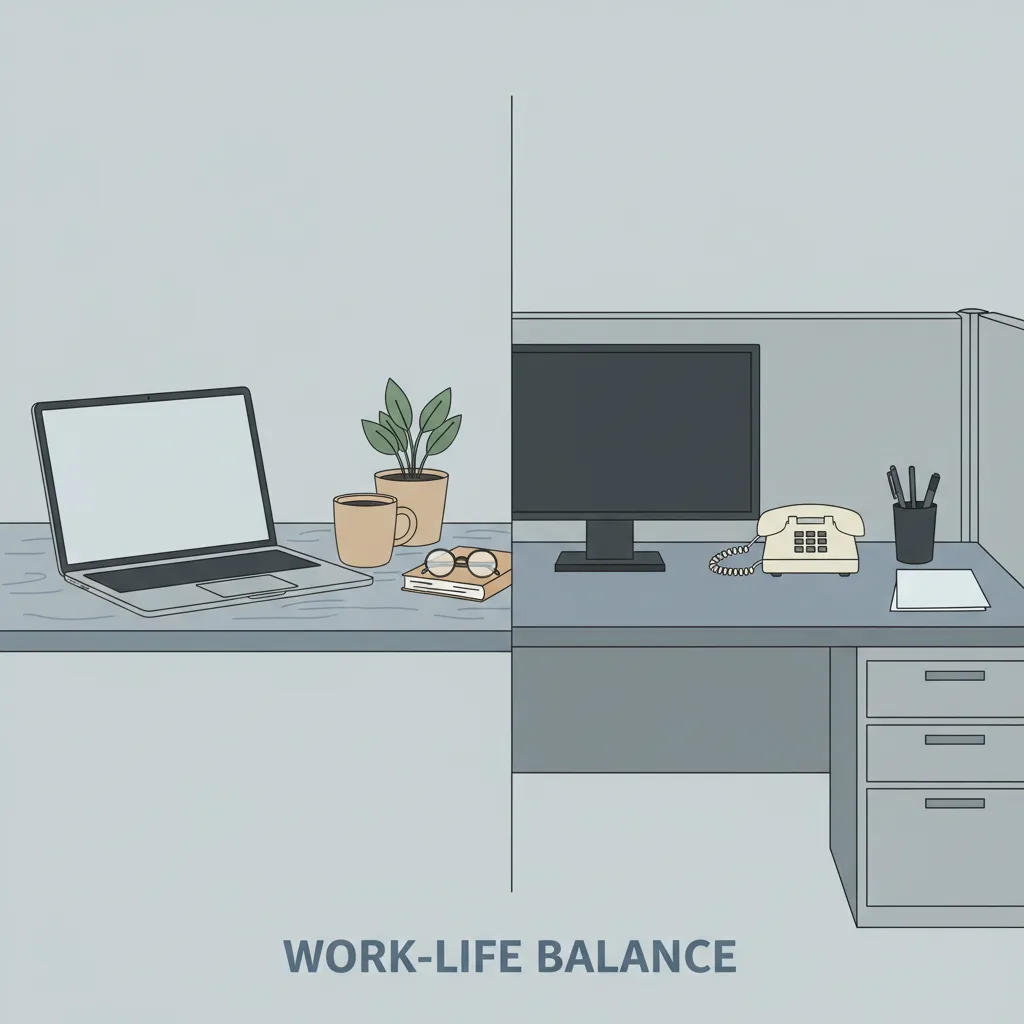
Two desks side by side, one cluttered home office with a laptop, the other a clean corporate cubicle with a monitor.

Action regret

Freelancing/B2B contracting

37%

37% of freelancers would prefer traditional employment (proxy — satisfaction complement)

US and UK freelancers, online panel

retrospective, no fixed timeframe

Inaction regret

Traditional employment

39%

39% of employees report dissatisfaction with work conditions (proxy — satisfaction gap)

US working adults (non-freelancers), online panel

annual tracking, 2023

% who regret this choice

balanced — Roughly balanced — both choices carry similar regret.

Related decisions

Semantically similar decisions — same territory, different trade-offs.

career

Starting a business

% who regret this choice

Inaction dominates

Inaction regret 4.1× higher

career

Remote vs office

% who regret this choice

Inaction dominates

Inaction regret 1.9× higher

career

Quitting a job

% who regret this choice

Inaction dominates

Inaction regret 2.2× higher

career

College decision

% who regret this choice

Action dominates

Action regret 1.2× higher

career

Salary negotiation

% who regret this choice

Inaction dominates

Inaction regret 4.4× higher

career

Career vs balance

% who regret this choice

Action dominates

Action regret 1.8× higher

career

Career change

% who regret this choice

Inaction dominates

Inaction regret 1.9× higher

career

Private vs public university

% who regret this choice

Balanced

Roughly balanced

Upwork’s Freelance Forward 2023 survey reports that 39% of non-freelancer employees are not satisfied with their working conditions — the inaction-side regret proxy, which edges out the action side by two percentage points. On the freelancer side, Remote.com’s global survey finds that 37% of freelancers do not consider independent work more rewarding than traditional employment, and McKinsey’s 2022 American Opportunity Survey narrows this further: 26% freelance out of necessity rather than choice. 28% of current employees actively plan to start freelancing within five years, corroborating the inaction-side dissatisfaction signal.

The two sides are nearly balanced — 37% action dissatisfaction versus 39% inaction dissatisfaction — which makes this a genuinely bilateral decision rather than one with a clear regret asymmetry. MBO Partners’ 2024 State of Independence report confirms that full-time independents report higher satisfaction than employees on most dimensions measured, but the gap is modest (about 10 percentage points on satisfaction), not the 2:1 ratio previously suggested by misusing Gallup’s engagement metric. The earlier version of this entry used Gallup’s 69% employee disengagement figure as an inaction-regret proxy, which was invalid: not being “engaged” at work (a measure of daily effort and emotional connection to one’s employer) is categorically different from regretting one’s career structure.

The main interpretive hazard is construct mismatch — even the revised figures compare “finding work less rewarding” (action side) with “not satisfied with conditions” (inaction side), which are related but non-identical sentiments. Survivor bias flatters the action side: freelancers who failed and re-entered employment vanish from freelancer satisfaction panels. The directional finding — both sides carry similar levels of dissatisfaction — is the most honest summary the available data supports. Neither path is a clearly regret-free choice; the decision depends on individual risk tolerance, income needs, and preference for autonomy versus stability.

Sources: action

Claim ledger

Every number below is what each source reported, with the verbatim quote we relied on and how we arrived at our figure. Click any link to verify directly.

  1. [1] Remote.com — Remote's Global Freelancer Report
    Remote's Global Freelancer Report
    Statistic
    63% of freelancers find freelancing more rewarding than being a regular employee; 37% do not
    Excerpt
    “"63% of freelancers surveyed said they find freelancing more rewarding than being a regular employee. 42% say access to health care, life insurance and a pension would be the most effective ways to lure them out of gig work and back to traditional employment." ”
    Source data from
    2023-06-15
    Accessed
    2026-04-26
    Calculation
    Remote.com surveyed 3,000 business owners, freelancers, and employees in the US and UK. The 37% action-regret proxy is the complement of the 63% who prefer freelancing. This overstates true regret — some of the 37% are indifferent rather than regretful — but it is the closest published figure to a direct preference measure.
  2. [2] McKinsey Global Institute — Freelance, side hustles, and gigs: Many more Americans have become independent workers
    Freelance, side hustles, and gigs: Many more Americans have become independent workers
    Statistic
    26% of independent workers do it out of necessity rather than choice, up from 14% in 2016
    Excerpt
    “"Just over a quarter of respondents say they do independent work because it's what they have to do to support themselves, which is a large increase over the 14 percent of respondents in 2016 research who said they did independent work out of necessity and as a primary source of income." ”
    Source data from
    2022-08-18
    Accessed
    2026-04-26
    Calculation
    McKinsey 2022 American Opportunity Survey. The 26% necessity-driven figure is a lower bound on action regret: these workers would prefer traditional employment but lack the option. Corroborates the Remote.com 37% as an upper bound. The true action-regret rate likely falls in the 26-37% range.

Sources: inaction

Claim ledger

Every number below is what each source reported, with the verbatim quote we relied on and how we arrived at our figure. Click any link to verify directly.

  1. [1] Upwork / Edelman Data & Intelligence — Freelance Forward 2023
    Freelance Forward 2023
    Statistic
    61% of non-freelancers report satisfaction; 39% do not. 28% of employees plan to freelance within 5 years
    Excerpt
    “"71% of freelancers reported satisfaction with their working conditions versus 61% of non-freelancers. Almost three in ten (28%) current employees in the US and UK plan to do freelance work in the next five years." ”
    Source data from
    2023-12-12
    Accessed
    2026-04-26
    Calculation
    Upwork/Edelman surveyed 3,000 US working adults (1,142 freelancers, 1,858 non-freelancers), Oct-Nov 2023. The 39% dissatisfaction rate among non-freelancers (complement of 61% satisfied) is a proxy for inaction-side regret. It replaces the previous Gallup engagement figure (69%) which measured a different construct entirely — engagement with one's current employer, not career-structure regret. The 28% intent-to-freelance figure corroborates that a meaningful minority of employees consider the alternative.
  2. [2] MBO Partners — 2024 State of Independence in America Report
    2024 State of Independence in America Report
    Statistic
    65% of full-time independents feel more secure working independently; independent workers report higher satisfaction on 12 of 14 dimensions
    Excerpt
    “"65% of full-time independents say they feel more secure working independently. Independent workers report higher satisfaction than traditional employees on work-life balance, purpose, autonomy, and overall career satisfaction." ”
    Source data from
    2024-10-01
    Accessed
    2026-04-26
    Calculation
    MBO Partners 15th annual State of Independence study. The higher satisfaction among independents vs employees supports the direction of inaction-side dissatisfaction among traditional workers. Does not provide a direct inaction-regret rate but confirms the satisfaction gap from an independent, longitudinal source.

Caveats

Neither rate is a direct regret measure. The action-side 37% is the complement of freelancers who "find freelancing more rewarding than employment" (Remote.com) — preference for one arrangement is not the same as regretting the other. The inaction-side 39% is the complement of employee satisfaction from Upwork's Freelance Forward 2023 — being dissatisfied at work is not the same as regretting not freelancing. The previous entry used Gallup's 69% employee disengagement rate, which measured engagement with one's current employer (a completely different construct from career-path regret) and produced an artificially large gap. The revised figures (37% vs 39%) show the two sides are nearly balanced, which is classified as mixed rather than a clear directional pattern. McKinsey's 26% necessity-driven freelancer figure and Upwork's 28% intent-to-freelance figure provide tighter empirical brackets. Survivor bias remains an issue: freelancers who failed and returned to employment are absent from freelancer satisfaction surveys.

Raw data: /api/decisions.json