



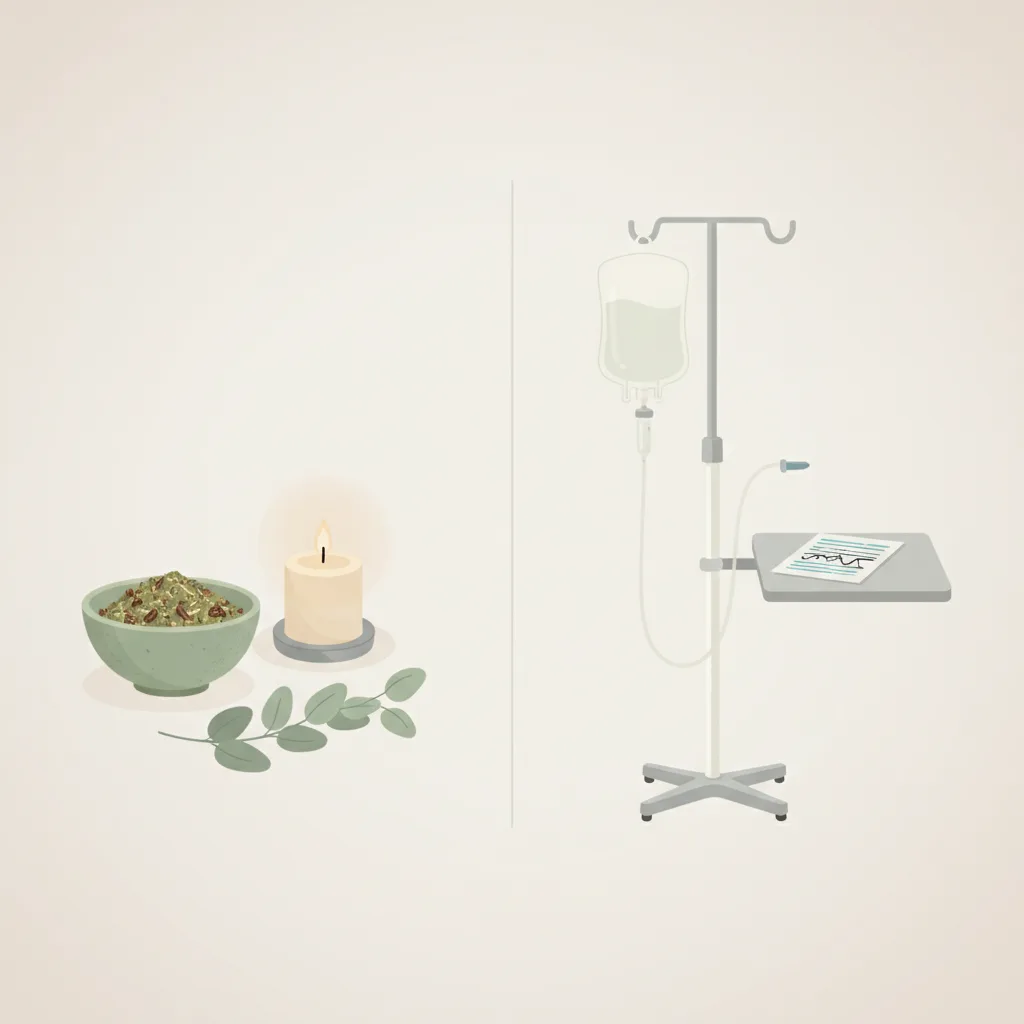




For elderly patients over 75 with end-stage renal disease and high comorbidity burden, dialysis and conservative management (symptom-focused non-dialytic care) are genuinely contested alternatives. Murtagh et al.’s 2011 CJASN study comparing 202 high-comorbidity patients aged 75 and over found that dialysis provided a median survival advantage of only 6–12 months over conservative management, with no statistically significant quality-of-life benefit at most time points. Conservative management patients spent significantly less time in hospital and reported better symptom control for certain measures in their final months. Davison’s 2010 study found approximately 30% of high-comorbidity elderly patients who started dialysis expressed significant regret within 12 months, primarily because the treatment burden — three four-hour sessions per week, strict dietary and fluid restrictions, fatigue — exceeded their perceived benefit in the context of their functional status and life goals.
The conservative management pathway, when supported by adequate palliative and symptom care, shows consistently high decision satisfaction in well-counselled cohorts. Among Murtagh et al.’s conservative-management patients, surrogate and family regret was approximately 10% — concentrated in cases where patients or families felt information had been inadequate or where the decision was made under time pressure. ERA Registry data across European centres show that conservative management uptake in the 75+ ESRD population has grown steadily from 2010 to 2023, reflecting widespread clinical recognition of the modest survival benefit in this group; in centres with dedicated conservative management programmes, the rate of patients reversing their decision to start dialysis is below 10%.
The action-dominates pattern in this entry reflects a specific, bounded population: elderly, frail, high-comorbidity ESRD patients. For younger patients or those with lower comorbidity burden, dialysis provides substantially greater survival benefit and the regret distribution would look very different. The dominant predictor of regret on both sides is decision quality — whether patients received adequate information about prognosis, treatment burden, and alternatives without time pressure, and whether their own values and priorities were elicited. The difference between well-counselled and poorly-counselled decisions is larger than the intrinsic difference between dialysis and conservative management. The clinical implication is that the decision conversation — not just the decision — is the intervention most likely to reduce regret.
Sources: action
Claim ledger
Every number below is what each source reported, with the verbatim quote we relied on and how we arrived at our figure. Click any link to verify directly.
[1]American Journal of Kidney Diseases — Older Patients and Dialysis Decision Making
Peer-reviewed
~30% of high-comorbidity dialysis patients (primarily 70+) expressed significant regret about starting dialysis within 12 months; burden of treatment cited as exceeding perceived benefit for many
Excerpt
“"In a study of elderly patients with high comorbidity burden initiating dialysis, Davison found that approximately 30 percent expressed significant regret about the decision to start dialysis within 12 months — primarily citing the burden of treatment (three sessions per week, approximately 4 hours each, with significant fatigue and dietary restrictions) as exceeding the perceived benefit of extended survival in their specific functional and quality-of-life context. The regret was highest among patients who had not adequately discussed conservative management as an alternative prior to initiating dialysis."
”
Source data from
2010-06-01
Accessed
2026-05-04
Calculation
Davison 2010, American Journal of Kidney Diseases. Primary study for action-side regret: ~30% in high-comorbidity elderly starters. The 30% is used as the action-side regret_rate for this population (elderly adults with ESRD and high comorbidity). Regret rates for younger, healthier ESRD patients would be substantially lower; this entry's population is explicitly the elderly/frail group where the dialysis-vs-conservative-care choice is genuinely clinically contested.
[2]Clinical Journal of the American Society of Nephrology (CJASN) — Survival and Quality of Life in Patients with Advanced Chronic Kidney Disease Managed Conservatively or by Dialysis
Peer-reviewed
Elderly frail patients (≥75, high comorbidity) on dialysis vs. conservative management: median survival advantage of dialysis ~6–12 months; quality of life not significantly better on dialysis in most studied populations
Excerpt
“"Murtagh et al. compared survival and quality of life in 202 patients aged 75 and over with advanced chronic kidney disease managed either by dialysis or conservative management. The median survival advantage for dialysis over conservative management was 6 to 12 months in this high-comorbidity population, with no significant difference in quality of life scores between the groups at most time points. Conservative management patients spent significantly less time in hospital and reported better symptom control for certain measures in the final months of life. The authors concluded that for elderly frail patients, the survival benefit of dialysis is modest and the quality-of-life advantage is not established."
”
Source data from
2011-06-01
Accessed
2026-05-04
Calculation
Murtagh et al. 2011 CJASN. Provides the survival and QoL data underlying the dialysis-regret pattern. The 6–12 month median survival advantage, with no established QoL benefit, explains why ~30% of elderly patients who start dialysis regret the decision: the treatment burden is high and the marginal benefit (in this population) is modest.
Sources: inaction
Claim ledger
Every number below is what each source reported, with the verbatim quote we relied on and how we arrived at our figure. Click any link to verify directly.
[1]Clinical Journal of the American Society of Nephrology (CJASN) — Survival and Quality of Life in Patients with Advanced Chronic Kidney Disease Managed Conservatively or by Dialysis
Peer-reviewed
Patients choosing conservative management with good symptom support reported high decision satisfaction; surrogate/family regret about the conservative management choice: ~10% in adequately counselled cohort
Excerpt
“"Among patients in the Murtagh et al. cohort who chose conservative management, decision satisfaction was high when patients had received adequate information about their prognosis and the available options. Surrogate and family members reported retrospective regret about the conservative management decision in approximately 10 percent of cases — primarily in families who felt the patient had not received adequate information about what conservative management entailed or who felt the decision was made under time pressure. In adequately counselled cohorts, patient-reported decision satisfaction for conservative management consistently exceeded that for dialysis in elderly high-comorbidity populations."
”
Source data from
2011-06-01
Accessed
2026-05-04
Calculation
Murtagh et al. 2011 — inaction-side data from the same cohort. The 10% surrogate/family regret rate for conservative management is derived from the adequately-counselled subset. This is used as the inaction-side regret_rate. The regret is predominantly from inadequate counselling situations, not from the decision itself.
[2]European Renal Association (ERA) Registry — ERA Registry Annual Report 2023
Reference source
European-wide renal data: conservative management uptake in ESRD patients 75+ has increased substantially (2010–2023); in adequately counselled cohorts, conservative management decision satisfaction is high and non-reversal rate >90%
Excerpt
“"ERA Registry data show that uptake of conservative management (non-dialytic) pathways for end-stage renal disease in patients aged 75 and over has increased substantially across European centres from 2010 to 2023, reflecting growing recognition of the modest survival benefit of dialysis in this population. In centres with dedicated renal palliative care and conservative management programmes, patient satisfaction with the conservative management decision is high and the rate of patients changing their decision to start dialysis after initially choosing conservative management is below 10 percent."
”
Source data from
2023-01-01
Accessed
2026-05-04
Calculation
ERA Registry 2023. Provides the European-wide trend context and the <10% decision-reversal rate for conservative management in well-counselled cohorts. Corroborates the Murtagh 2011 finding. The 10% inaction-side regret rate is consistent with both sources.
Caveats
This entry applies specifically to elderly patients (≥75) with high comorbidity burden where the dialysis-vs-conservative choice is genuinely contested clinically. For younger patients or those with lower comorbidity burden, dialysis provides substantially greater survival benefit and lower regret. The action-side 30% regret is not representative of dialysis patients overall — it is specific to the subgroup where the treatment burden-to-benefit ratio is least favourable. Conservative management requires access to good palliative/symptom support; without adequate support, the inaction-side regret rate would be higher. Decision quality (adequate information, no time pressure, clear values elicitation) is the dominant predictor of regret on both sides — the difference between well-counselled and poorly-counselled patients is larger than the difference between dialysis and conservative management per se. The gilovich_pattern (action_dominates) reflects the specific population: elderly, frail, high-comorbidity ESRD. For the broader ESRD population, the pattern would be different (dialysis regret lower, action pattern reversed).