







Skip to content
Likelier
Family

Giving a teenager supervised access to alcohol vs strict prohibition

Last reviewed 2026-05-22

Evidence quality 4.5/5

Eight-dimension review score against the quality rubric . Each dimension scored 1–5.

D1 Source verification
5/5
D2 Source authority & independence
5/5
D3 Regret-rate accuracy
2/5
D4 Source comparability
4/5
D5 Gilovich pattern
5/5
D6 Prose quality
5/5
D7 Caveat completeness
5/5
D8 Sample quality
5/5
Average 4.5/5
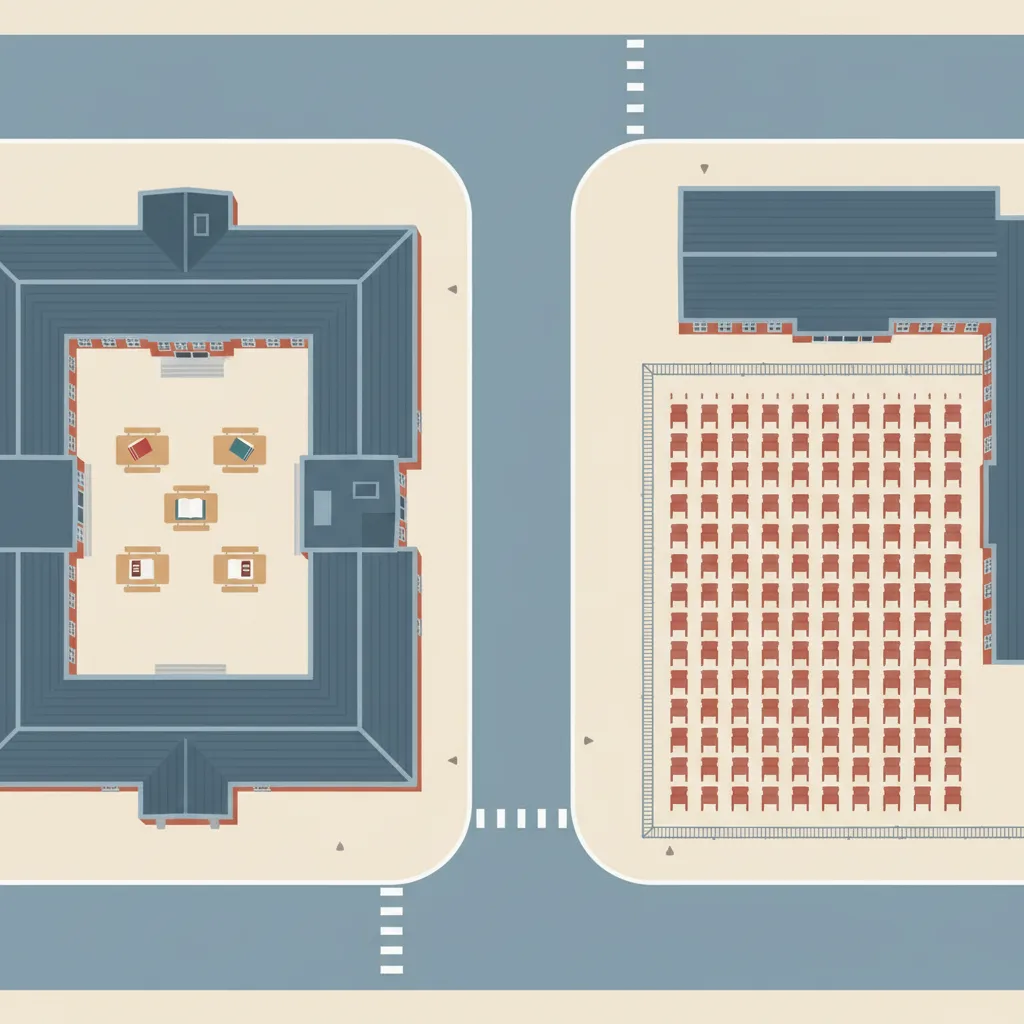
A wine glass with a small pour on the left and a locked cabinet on the right
Proxy data — no direct regret survey exists for this decision. Rates are derived from satisfaction scores and access-barrier data rather than questions that directly asked about regret. See caveats below.

Action regret

Supervised/managed alcohol access

36%

36% of teenagers given adult-supervised access to alcohol experienced harmful alcohol consequences by grade 9 (child-harm proxy for parental regret)

Secondary-school students in Victoria, Australia (permissive-norm context), followed from grade 7

3-year prospective cohort; grades 7–9 (ages ~12–15)

Inaction regret

Strict prohibition (no parental alcohol supply)

21%

21% of teenagers in a strict-prohibition policy context (Washington State) experienced harmful alcohol consequences by grade 9 (harm-outcome proxy)

Secondary-school students in Washington State (prohibition-norm context), followed from grade 7

3-year prospective cohort; grades 7–9 (ages ~12–15)

% who regret this choice

action dominates — Action dominates — most regret acting.

Related decisions

Semantically similar decisions — same territory, different trade-offs.

family

Free-range vs helicopter

% who regret this choice

Action dominates

Action regret 2.3× higher

family

Adoption placement vs raising

% who regret this choice

Action dominates

Action regret 4.8× higher

family

Sex ed timing

% who regret this choice

Inaction dominates

Inaction regret 3.5× higher

familyDirect

Child social media account access

% who regret this choice

Action dominates

Action regret 5.4× higher

family

Having children

% who regret this choice

Balanced

Roughly balanced

family

Child smartphone timing

% who regret this choice

Action dominates

Action regret 13.0× higher

family

Discipline vs leniency

% who regret this choice

Inaction dominates

Inaction regret 2.4× higher

family

Harsh vs gentle discipline

% who regret this choice

Action dominates

Action regret 1.2× higher

The intuition behind supervised teen drinking is plausible on its surface: introducing alcohol at home, in controlled amounts, might satisfy curiosity and teach moderation before peer pressure enters the picture. The data from three decades of prospective cohort research does not support this narrative. The Australian Parental Supply of Alcohol Longitudinal Study (APSALS), which followed 1,927 families from grades 7 through 12, found that adolescents who received alcohol exclusively from their parents had 2.58 times the odds of binge drinking, 2.53 times the odds of alcohol-related harm, and 2.51 times the odds of alcohol use disorder symptoms compared to adolescents who received no alcohol from any source (Mattick et al., Lancet Public Health, 2018). Critically, those supplied only by parents were twice as likely to begin accessing alcohol from other sources the following year — the supervised exposure did not contain the behaviour, it accelerated it.

The cross-jurisdictional comparison by Smolkowski and colleagues (2011) is particularly useful for this decision frame because it provides directly comparable child-harm rates across two policy environments that map onto parental approaches. In Victoria, Australia — where supervised home drinking was normative and two-thirds of students reported it by grade 8 — 36% of students experienced harmful alcohol consequences by grade 9. In Washington State, where zero-tolerance norms prevailed and only 35% reported supervised drinking, the rate was 21%. The gap is not merely cultural: the same study found that adult-supervised drinking settings were associated with higher harmful-consequence rates within both populations. A meta-analysis pooling 7 prospective studies across Sweden, the USA, the Netherlands, and Australia found a pooled odds ratio of 2.00 (95% CI 1.72–2.32) for risky drinking among adolescents supplied alcohol by parents versus those not supplied (Mattick et al., IJERPH, 2017).

Under Gilovich and Medvec’s temporal regret framework, actions generate more intense short-term regret when their consequences materialise quickly — and parental alcohol supply consequences tend to appear within one to three years. The action-dominates pattern is consistent with the evidence: parents who gave supervised access and watched their child develop problem drinking have a clear counterfactual (I could have said no) that is cognitively vivid. Parents who maintained strict prohibition and worry their child drinks covertly face a murkier counterfactual. The proxy gap between 36% and 21% represents a 15-point differential in immediate child harm, not a direct bilateral regret survey. Both sides carry real uncertainty: a minority of prohibition-context adolescents become drinkers anyway, and a minority of supervised-access adolescents show no problem trajectory. The evidence does not justify categorical certainty in either direction — it justifies noting that, on average, the supervised-access route produced more measurable harm.

Sources: action

Claim ledger

Every number below is what each source reported, with the verbatim quote we relied on and how we arrived at our figure. Click any link to verify directly.

  1. [1] Prevention Science (PMC) — Influence of Family Factors and Supervised Alcohol Use on Adolescent Alcohol Use and Harms: Similarities Between Youth in Different Alcohol Policy Contexts
    Influence of Family Factors and Supervised Alcohol Use on Adolescent Alcohol Use and Harms: Similarities Between Youth in Different Alcohol Policy Contexts
    Statistic
    36% of Victoria (supervised-drinking context) students experienced any harmful alcohol consequence by grade 9; adult-supervised settings for alcohol use were associated with higher levels of harmful alcohol consequences
    Excerpt
    “"Adult-supervised settings for alcohol use were associated with higher levels of harmful alcohol consequences," contrary to harm-minimization policy predictions. The relationship between supervised drinking and increased harms held true across both jurisdictions. ”
    Source data from
    2011-04-19
    Accessed
    2026-05-22
    Calculation
    Smolkowski et al. (2011), Prevention Science 12(3):250–263. Prospective cohort of 1,945 grade-7 students (989 females) from Washington State and Victoria, Australia; analysis sample 1,888. Victoria students—where parental supervised drinking was normative and common (66% reported supervised drinking by grade 8)—experienced a 36% rate of harmful alcohol consequences by grade 9. This covers eight harms: blackouts, injuries, loss of control, and violent behaviour. Used here as the action-side regret proxy: parental decision to allow supervised access is judged by whether the child suffered measurable alcohol-related harm within 3 years. No large-scale survey directly asks parents whether they regret giving supervised access.
  2. [2] The Lancet Public Health — Association of parental supply of alcohol with adolescent drinking, alcohol-related harms, and alcohol use disorder symptoms: a prospective cohort study
    Association of parental supply of alcohol with adolescent drinking, alcohol-related harms, and alcohol use disorder symptoms: a prospective cohort study
    Statistic
    Adolescents receiving alcohol exclusively from parents had OR 2.58 (95% CI 1.96–3.41) for binge drinking, OR 2.53 (1.99–3.24) for alcohol-related harm, and OR 2.51 (1.46–4.29) for AUD symptoms vs no supply
    Excerpt
    “"Providing alcohol to children is associated with alcohol-related harms" with no protective effect demonstrated. Parental supply only was associated with significantly elevated odds of binge drinking (OR 2.58), alcohol-related harm (OR 2.53), and alcohol use disorder symptoms (OR 2.51) compared to no supply from any source. ”
    Source data from
    2018-02-01
    Accessed
    2026-05-22
    Calculation
    Mattick et al. (2018), Lancet Public Health 3(2):e64–e71. APSALS cohort, n=1,927 families, grades 7–12, Sydney/Perth/Hobart, 2010–2016. Adjusted odds ratios compare parental-supply-only group vs no-supply group controlling for multiple confounders. These ORs corroborate the Smolkowski harm-rate figure as the primary proxy. The OR 2.53 for alcohol-related harm among parental-supply recipients is directionally consistent with the 36% vs 21% raw rates across jurisdictions in Smolkowski.

Sources: inaction

Claim ledger

Every number below is what each source reported, with the verbatim quote we relied on and how we arrived at our figure. Click any link to verify directly.

  1. [1] Prevention Science (PMC) — Influence of Family Factors and Supervised Alcohol Use on Adolescent Alcohol Use and Harms: Similarities Between Youth in Different Alcohol Policy Contexts
    Influence of Family Factors and Supervised Alcohol Use on Adolescent Alcohol Use and Harms: Similarities Between Youth in Different Alcohol Policy Contexts
    Statistic
    21% of Washington State (prohibition context) students experienced any harmful alcohol consequence by grade 9; lower than the 36% rate in the Victoria (supervised drinking) context
    Excerpt
    “"Adult-supervised settings for alcohol use were associated with higher levels of harmful alcohol consequences," contrary to harm-minimization policy predictions. Washington State students—in a zero-tolerance context—experienced 21% harmful consequences vs Victoria's 36%. ”
    Source data from
    2011-04-19
    Accessed
    2026-05-22
    Calculation
    Same Smolkowski et al. (2011) cohort, Washington State subsample (n=874 of 1,888 total). Washington State enforces strict zero-tolerance underage alcohol laws; parental supervised drinking was reported by only 35% of students by grade 8 vs 66% in Victoria. The 21% harm rate in the prohibition-norm context is the inaction-side proxy: parents who maintained prohibition saw lower rates of immediate alcohol-related harm in their children.
  2. [2] International Journal of Environmental Research and Public Health (PMC) — Parental Supply of Alcohol in Childhood and Risky Drinking in Adolescence: Systematic Review and Meta-Analysis
    Parental Supply of Alcohol in Childhood and Risky Drinking in Adolescence: Systematic Review and Meta-Analysis
    Statistic
    Pooled OR 2.00 (95% CI 1.72–2.32): parental supply of alcohol associated with twice the odds of subsequent risky drinking across 7 prospective studies
    Excerpt
    “"Parental supply of alcohol in childhood is associated with an increased likelihood of risky drinking later in adolescence." Pooled OR 2.00 (95% CI 1.72–2.32) across 6 studies with 8 effect estimates from Sweden, USA, Netherlands, Australia. ”
    Source data from
    2017-03-01
    Accessed
    2026-05-22
    Calculation
    Mattick et al. (2017), Int J Environ Res Public Health 14(3):287. Meta-analysis of 7 prospective longitudinal studies (6 in the pooled OR), sample sizes 428–2,625. The pooled OR 2.00 supports the no-supply (prohibition) inaction side as having roughly half the downstream risky drinking risk. The review notes methodological heterogeneity and cautious causal inference, consistent with the proxy-only framing of this entry.

Caveats

Both sides use child-harm rates as proxies for parental regret, not direct surveys asking parents whether they regret their alcohol-supply decision. No large-scale study has prospectively tracked parent-reported regret about supervised versus prohibited access. The Victoria (action proxy) and Washington State (inaction proxy) samples come from different cultural and policy environments, so the 36% vs 21% comparison partially reflects policy context rather than solely the parenting decision. The Mattick et al. (2018) APSALS odds ratios, and the Mattick et al. (2017) meta-analytic OR 2.00, corroborate the direction of effect but are not parent-regret measures. All studies are observational; residual confounding by family drinking culture, socioeconomic status, and child temperament is plausible. The regret framing also assumes that child harm maps directly onto parental regret; some parents in the supervised-access group may not view their child's drinking as a harm they caused, and some prohibition parents may regret being too restrictive even when their child did not develop problems. The 15-point gap should be interpreted as a direction of effect, not a precise bilateral regret differential.

Raw data: /api/decisions.json