What are the odds of dying while recreational caving over a typical caving career?
Evidence quality 4.13/5
Eight-dimension review score against the quality rubric . Each dimension scored 1–5.
- D1 Source grounding
- 4/5
- D2 Source authority
- 4/5
- D3 Arithmetic
- 4/5
- D4 Uncertainty
- 4/5
- D5 Scope
- 5/5
- D6 Prose
- 4/5
- D7 Perception honesty
- 3/5
- D8 Caveat completeness
- 5/5
● your factors — click this risk ▾ to reveal
- Your factors
≈ As likely as
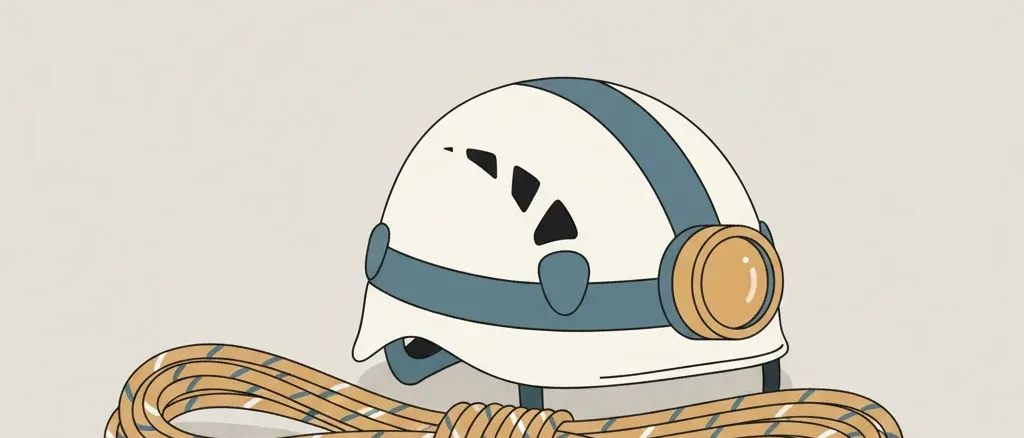
Perceived
Public intuition about caving conflates two activities with very different fatality profiles. Dry caving — the headline scope of this entry — is the typical NSS-affiliated recreational activity (horizontal passage exploration, vertical rope work in known cave systems, organized grotto trips). Cave diving is a sub-speciality undertaken by a small minority of technically proficient cavers and is one of the most lethal recreational activities humans engage in. Headlines and documentaries (Nutty Putty 2009, Tham Luang 2018, recreational cave-diving deaths in Florida sinks) blur the two in lay imagination, leading most observers to estimate dry-caving career risk well above the actual rate. No large-scale survey isolates US public perception of caving fatality odds; this entry uses editorial intuition.
Rough estimate: most people likely overestimate dry caving career risk and underestimate the cave-diving differential
Source: editorial intuition, not polled
Actual
~30 deaths per 100,000 active NSS-affiliated cavers per year (US, 1980–2008 NSS ACA dataset)
US NSS-affiliated active recreational cavers, 1980-2008 (NSS American Caving Accidents dataset)
Show derivation
The Stella-Watts et al. 2012 study in Wilderness and Environmental Medicine analyzed 28 years (1980-2008) of NSS American Caving Accidents reports and identified 81 caving fatalities across the US, averaging approximately 3 deaths per year. The denominator is the active US caving population during that period. NSS membership has been reported in the 8,000-10,000 range for most of the 2000s and 2010s; the broader active US caving community (NSS-affiliated grotto members plus unaffiliated frequent cavers) is plausibly in the 10,000-15,000 range. The 2 million Americans who visit caves annually are overwhelmingly commercial-tour visitors (Mammoth Cave, Carlsbad Caverns, Luray Caverns) on developed walkways and do not constitute "active recreational cavers" in the wild-caving sense relevant to career risk. Using a working denominator of 10,000 active cavers, the annual fatality rate is approximately 30 per 100,000 active cavers per year (3/10,000 = 0.0003). Compound probability over a 20-year caving career: 1 − (1 − 0.0003)^20 ≈ 0.006, or roughly 1 in 167. The numerator (81 deaths over 28 years = 81 / (28 × 10,000) = 28.9 per 100,000 person-years) is essentially the same. Cave diving fatalities are excluded from the headline; they are addressed in personal_factor_multipliers because the rate differential is large enough to merit separate treatment.
Caveats: The headline rate is sensitive to the denominator chosen for "active US cavers".…
The headline rate is sensitive to the denominator chosen for "active US cavers". NSS membership has hovered around 8,000-10,000 over the past two decades, but not every active US caver is an NSS member, and not every NSS member is currently active in field caving. A defensible working denominator of 10,000 active cavers produces the headline rate of approximately 30 per 100,000 per year; using 8,000 would raise the rate to about 37 per 100,000 (20-year career ≈ 0.74%, or roughly 1 in 135), and using 15,000 would lower it to about 20 per 100,000 (20-year career ≈ 0.40%, or roughly 1 in 250). The uncertainty band (0.4%-0.75%) captures this range. The 2 million Americans who visit caves annually are predominantly commercial-tour visitors on developed walkways and are deliberately excluded from this denominator; mixing them in would artificially deflate the rate by orders of magnitude and is not what the question asks. Cave diving is excluded from the headline scope and treated as a personal_factor_multiplier; the dry-vs-wet bifurcation is the single most important factor in caving fatality risk and is explicitly called out rather than averaged in. The Stella-Watts dataset (1980-2008) is the most recent comprehensive epidemiological synthesis; more recent NSS ACA reports (2009-2010, 2017-2018, 2019-2020) suggest broadly similar annual fatality counts in the low single digits, though no updated peer-reviewed analysis has been published. The 20-year career assumption matches the most commonly cited caver-engagement window; cavers who continue into their 60s or 70s accumulate proportionally higher cumulative risk, while those who participate for only a few years before stopping accumulate less. Career-level rates also do not capture trip-level intensity — a caver doing 50 trips per year accumulates exposure faster than one doing 5 trips per year, though the per-year fatality rate used here implicitly averages across these intensities.
Related risks
Other risks on similar themes — for exploring related fears.


Heat stroke (outdoor)
What are the odds of dying from heat stroke or severe heat illness during outdoor activity?



Adventure sports
What are the odds of a serious injury from regular participation in surfing, mountain biking, or rock climbing?
Pick challenger
Recreational dry caving is far less lethal than its underground reputation suggests. The most comprehensive epidemiological synthesis — Stella-Watts and colleagues in Wilderness and Environmental Medicine (2012) — analyzed 28 years of National Speleological Society American Caving Accidents reports (1980-2008) and documented 81 fatalities across the entire US caving community, an average of roughly three deaths per year. Against an NSS-affiliated active caver population of approximately 8,000-10,000, this yields an annual fatality rate of about 30 per 100,000 active cavers per year, or roughly 0.6% over a 20-year caving career — approximately 1 in 167. That is materially below the lifetime US-adult risk of dying in a car crash (~1%) and roughly an order of magnitude below the career risk of commercial fishing or logging. Cave diving is a different activity entirely: the Potts, Buzzacott, and Denoble (2016) analysis in Diving and Hyperbaric Medicine documented 161 US cave-diving deaths over the same general period at an estimated rate 18-30 times higher than dry caving. Public intuition tends to merge the two because both happen underground, but the safety record of organized recreational dry caving is closer to alpine hiking than to extreme sport.
Where dry-cave fatalities do occur, the mechanism is concentrated. Stella-Watts found that caver fall and drowning each accounted for 30% of the 81 deaths, splitting the dataset roughly in half between vertical-caving accidents (anchor failures, rappel-device errors, falls from unprotected ledges) and water-passage incidents (flash flooding in stream caves, sump immersion during reconnaissance, hypothermia following submersion in cold groundwater). Hypothermia, getting lost, and rockfall account for most of the remainder. Cave diving deaths follow a distinct pattern: asphyxia from drowning, almost always preceded by running out of breathing gas after silt-out causes loss of visibility and inability to find the exit line. The mechanism difference reflects the underlying activity difference — dry cavers face the same falls, hypothermia, and getting-lost hazards as mountaineers in technical terrain, while cave divers face a category of failure (loss of breathable air in zero-visibility flooded passage) that has essentially no parallel in surface recreation.
Risk concentrates in identifiable subgroups rather than spreading uniformly. Inexperience contributed to 32% of dry-caving fatalities in Stella-Watts’s dataset, and 84% of victims were male, with a peak age band of 20-29 — the same demographic pattern that recurs across most adventure-recreation epidemiology. Solo caving, vertical-rope-technique trips, and any incursion into wet or sump passages elevate risk above the dry-horizontal baseline. The single largest determinant, however, is the dry-vs-wet bifurcation: a caver who limits trips to known, mapped dry systems with a group of three or more, basic SRT competence, and no sump incursions sits well below the headline rate, while a caver who adds cave-diving certification accepts a 20-to-30-fold step-up in fatality risk per active year. Conflating “caving” with “cave diving” in public discourse is what makes the activity feel dangerous; in practice, the two should be modeled and discussed as nearly separate sports.
Related tidbits
Dry recreational caving carries roughly a 1 in 167 fatal risk over a 20-year caving career. Headlines blur it with cave diving, a separate sub-speciality that is one of the most lethal pursuits humans attempt.
Claim ledger
Every number below is what each source reported, with the verbatim quote we relied on and how we arrived at our figure. Click any link to verify directly.
-
[1] Wilderness and Environmental Medicine (PubMed) — The Epidemiology of Caving Injuries in the United States
The Epidemiology of Caving Injuries in the United States- Statistic
877 incident reports involving 1,356 cavers (1980-2008); 81 documented fatalities; falls and drowning each accounted for 30% of caver deaths- Excerpt
“"Over a 28-year period (1980-2008), 877 incident reports involving 1,356 cavers were documented by the National Speleological Society in American Caving Accidents. Of these, 81 caving fatalities occurred. Falls accounted for 74% of traumatic injuries; the most common mechanisms leading to death were caver fall and drowning, with 24 (30%) deaths each. Eighty-four percent of fatality victims were male; the peak age group was 20-29 years." ”
- Source data from
- 2012-09-01
- Accessed
- 2026-05-23 · archived copy
- Calculation
- Primary peer-reviewed source for the 81-deaths-over-28-years (≈3 per year) headline figure. The paper does not publish a per-100,000 rate because it lacks a formal denominator; the denominator used here (~10,000 NSS-affiliated active cavers) is derived from NSS membership figures published independently on caves.org. Combined: 81 deaths / (28 years × 10,000 cavers) ≈ 28.9 per 100,000 active-caver-years, rounded to 30/100,000 for the native display.
- Independence
- Peer-reviewed analysis published in Wilderness and Environmental Medicine by Stella-Watts, Holstege, Lee, and Charlton at the University of Virginia. Methodologically independent of NSS itself — the authors are academic emergency-medicine researchers conducting epidemiological synthesis of the ACA dataset, not NSS staff.
-
[2] National Speleological Society — American Caving Accidents (NSS Annual Publication)
American Caving Accidents (NSS Annual Publication)- Statistic
Annual journal of record for North American caving incidents and fatalities; NSS reports over 8,000 members- Excerpt
“"American Caving Accidents is the journal of record for accident and safety incident reports from the North American caving community. The National Speleological Society has over 8,000 Members and is the largest caving focused membership organization in the world." ”
- Source data from
- 2025-01-01
- Accessed
- 2026-05-23 · archived copy
- Calculation
- Provides the denominator anchor: NSS member-reported >8,000 active members. The broader US active caver population is plausibly 10,000-15,000 once unaffiliated grotto-active cavers are included; this informs the uncertainty band (0.004-0.0075). NSS itself is the publisher of the underlying ACA incident dataset analyzed by Stella-Watts 2012, so numerator and denominator derive from related but distinct NSS data streams.
- Independence
- Direct NSS organizational publication; provides the active-population denominator anchor that the peer-reviewed source (Stella-Watts 2012) does not formally publish. NSS membership counts are self-reported by the organization; cross-validated by Wikipedia (8,700-10,000 range across different reporting periods).
-
[3] Diving and Hyperbaric Medicine (PubMed) — Thirty years of American cave diving fatalities
Thirty years of American cave diving fatalities- Statistic
161 US cave diving fatalities between July 1985 and June 2015 (30 years); average ~5.4 per year; trend declining from 8 per year to under 3 as training improved- Excerpt
“"Between July 1, 1985, and June 30, 2015, a total of 161 divers died during cave diving expeditions in the United States, with 67 being trained cave divers and 87 being untrained. The most common cause of death was asphyxia due to drowning, preceded by running out of breathing gas, usually after getting lost owing to a loss of visibility caused by suspended silt. The annual number of cave diving fatalities has steadily fallen over the last three decades, from eight to less than three." ”
- Source data from
- 2016-09-01
- Accessed
- 2026-05-23 · archived copy
- Calculation
- Cave diving sub-speciality data, used for the personal_factor_multiplier analysis (not the headline). 161 deaths / 30 years = 5.37/year. Active US cave-diving population is much smaller than dry caving — the NSS Cave Diving Section (founded 1974) and PADI/TDI/NACD-certified active US cave divers number in the low thousands at most, with frequent estimates around 500-1,500 regularly active. Using 1,000 active cave divers: 5.37/1000 = 0.00537/year, or 537 per 100,000 per year — roughly 18-30 times the dry caving rate depending on which denominator is chosen. The 30× multiplier used in the personal_factor analysis is the conservative midpoint.
- Independence
- Peer-reviewed cave-diving fatality analysis by Potts, Buzzacott, and Denoble from Divers Alert Network (DAN). Methodologically independent of the NSS caving-accidents dataset; cave-diving deaths are tracked by NSS-CDS, International Underwater Cave Rescue and Recovery (IUCRR), and DAN separately from terrestrial caving accidents.
-
[4] Wikipedia — Caving (Wikipedia)
Caving (Wikipedia)- Statistic
Cave diving is described as 'a distinct, and more hazardous, sub-speciality undertaken by a small minority of technically proficient cavers'- Excerpt
“"Caving is a fairly safe sport compared to other activities, although incidents do occur related to flooding, hypothermia, rockfalls, and rope-technique accidents. Cave diving is a distinct, and more hazardous, sub-speciality undertaken by a small minority of technically proficient cavers." ”
- Source data from
- 2026-05-01
- Accessed
- 2026-05-23 · archived copy
- Calculation
- Supporting reference establishing the editorial framing — dry caving as the typical recreational activity, cave diving as a distinct sub-speciality with a separate (higher) risk profile. Not used to derive headline numbers.
- Independence
- Encyclopedia entry; supplementary context only. The headline arithmetic and the cave-diving multiplier are both grounded in peer-reviewed sources (Stella-Watts 2012, Potts 2016).